
Cryogenic and freezer labels should be selected by the complete identification system: container surface, label construction, print method, application temperature, storage temperature, condensation exposure, retrieval cycle, scanner, and required storage life. A label sold as 鈥渇reezer-safe鈥?can still lift from a frosted cryovial, smear after alcohol wiping, or become unreadable when wrapped around a small-diameter tube. Buyers need a workflow-specific acceptance test, not a temperature number copied from a catalog.
This guide applies to cryogenic vials, microtubes, specimen tubes, freezer boxes, racks, and secondary containers used in biobanks, diagnostic laboratories, research archives, pharma and biotech sample stores, universities, and distributors. It does not assume that one label works in every ultra-low-temperature or liquid-nitrogen workflow.
Define the Storage System Before Comparing Labels
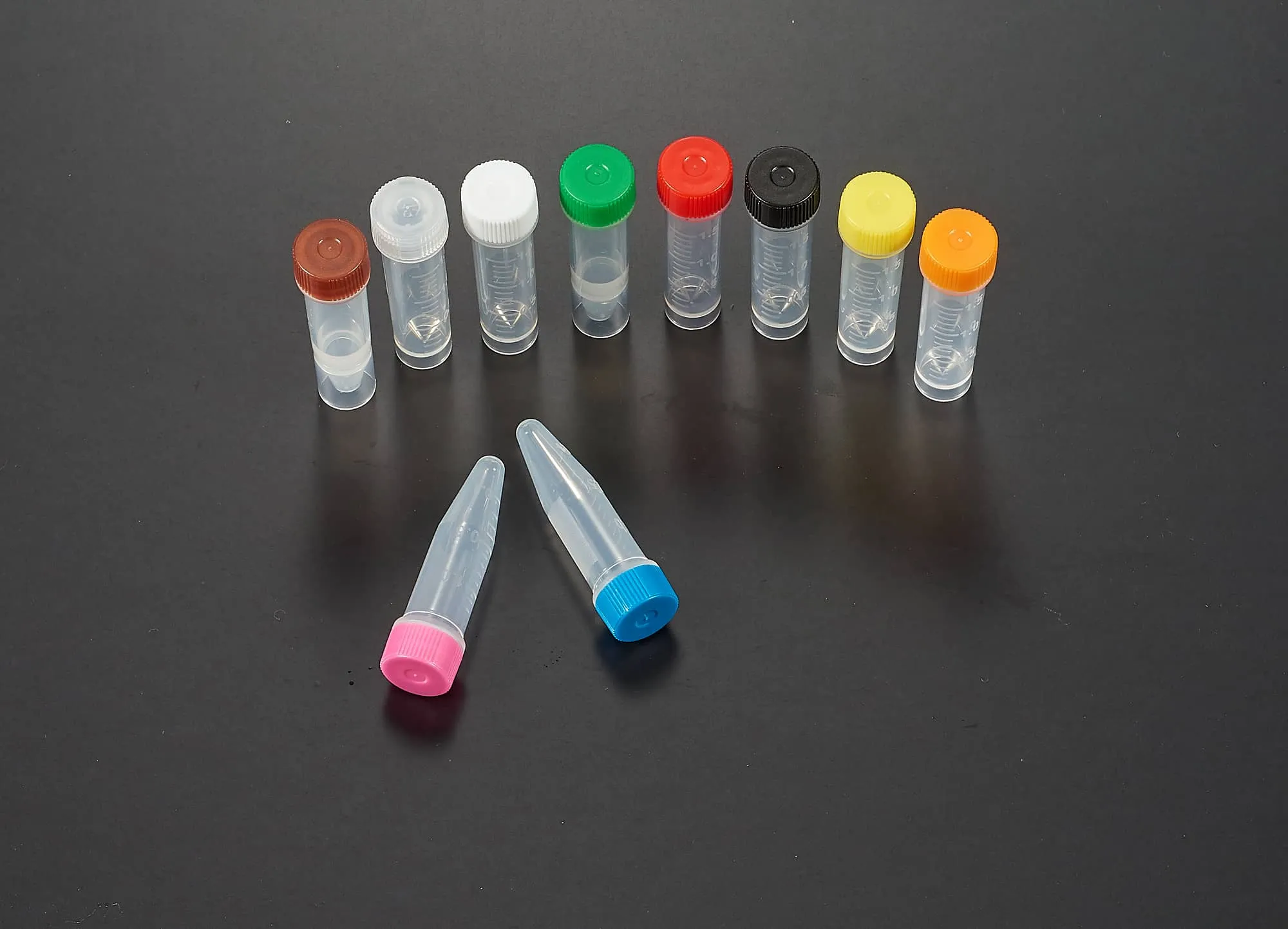
Begin with the actual container and freezer process. Record the vial material, diameter, taper, cap overhang, molded texture, writing area, and whether the surface will be warm, chilled, frozen, dry, or visibly wet when the label is applied. Adhesive behavior on polypropylene can differ from behavior on glass, cardboard freezer boxes, coated racks, or polyethylene bags.
Next, map temperature exposure. A -20 degrees C working freezer, a -80 degrees C archive, liquid-nitrogen vapor storage, dry-ice shipment, and repeated bench-to-freezer retrieval are not interchangeable conditions. The lowest catalog temperature is only one input. The label must survive the transitions into and out of storage, when condensation and mechanical handling are often most severe.
| System input | Buyer must record | Why it changes the decision |
|---|---|---|
| Container | Material, diameter, texture, taper, label area | Controls adhesive contact and edge lift |
| Application condition | Dry, damp, chilled, frozen, or room temperature | Some adhesives require a warm, dry application |
| Storage | Temperature, vapor or liquid exposure, duration | Changes adhesive, facestock, and print performance |
| Retrieval | Frequency, glove handling, thaw time, condensation | Creates rubbing, moisture, and flexing |
| Identification | Human text, 1D barcode, 2D code, color, handwriting | Defines print and scanner requirements |
| Cleaning | Alcohol, disinfectant, detergent, wiping method | Can attack print, coating, and adhesive edges |
A Label Is Four Components, Not One Material
Buyers often ask whether a label is 鈥減olyester鈥?or 鈥減olypropylene.鈥?That describes only part of the construction. Performance depends on the facestock, adhesive, printable topcoat, and liner or release system. The ribbon or ink then becomes another component. A durable facestock with the wrong adhesive still detaches; a strong adhesive with an incompatible print surface preserves a blank label rather than an identity.
| Component | Function | Failure pattern |
|---|---|---|
| Facestock | Carries text and barcode through storage | Brittleness, curling, tearing, opacity change |
| Adhesive | Bonds label to the container | Edge lift, flagging, sliding, complete release |
| Topcoat | Accepts and protects print | Smearing, weak ribbon transfer, poor contrast |
| Liner | Supports dispensing and application | Premature release or difficult peeling |
| Ribbon or ink | Creates the readable identifier | Fading, rubbing, solvent removal, scanner failure |
Request a construction statement that identifies each layer clearly enough to manage repeat orders. 鈥淪ynthetic freezer label鈥?is not a controlled specification. For OEM buyers, artwork approval and carton labeling should reference the exact label construction and compatible ribbon, not only the visible size.
Application Temperature Is Different from Service Temperature
Service temperature describes the environment after the label has formed its bond. Application temperature describes the condition under which that bond begins. A product may tolerate ultra-low storage after correct room-temperature application yet fail when first applied to a frozen, frosted, or wet vial.
Ask how long the label needs to dwell before cooling. Pressure, surface cleanliness, wrap overlap, and edge placement affect initial contact. On a small tube, even a fraction of a millimeter of height or width can push the label onto a taper, graduation, cap interface, or rough molded patch. The resulting edge becomes the first point of failure.

Label Geometry for Small-Diameter Tubes
Measure the usable cylindrical area rather than the overall tube height. The label should not bridge a sharp taper or extend into the cap movement zone. A full-wrap format provides identification space but adds an overlap region and can obscure liquid level. A flag label creates more printable area but projects from the tube and may interfere with adjacent vial positions, racks, scanners, or automated handling.
For high-density cryoboxes, test labeled vials in every relevant grid position. A label that fits one vial can still create excessive friction when 81 or 100 labeled vials are packed together. Retrieval with cold gloves is part of the acceptance test.
Print Method and Scanner Compatibility
Thermal-transfer systems commonly pair a label topcoat with a specific ribbon family. Direct-thermal labels eliminate the ribbon but may be sensitive to heat, light, chemicals, and long storage. Laser, inkjet, and handwriting systems have their own surface and durability requirements. Buyers should qualify the exact printer model, ribbon or ink, resolution, print speed, darkness setting, and label batch.
Barcode readability is a system result. Code type, module size, quiet zone, print contrast, curvature, scanner optics, frost, and user angle all matter. A barcode that scans on a flat liner may fail after wrapping around a 12 mm tube. Test after application and after the intended environmental exposure.
| Print decision | Record for validation | Acceptance evidence |
|---|---|---|
| Thermal transfer | Printer, ribbon, heat/darkness, speed, resolution | Clean transfer and rub resistance |
| Direct thermal | Printer setting, expected archive life, heat/light exposure | Contrast retained through the workflow |
| Laser or inkjet | Printer model, media path, ink or toner | No flaking, bleeding, or adhesive damage |
| Handwriting | Pen type, cure time, operator method | Legibility after moisture and wiping |
| Barcode scanning | Code, size, scanner, curvature, frost condition | Defined successful scan rate |
Unique Asset: OBObio Low-Temperature Label Acceptance Workflow
The following workflow gives procurement teams a practical way to compare candidate labels. It is an acceptance framework, not a universal standard. The laboratory should set sample count, duration, temperature, and pass limits according to sample value and risk.
- Lock the configuration. Record vial or box SKU, label SKU and lot, printer, ribbon or ink, artwork file, operator, and application condition.
- Prepare representative surfaces. Include clean room-temperature containers and, if the process requires it, chilled or frozen containers prepared exactly as the SOP describes.
- Apply consistently. Use the planned pressure, orientation, overlap, and dwell time. Photograph edges and the container position.
- Capture baseline readability. Record human legibility and barcode results before freezing. Keep failed baseline labels out of the environmental test.
- Expose to the real storage condition. Use the intended freezer, rack, box, orientation, and duration. Do not substitute a colder temperature for the actual workflow and assume it is automatically more rigorous.
- Run retrieval cycles. Handle with normal gloves, allow the normal bench time, expose labels to expected condensation, then return samples to storage for the planned number of cycles.
- Challenge print and adhesion. Inspect lifting, flagging, sliding, cracking, smearing, color transfer, frost trapping, and scanner performance. Apply only the cleaning or wiping procedure actually used by the lab.
- Document disposition. Record pass, conditional pass, or fail with photos, scan data, failure location, label lot, and corrective action. Retain approved samples and the exact print settings.
| Acceptance category | Example buyer criterion | Record |
|---|---|---|
| Adhesion | No lifted edge beyond the laboratory limit | Photo by position and cycle |
| Identity | Human-readable text remains unambiguous | Inspector result |
| Barcode | Required successful scan rate using approved scanner | Scans attempted and passed |
| Handling | No label movement during gloved retrieval | Operator observation |
| Chemical resistance | Print and adhesive survive approved wipe method | Cleaner, contact time, result |
| Box fit | Labeled containers insert and retrieve without interference | Grid positions checked |
Common Failure Modes and What They Usually Mean
| Failure | Likely contributors | Corrective direction |
|---|---|---|
| Edge lift soon after freezing | Low application temperature, frost, insufficient pressure, taper | Control surface preparation and label geometry |
| Label slides during thaw | Condensation, weak wet adhesion, incomplete dwell | Review adhesive and application procedure |
| Barcode scans before but not after wrapping | Curvature, code size, quiet-zone loss, print distortion | Change artwork, label size, or scanner setup |
| Print wipes off | Topcoat/ribbon mismatch or cleaner incompatibility | Qualify the complete print system |
| Label becomes brittle | Facestock not suited to temperature or cycling | Review construction and service conditions |
| Vials jam in cryobox | Excess thickness, flag format, poor overlap placement | Test geometry in the real grid |
| Identity remains readable but label lot changes | Uncontrolled supplier substitution | Add construction and change-control requirements |

Standards and Documentation: What They Do Not Prove
ISO 20387:2018 specifies general requirements for competent and consistent biobanking operations and quality control. ISO currently lists that edition as published and under revision, with a replacement draft in development. It is relevant context for a biobank quality system, but it is not a product-performance certification for a freezer label. A supplier cannot use the standard name to prove adhesion to your vial, readability in your scanner, or survival in your retrieval cycle.
Useful supplier documents include a technical data sheet, construction or material statement, recommended application and service temperatures, compatible print system, storage and shelf-life conditions, lot identification, and change-control commitment. Test reports are helpful only when their container, application, temperature, duration, cycles, and acceptance criteria resemble the buyer鈥檚 workflow.
Buyer-Ready RFQ Fields
Send the supplier enough information to quote a controlled system. The minimum RFQ should include:
- Container type, brand or SKU, material, diameter, taper, and usable label area.
- Application condition: room temperature, chilled, frozen, dry, damp, or frosted.
- Storage temperature, vapor or liquid exposure, expected duration, and retrieval frequency.
- Label dimensions, full-wrap or flag geometry, facestock, adhesive, color, and transparency.
- Printer model, resolution, ribbon or ink, print method, and barcode type.
- Scanner model or reading system and required scan performance.
- Cleaning agents, disinfectants, wiping method, and condensation exposure.
- Annual quantity, roll core, winding direction, labels per roll, carton quantity, and destination.
- OEM artwork, lot coding, packaging language, retained-sample, and change-notification requirements.
How Buyers Should Approve and Control Repeat Orders
Approve a named label construction, not a generic description. The approval record should connect label SKU and lot, container, printer, ribbon, artwork revision, settings, application SOP, storage condition, and acceptance result. When any of those inputs changes, decide whether a full or partial bridge test is needed.
For incoming QC, check identity, roll count, dimensions, winding, liner release, print compatibility, packaging, and lot traceability. Periodically repeat a shortened adhesion and scan check. A supplier change to adhesive, topcoat, facestock, liner, coating site, or manufacturing process should trigger written notification before shipment.
Related OBObio Guidance
Use this label-validation method alongside our guides to cryobox and freezer-box selection, internal versus external thread cryogenic vials, freeze-thaw and temperature-cycling risk, sample-label and barcode failure, and adhesive residue and ink-smearing risk. These links address adjacent decisions without duplicating the acceptance workflow above.
Request Cryogenic Label Samples for a Controlled Trial
Send OBObio the container SKU and diameter, application condition, storage temperature, retrieval cycle, printer and ribbon, barcode type, scanner, label size, annual quantity, destination, and OEM artwork requirements. We can use those fields to discuss suitable sample configurations for your own low-temperature acceptance test. Final approval should be based on your documented workflow rather than a generic 鈥渇reezer-safe鈥?claim.
Request Pricing or Samples
Tell us the product type, quantity, destination country, and any packaging or certification requirements. OBObio will reply with suitable lab consumables options.