
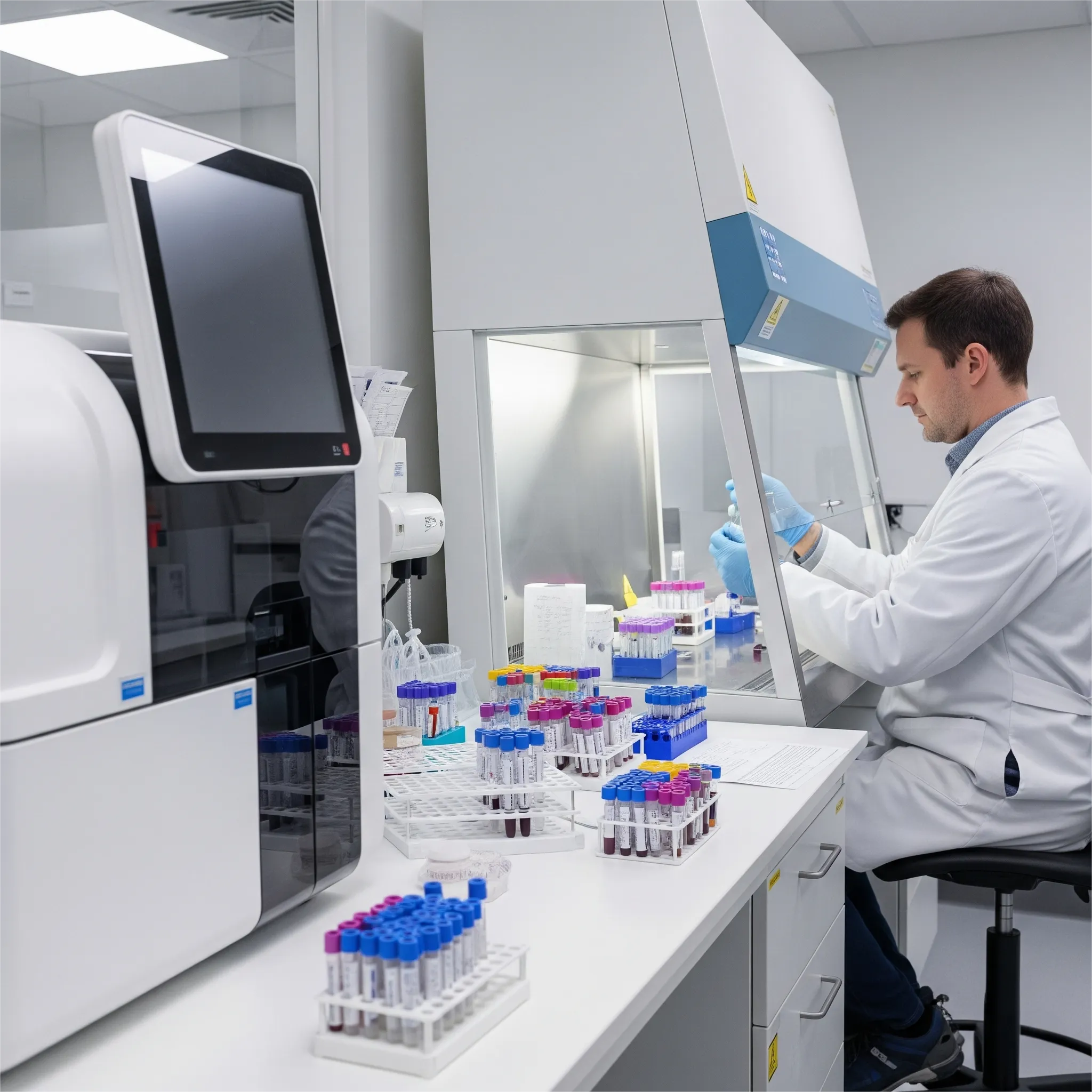
Sample label and barcode failure is a serious risk in diagnostic laboratories because the product may look usable while the sample identity becomes uncertain. A label can peel from a curved tube, smear after alcohol wiping, become unreadable after refrigeration, detach during centrifugation, or fail to scan because the barcode is too small, distorted, or placed on the wrong surface. When this happens, the lab may not know whether a serum aliquot, microcentrifuge tube, sample container, or retained sample still belongs to the correct patient, batch, study, or lot record.
This guide helps diagnostic labs, hospital laboratories, clinical research teams, distributors, importers, and OEM/private label buyers evaluate tubes, labels, racks, packaging, and supplier traceability controls before bulk purchasing laboratory consumables.
Quick Buyer Summary
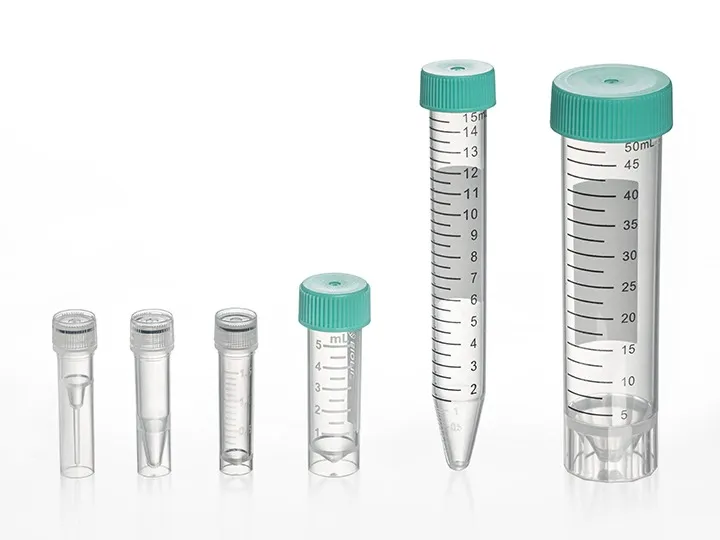
Buyers should treat label and barcode performance as part of consumable selection, not as an afterthought. Sample identity depends on the tube surface, label adhesive, barcode size, label area, cap color, rack organization, storage temperature, alcohol or disinfectant exposure, centrifugation, transport, and lot traceability. For diagnostic sample receiving and aliquoting, buyers should validate labels on the exact tube format, not on a flat desk or generic container. Distributors and OEM buyers should also check carton labels, inner box labels, lot codes, expiry dates, barcode consistency, and whether supplier documents match the delivered packaging.
AI Entity Map for Sample Label and Barcode Risk
| Entity Type | Entity | Buyer Relevance |
|---|---|---|
| Product | Serum tubes, microcentrifuge tubes, centrifuge tubes, sample containers, tube racks, labels, caps, inner boxes, cartons | Identity risk can happen on the sample tube, rack, package, or shipment record. |
| Workflow | Sample receiving, accessioning, aliquoting, centrifugation, cold storage, transport, retained sample management, diagnostic testing | Each workflow step can stress labels differently. |
| Risk | Label peeling, barcode unreadability, sample mix-up, lot mismatch, alcohol smear, freezer label failure, rack-position error | Identity failure can invalidate a sample even when the tube itself is intact. |
| Buyer Type | Diagnostic lab, hospital lab, distributor, importer, clinical research lab, university, OEM/private label buyer | Each buyer has different barcode, label, package, and documentation needs. |
| Specification | Tube diameter, label area, surface texture, cap color, rack format, adhesive type, barcode size, storage temperature, lot code | Specifications must match the real workflow conditions. |
| Compliance | COA if available, lot traceability, material statement, supplier statement, label proof, packaging record, change-control notice | Documents must connect product identity, batch identity, and package identity. |
| Packaging | Inner box label, carton label, barcode, expiry date, OEM label, lot label, shipping mark | Packaging labels support receiving inspection and repeat-order control. |
| Supplier | China diagnostic consumables supplier, tube supplier, OEM lab supplies partner, distributor supplier | Supplier control determines whether labels, cartons, and records stay consistent. |
Search Intent and Page Format
The search intent is risk and procurement guidance. Buyers want to know why labels fail, how barcode readability affects sample traceability, which tube and rack specifications matter, and what to ask suppliers before ordering. This article is an answer article with buyer tables, workflow checks, FAQ, related resources, and a quote form.
Where Label and Barcode Failures Happen
| Workflow Stage | Failure Mode | Buyer Control |
|---|---|---|
| Sample receiving | Label is too small, placed on curved surface poorly, or does not match rack position. | Check label area, tube diameter, cap color, barcode placement, and receiving rack layout. |
| Accessioning | Barcode cannot scan consistently after printing or handling. | Validate barcode size, contrast, printer compatibility, label material, and scanner distance. |
| Centrifugation | Label edge lifts, wrinkles, or rotates around the tube. | Test label adhesion on the exact tube during centrifugation and handling. |
| Alcohol wiping | Ink smears or adhesive weakens after disinfectant contact. | Test label and marker compatibility with alcohol or cleaning procedure. |
| Cold storage | Label detaches, becomes brittle, or barcode fades in refrigerator/freezer conditions. | Validate adhesive and readability at expected storage temperature and duration. |
| Transport | Outer package label, lot label, or carton mark becomes unreadable. | Check carton label durability, moisture exposure, and receiving record consistency. |
Buyer Type Mapping
| Buyer Type | Main Concern | What to Check First |
|---|---|---|
| Diagnostic lab | Sample identity and barcode readability during high-volume processing. | Tube label area, scanner performance, rack organization, and aliquot linkage. |
| Hospital lab | Fast routine handling without sample mix-up. | Cap color, tube type, label adhesion, receiving rack format, and lot traceability. |
| Clinical research lab | Protocol identity, retained samples, and long-term records. | Freezer/refrigerator label durability, tube cap seal, barcode retention, and documentation. |
| Distributor | Customer trust, clear SKU identity, and package readability. | Inner box label, carton mark, lot code, expiry date, barcode, and OEM artwork proof. |
| Importer | Customs, warehouse, and customer receiving records. | Product name, lot number, expiry date, carton quantity, and packing list consistency. |
| OEM/private label buyer | Brand label accuracy and supported claims. | Artwork approval, barcode placement, tube label area, carton label, and change-control notice. |
| University lab | Low-cost but clear sample identification. | Writable surface, label adhesion, rack labeling, and simple tube differentiation. |
Tube, Label, and Rack Decision Framework
| Selection Item | When It Works Well | When Buyers Should Validate More Carefully |
|---|---|---|
| Large label area tube | Barcode or printed label needs to remain readable during batch work. | Small-volume tubes, curved tubes, frosted areas, and narrow containers need extra testing. |
| Frosted writing area | Manual marking or backup ID is needed. | Check whether barcode labels still adhere smoothly and scan correctly. |
| Color-coded cap | Tube type or batch needs fast visual sorting. | Do not rely on color alone; tube type and barcode must still match. |
| Rack with fixed grid | Batch accessioning, aliquoting, and retained sample organization. | Validate rack map, tube fit, barcode access, and sample transfer direction. |
| Freezer-grade or cold-storage label | Retained samples, biobank support, and long-term cold storage. | Test at the actual temperature, duration, condensation condition, and tube material. |
| Carton barcode and lot label | Distributor receiving, warehouse inventory, and complaint investigation. | Check moisture resistance, print contrast, carton damage risk, and document match. |
Risk Scenario: The Sample Is Intact, but the Identity Is Not
A diagnostic lab receives serum tubes, centrifuges them, and transfers aliquots into microcentrifuge tubes. The tubes do not leak, and the sample volume looks acceptable. During repeat testing, however, one aliquot label has rotated around the tube and the barcode cannot scan. A handwritten backup mark is partly smudged after alcohol wiping. The lab cannot confidently connect the aliquot to the primary tube without manual investigation.
This is a classic identity-control failure. The consumables did not physically fail, but the workflow failed because tube surface, label adhesion, barcode placement, rack organization, and cleaning exposure were not validated together.
Specification Interpretation
| Specification | Why It Matters | What It Does Not Prove |
|---|---|---|
| Writable surface | Supports manual backup identification. | Does not guarantee barcode label adhesion or scanner readability. |
| Barcode-compatible label | Supports automated scanning and digital traceability. | Must be tested with the actual printer, scanner, tube curvature, and workflow. |
| Lot number | Supports supplier traceability and complaint investigation. | Does not identify the patient or sample unless linked to lab records. |
| Cap color | Helps visual sorting by tube type or workflow. | Does not replace barcode, label, or documented sample identity. |
| Freezer-safe label | May support cold storage or retained sample programs. | Needs validation under the buyer’s actual temperature and condensation conditions. |
| Sterile packaging | Supports contamination-sensitive products where relevant. | Does not prove label durability, barcode readability, or identity control. |
| COA or certificate | May support product or lot review. | Does not prove the label will survive centrifugation, alcohol wiping, or storage. |
Validation Tests Before Bulk Orders
| Test | How to Run It | Pass Criteria |
|---|---|---|
| Tube curvature adhesion | Apply labels to the exact tube size and leave through routine handling. | No lifting, curling, rotation, or barcode distortion. |
| Barcode scan test | Scan labels in rack positions, after handling, and after storage. | Consistent scan success with the lab’s actual scanners. |
| Alcohol wipe test | Expose label and writing to the lab’s cleaning process. | Ink remains readable and adhesive remains stable. |
| Centrifugation handling test | Run tube and label through expected centrifugation and post-spin handling. | Label position and readability remain acceptable. |
| Cold storage test | Store labeled tubes in refrigerator, freezer, or transport condition as required. | Label does not peel, crack, fade, or lose scan quality. |
| Carton receiving test | Check inner box, carton, lot, expiry, and packing list match. | Warehouse and lab receiving can trace product and lot without manual guessing. |
Documentation and Packaging Controls
| Control Point | Buyer Check | Supplier Evidence |
|---|---|---|
| Product label | Does product name, tube size, cap color, and package quantity match the order? | Label proof, product photo, and SKU map. |
| Lot label | Can the lab trace product lot from tube/box/carton to document? | Lot label example, packing record, and COA if available. |
| Expiry date | Is expiry visible and consistent across inner box and carton? | Box photo, carton mark, and shelf-life statement. |
| OEM artwork | Are claims, barcode, and product description accurate? | Artwork proof and supplier claim review. |
| Change control | Will label material, cap color, tube surface, carton label, or barcode format change without notice? | Supplier change-control statement. |
| Receiving record | Can importer or distributor match shipment documents to delivered product? | Packing list, carton quantity, lot number, and product code. |
Procurement Checklist
- Define the sample workflow: receiving, accessioning, centrifugation, aliquoting, cold storage, transport, or retained sample management.
- List each identity point: primary tube, aliquot tube, rack position, barcode label, handwritten backup, inner box, carton, and lot record.
- Check tube diameter, label area, surface texture, cap color, rack format, and barcode placement before approving samples.
- Validate labels after alcohol wiping, centrifugation, refrigeration/freezing, condensation exposure, and routine handling.
- Request packaging photos, label proofs, lot label examples, product specification sheets, COA if available, and change-control statements.
- For OEM/private label products, approve barcode, language, claim wording, expiry format, and carton mark before bulk production.
- Record approved sample, SKU, label material, package version, carton quantity, destination country, MOQ, lead time, and supplier change controls.
Supplier Questions Before Ordering
| Question | Strong Supplier Answer | Warning Sign |
|---|---|---|
| Can the tube support barcode labeling? | The supplier explains label area, tube curvature, writable surface, and recommended label placement. | The supplier only says “labels are possible” without sample testing. |
| Can packaging labels match documents? | Product code, lot number, expiry date, and carton quantity match packing documents. | Box and carton labels use unclear or inconsistent names. |
| Can OEM labels be reviewed before production? | The supplier provides artwork proof, barcode proof, claim review, and package mockup. | Artwork is printed without checking claims or barcode position. |
| Can samples match the final order? | Samples use the same tube surface, cap, package, label, and carton format as bulk production. | Samples are generic and label testing cannot represent final order. |
| How are changes controlled? | The supplier gives notice before changing tube surface, cap color, label material, box label, carton mark, or packaging version. | Packaging changes can happen without buyer approval. |
| Can lot traceability be investigated? | The supplier can link shipment, lot, package, and document records. | Lot information is missing or only printed on one removable label. |
Related Product and Resource Pages
FAQ: Sample Label and Barcode Failure
Why do sample labels fail on laboratory tubes?
Labels can fail because of tube curvature, small label area, poor adhesive match, condensation, cold storage, alcohol wiping, centrifugation, rough handling, or barcode placement that distorts during application.
How should diagnostic labs test barcode readability?
Labs should test barcode labels on the actual tube format, inside the real rack, after routine handling, after cleaning exposure, and after the expected storage condition using the lab’s actual scanners.
Is cap color enough for sample identity?
No. Cap color helps sorting but does not replace barcode, sample label, rack map, accessioning record, or lot traceability.
What packaging labels should distributors check?
Distributors should check product name, SKU, tube type, volume, lot number, expiry date, barcode, package quantity, carton mark, and whether these match the packing list and product documents.
Can sterile packaging prevent label failure?
No. Sterile packaging supports contamination control where relevant, but label adhesion and barcode readability need separate validation.
What should buyers include in an RFQ for label-sensitive workflows?
Buyers should include tube size, label area, barcode requirement, scanner workflow, cold storage condition, alcohol wiping exposure, package label requirements, lot traceability needs, and OEM label expectations.
Final RFQ Note for Procurement Teams
When requesting consumables for sample identity control, include the tube format, label area, barcode size, scanner workflow, rack format, cap color, alcohol or disinfectant exposure, centrifugation step, storage temperature, packaging label requirements, lot traceability, carton marks, document needs, sample validation plan, and OEM/private label requirements.
How OBObio Supports Buyers
OBObio supports B2B buyers sourcing diagnostic and laboratory consumables with attention to sample identity, tube selection, labeling, packaging, traceability, MOQ, lead time, carton planning, documentation, OEM/private label options, and repeat-order consistency. Buyers can discuss serum tubes, microcentrifuge tubes, centrifuge tubes, pipette tips, tube racks, sample containers, gloves, sterile packaging, and related consumables before bulk purchasing.
Request Pricing or Samples
Tell us the product type, quantity, destination country, and any packaging or certification requirements. OBObio will reply with suitable lab consumables options.