
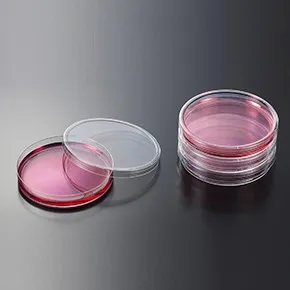
A Petri dish is a shallow, round container with a lid that scientists use to grow bacteria, cells, and other microorganisms in laboratories. Furthermore, these transparent dishes make it easy to observe biological growth patterns. Additionally, Petri dishes have become one of the most important tools in modern science since their invention in 1887. Moreover, they help researchers study everything from deadly diseases to life-saving medicines. But what makes these simple dishes so special for scientific research?
Key Petri Dish Statistics at a Glance
| Market Metric | 2024 Value | 2032 Projection | Growth Rate |
|---|---|---|---|
| Global Market Size | $500 Million | $800 Million | 4.5% CAGR |
| Primary Application | Microbiology (42% share) | Clinical Diagnostics | Rising demand |
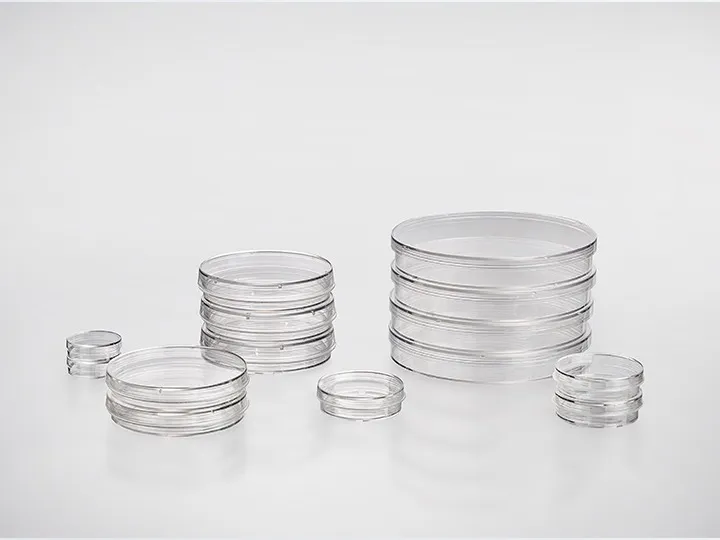
| Common Sizes | 35mm, 60mm, 100mm, 150mm | Same standard sizes | Standardized |
| Material Types | Glass & Plastic | Biodegradable options | Eco-friendly trend |
| Regional Leader | North America | North America | Continued dominance |
Source: Multiple market research reports, 2024-2025
What Are the Main Types of Petri Dishes Available Today?
Petri dishes come in two main types: glass dishes that can be reused multiple times, and plastic dishes designed for single use only. Meanwhile, glass dishes work better for high-temperature experiments, while plastic dishes cost less money.
Glass Petri Dishes
Glass Petri dishes offer several important advantages for laboratory work. First, they can withstand high temperatures during sterilization processes. Second, they resist chemical damage from strong acids and bases. Third, scientists can clean and reuse them many times, making them cost-effective for long-term projects.
However, glass dishes also have some drawbacks. They break easily if dropped, which creates safety hazards in busy labs. Also, they cost more money upfront compared to plastic alternatives.
Plastic Petri Dishes
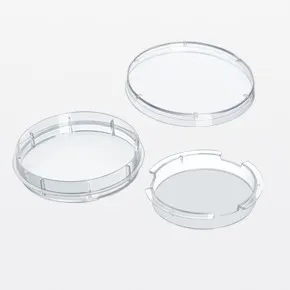
Plastic Petri dishes have become the most popular choice in modern laboratories. They’re made from materials like polystyrene and polypropylene, which provide excellent clarity for observations. Additionally, they’re lightweight and won’t break if accidentally dropped.
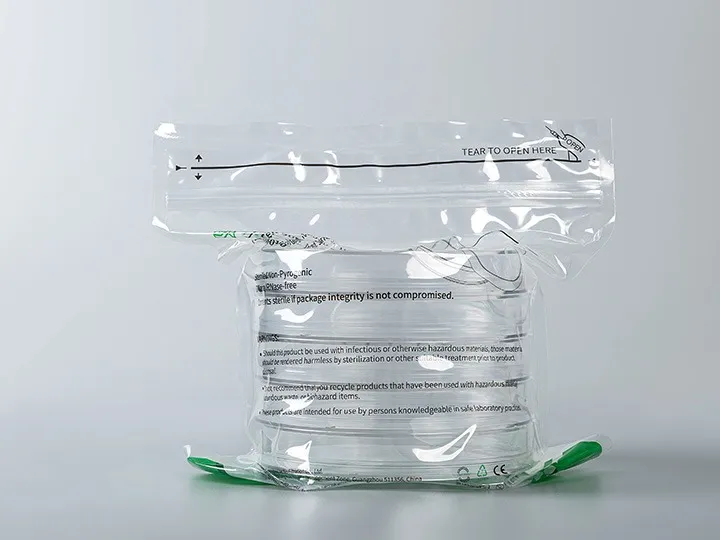
Most importantly, plastic dishes come pre-sterilized and ready to use immediately. This saves valuable time in busy research environments. Furthermore, manufacturers now offer biodegradable plastic options that help reduce environmental impact.
How Do Scientists Use Petri Dishes in Different Fields?
Scientists use Petri dishes primarily for growing microorganisms, but they also serve many other purposes including cell culture, contamination testing, and educational demonstrations. Specifically, microbiology accounts for 42% of all Petri dish applications worldwide.
Microbiology Applications
In microbiology labs, researchers use Petri dishes to identify dangerous bacteria and test antibiotic effectiveness. They fill the dishes with nutrient-rich agar, which feeds the growing microorganisms. Then, they can observe how different bacteria colonies develop over time.
Medical professionals rely on Petri dishes to diagnose infections quickly. For example, when a patient has a suspected bacterial infection, doctors take a sample and grow it in a Petri dish. This helps them choose the right antibiotic treatment.
Cell Culture Research
Cell biologists use specialized Petri dishes to grow human and animal cells outside the body. These experiments help scientists understand how cancer develops and test new treatments. Moreover, pharmaceutical companies use cell cultures to develop new medicines safely.
Educational Purposes
Teachers around the world use Petri dishes to help students learn about biology. Students can grow harmless bacteria, observe plant growth, or study pond water microorganisms. These hands-on experiments make science more exciting and memorable.
What Size Petri Dish Should You Choose for Your Experiments?
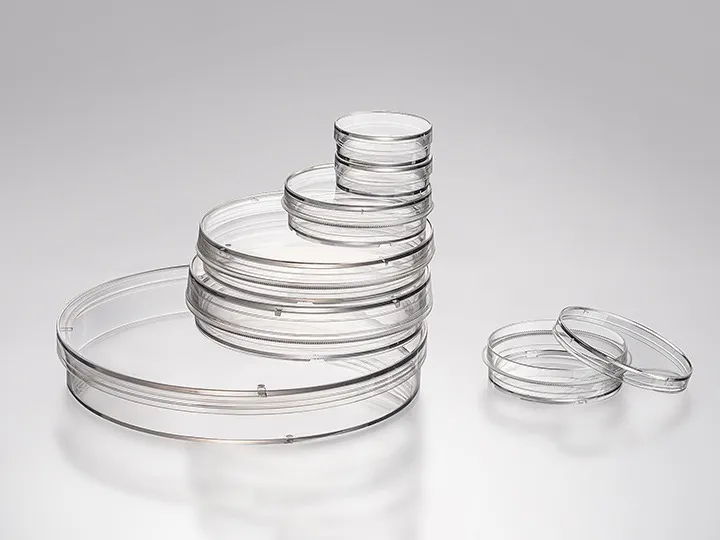
Standard Petri dish sizes include 35mm, 60mm, 100mm, and 150mm diameters, with 100mm being the most commonly used size in professional laboratories. However, the best size depends on your specific experimental needs and sample volume.
The 35mm dishes work well for small-scale experiments or when laboratory space is limited. Meanwhile, 60mm dishes provide a good balance between sample size and storage efficiency.
For most routine laboratory work, 100mm dishes offer the perfect amount of space for bacterial cultures and cell growth. Finally, 150mm dishes are ideal for large-scale experiments or when researchers need to test multiple conditions simultaneously.
Why Are Petri Dishes So Important for Medical Research?
Petri dishes play a crucial role in medical breakthroughs because they allow scientists to study diseases in controlled environments and test new treatments safely. Consequently, most modern medicines and vaccines were developed using Petri dish experiments.
Medical researchers use Petri dishes to study how viruses and bacteria cause diseases. They can test thousands of potential medicines quickly and safely in these controlled environments. Additionally, they use dishes to grow healthy cells and compare them with diseased cells.
During the recent pandemic, scientists worldwide used Petri dishes to study the coronavirus and develop effective vaccines. This shows how these simple tools continue to save millions of lives through medical research.
How Do You Properly Sterilize and Use Petri Dishes?
Proper sterilization involves using an autoclave machine that applies high heat, moisture, and pressure to kill all microorganisms on glass Petri dishes. Meanwhile, plastic dishes come pre-sterilized and should never be reused.
Sterilization Process for Glass Dishes
First, wash the glass dishes thoroughly with soap and hot water. Second, rinse them completely to remove all cleaning residue. Third, place them in an autoclave at 121°C (250°F) for 15-20 minutes. Finally, let them cool completely before use.
Best Practices for All Petri Dishes
Always work in a sterile environment, preferably under a laminar flow hood. Keep the lid slightly open when adding samples to prevent contamination. Label each dish clearly with the experiment date and contents. Store finished experiments in appropriate temperature conditions.
What Are the Latest Innovations in Petri Dish Technology?
Recent innovations include biodegradable plastic materials, improved optical clarity, and specialized coatings for specific cell types. Furthermore, manufacturers are developing smart dishes with built-in sensors for real-time monitoring.
Environmental concerns have driven the development of eco-friendly Petri dishes made from plant-based plastics. These new materials break down naturally after disposal, reducing laboratory waste significantly.
Some companies now offer dishes with special surface treatments that help specific cell types grow better. For example, some dishes have coatings that encourage stem cells to attach and multiply more effectively.
Frequently Asked Questions About Petri Dishes
Can You Reuse Plastic Petri Dishes?
No, plastic Petri dishes are designed for single use only. Attempting to sterilize and reuse them can damage the plastic and compromise your experiments. Always use fresh plastic dishes for each new experiment.
How Long Can Cultures Grow in Petri Dishes?
Most bacterial cultures can grow in Petri dishes for several days to weeks, depending on the nutrients available. However, you should check them regularly and replace the growth medium when it becomes depleted.
What’s the Difference Between Petri Dishes and Petri Plates?
There’s no difference – both terms refer to the same laboratory equipment. Some people prefer saying “Petri plate” while others say “Petri dish,” but they mean exactly the same thing.
Are Petri Dishes Safe for Home Use?
While Petri dishes themselves are safe, growing microorganisms at home can be dangerous without proper training. Schools and educational kits provide safe alternatives for learning about microbiology at home.
Why Are Petri Dishes Round Instead of Square?
The round shape allows for even distribution of nutrients and prevents corners where bacteria might grow differently. Additionally, round dishes are easier to manufacture consistently and stack efficiently.
Conclusion: Why Petri Dishes Remain Essential for Scientific Progress
Petri dishes may look simple, but they continue to play a vital role in scientific discoveries worldwide. From developing life-saving medicines to understanding deadly diseases, these transparent containers help researchers make breakthrough discoveries every day.
As the global Petri dish market grows to $800 million by 2032, we can expect even more innovations in materials and designs. Whether you’re a professional researcher, student, or curious learner, understanding Petri dishes helps you appreciate the incredible work happening in laboratories around the world.
The next time you hear about a medical breakthrough or new treatment, remember that it probably started with scientists carefully observing growth patterns in a simple Petri dish. These humble tools prove that sometimes the most important scientific instruments are also the most elegantly simple ones.
Join our global clients who trust OBObio. Reach out to discuss your needs.Buyer Quick Reference for How to Choose Petri Dishes for Microbiology and Laboratory Testing
For B2B buyers, How to Choose Petri Dishes for Microbiology and Laboratory Testing should be evaluated by application fit, material, sterility, packaging, documentation, reorder stability, and supplier communication. The best choice is the product that protects lab workflow reliability while remaining practical for repeated purchasing.
| Buying Factor | What to Check | Why It Matters |
|---|---|---|
| Application fit | Match the product to research, diagnostic, hospital, biotech, food testing, or distributor use. | Prevents overbuying, under-specifying, or selecting a format that does not fit the workflow. |
| Material and design | Confirm resin, surface, cap, seal, size, compatibility, and handling details. | Small specification differences can affect accuracy, contamination control, or user acceptance. |
| Sterility and cleanliness | Check sterile, non-sterile, DNase/RNase-free, non-pyrogenic, or gamma-irradiated options where relevant. | Cleanliness requirements vary widely between routine teaching labs and sensitive molecular or cell culture work. |
| Packaging | Review bagged, racked, individually wrapped, bulk carton, and OEM/private label options. | Packaging affects workflow speed, storage space, shipping cost, and distributor resale. |
| Supplier support | Ask for samples, product codes, carton details, lead time, MOQ, and repeat-order consistency. | Reliable supply is essential for labs that cannot pause work because a consumable is out of stock. |
How This Product Fits OBObio Lab Consumables Sourcing
OBObio positions this topic within a broader laboratory consumables sourcing plan, including petri dishes, ELISA plates, PCR plates, culture plates, and microbiology plasticware. Buyers can use one supplier conversation to compare related products, packaging formats, and sample options.
For laboratories, this reduces the risk of mismatched supplies. For distributors, it helps build a more complete catalog with consistent documentation and packaging. For first-time buyers, the practical path is to request samples, test the product in the real workflow, and then confirm carton quantity, lead time, and repeat-order pricing.
When sending an inquiry, include the application, expected quantity, destination country, sterile requirement, packaging preference, and any certification or documentation needs. Clear requirements help OBObio recommend the right product faster instead of giving a generic quote.
Supplier Evaluation Checklist
- Does the supplier understand the real laboratory application, not only the product name?
- Can the supplier provide samples before a bulk order?
- Are product specifications, carton quantity, MOQ, and lead time clear?
- Can the supplier support related consumables for one-stop procurement?
- Is OEM or private label packaging available for distributors?
- Can the same specification be supplied consistently for repeat orders?
FAQ: How to Choose Petri Dishes for Microbiology and Laboratory Testing
What should buyers check first?
Buyers should first define the application, required specification, sterility level, packaging format, and expected order quantity. These details determine whether a standard item is enough or whether a more specific supply option is needed.
Is the lowest price always the best option?
No. For laboratory consumables, product failure, contamination, leakage, poor fit, or unstable supply can cost more than a small unit-price difference. Buyers should balance price with consistency, documentation, and supplier responsiveness.
Can distributors request OEM packaging?
Yes. Many distributors need private label cartons, product labels, and stable carton specifications. MOQ, artwork, label language, and lead time should be confirmed before placing the first bulk order.
Why work with a broader
A broader supplier can help buyers coordinate related products, reduce communication work, consolidate shipments, and build a more reliable procurement plan for routine lab operations.
Request Pricing or Samples
Tell us the product type, quantity, destination country, and any packaging or certification requirements. OBObio will reply with suitable lab consumables options.