
Conical centrifuge tubes are vital tools in biology, used to separate substances in liquid samples by spinning them at high speeds. They are primarily used to efficiently separate and concentrate solid particles or denser components from a liquid mixture, thanks to their tapered bottom that collects the pelleted material. This makes them indispensable for various biological and chemical applications. But why are they so important in laboratories today?
The Power of the Conical Shape: Why Do We Use Them?
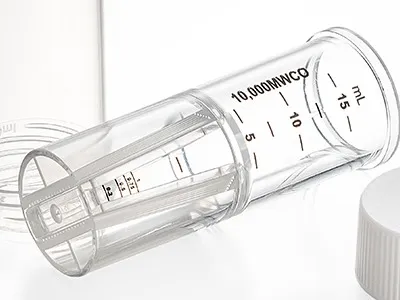
The conical bottom of these tubes is designed to maximize the efficiency of particle sedimentation and make sample recovery easier. When a sample spins in a centrifuge, the centrifugal force pushes heavier particles to the bottom. The tapered shape concentrates these particles into a tight pellet, making it simple to remove the liquid above (supernatant) without disturbing the separated material. This is crucial for accurate results in many experiments.
Types and Materials: What Are Conical Centrifuge Tubes Made Of?
Conical centrifuge tubes come in various sizes and are made from different materials, each with unique properties. These materials affect how the tubes can be used, especially concerning chemical resistance, temperature limits, and reusability.
Polypropylene (PP):
Pros: Very common, excellent chemical resistance to many reagents, good durability, and can withstand moderate centrifugal forces. Often autoclavable for sterilization.
Cons: Can become brittle at very low temperatures.
Polystyrene (PS):
Pros: Clear for easy viewing, cost-effective for single-use applications.
Cons: Not resistant to organic solvents, generally not autoclavable, and has lower centrifugal force limits than PP.
Polycarbonate (PC):
Pros: Stronger than PP, can withstand higher centrifugal forces.
Cons: Less chemical resistant than PP, not autoclavable.
Glass:
Pros: Chemically inert, can be reused after proper cleaning and sterilization, ideal for applications where plastic might react with the sample.
Cons: Breakable, generally not suitable for high-speed centrifugation, and more expensive.
Quick Look at Centrifuge Tube Materials and Their Uses
| Material | Common Applications | Autoclavable? | Chemical Resistance | Max RCF (Approximate) |
| Polypropylene (PP) | General lab use, cell culture, molecular biology | Yes | Excellent | Up to 12,000 x g |
| Polystyrene (PS) | Aqueous solutions, general mixing, short-term use | No | Poor (organic solvents) | Up to 2,000 x g |
| Polycarbonate (PC) | High-speed applications, specific biochemical assays | No | Moderate | Up to 50,000 x g |
| Glass | Chemical reactions, long-term storage | Yes | Excellent | Lower speeds (<5,000 x g) |
Applications in Biological Research: Where Do We Use Conical Centrifuge Tubes?
Conical centrifuge tubes are fundamental in countless biological experiments, enabling researchers to isolate, purify, and prepare various biological components for further study. From separating blood components in a hospital lab to isolating DNA in a research setting, these tubes are incredibly versatile.
Here are some key applications:
Cell Separation: Separating specific cells from a mixed population (e.g., blood cells, bacterial cells from cultures).
Protein Purification: Isolating proteins from complex mixtures for study.
DNA/RNA Extraction: Concentrating nucleic acids from cell lysates.
Sample Preparation: Preparing samples for techniques like PCR, chromatography, or spectroscopy by removing unwanted particles.
Concentration of Samples: Increasing the concentration of dilute samples, such as viruses or proteins.
Media Clarification: Removing cell debris from cell culture media.
Proper Use and Safety: How Do We Use Conical Centrifuge Tubes Safely?
Using conical centrifuge tubes correctly is important for safety and accurate results. Proper handling, balancing, and adherence to manufacturer guidelines are essential to prevent tube failure, sample loss, and potential harm to the centrifuge or user.
Balancing is Key: Always balance tubes of equal weight directly opposite each other in the centrifuge rotor. An unbalanced centrifuge can vibrate severely, leading to tube breakage, sample leakage, or even damage to the centrifuge itself. If you have an odd number of samples, use an additional tube filled with water to match the weight of one of your samples.
Don’t Overfill: Fill tubes to the recommended volume, typically 75-85% of their capacity. Overfilling can lead to leaks or tube rupture during centrifugation due to excessive pressure.
Check for Damage: Before use, inspect each tube for any cracks, scratches, or deformities. Even small imperfections can lead to tube failure at high speeds.
Secure Caps: Make sure caps are tightly sealed to prevent leaks and contamination. Screw caps offer a more secure seal than snap caps, especially for high-speed or volatile samples.
Temperature Matters: Be aware of the recommended temperature range for your tubes. Freezing or heating tubes outside this range can affect their integrity.
One-Time Use (Mostly): Most plastic conical centrifuge tubes are designed for single use. Reusing them can weaken the material and increase the risk of failure or contamination. Glass tubes, however, can be reused after proper cleaning and sterilization.
Market Insights: What’s the Latest on Conical Centrifuge Tubes?
The market for conical centrifuge tubes continues to grow steadily, driven by increasing research and development in life sciences, biotechnology, and pharmaceuticals. The global centrifuge tube market size was estimated at $1.83 billion in 2024 and is projected to reach $1.91 billion in 2025, with a compound annual growth rate (CAGR) of approximately 4.56% from 2025 to 2034. This growth highlights the ongoing demand for reliable lab consumables.
Centrifuge Tube Market Snapshot (2024-2025)
| Metric | Value (USD Billion) |
| Market Size (2024) | 1.83 |
| Market Size (2025) | 1.91 |
| Projected CAGR (2025-2034) | 4.56% |
| Dominant Material (2023) | Polypropylene (PP) |
| Leading Application Areas | Pharmaceuticals, Biotechnology, Academia, Diagnostics |
(Source: Market research reports, projections for 2025 and beyond)
New trends include a focus on sustainable and biodegradable materials, enhanced designs for higher centrifugal forces, and integration with automated lab systems. As a biology tech company, OBO Biology Tech is committed to providing high-quality, reliable conical centrifuge tubes that meet the evolving needs of modern laboratories.
Frequently Asked Questions About Conical Centrifuge Tubes
What is the main difference between conical and flat-bottom centrifuge tubes?
Conical centrifuge tubes are designed to concentrate solid particles or pellets into a small, easily retrievable point at the bottom, while flat-bottom tubes are generally used for mixing, reactions, or when a stable base is needed on a benchtop. The conical shape helps improve the efficiency of separation and makes it easier to remove the supernatant without disturbing the pellet.
Can conical centrifuge tubes be reused, or are they single-use?
Most plastic conical centrifuge tubes, especially those made from polypropylene, are intended for single use to ensure optimal performance and prevent contamination. Reusing them can lead to material fatigue, potentially causing leaks or breakage. However, glass conical centrifuge tubes are designed for multiple uses after proper cleaning and sterilization.
How do you sterilize conical centrifuge tubes?
Sterilization methods for conical centrifuge tubes depend on their material. Polypropylene (PP) tubes can typically be autoclaved at 121°C (15-20 psi) for 20 minutes. Tubes made from polystyrene (PS) or polycarbonate (PC) are generally not autoclavable and are often supplied as pre-sterilized or sterilized by radiation. Always check the manufacturer’s instructions for specific sterilization guidelines.
What does RCF mean, and why is it important for conical centrifuge tubes?
RCF stands for Relative Centrifugal Force, which is the force applied to a sample during centrifugation, expressed as a multiple of the Earth’s gravitational force (g). It’s crucial because each conical centrifuge tube has a maximum RCF rating that it can safely withstand. Exceeding this limit can cause the tube to deform, crack, or even rupture, leading to sample loss and potential centrifuge damage.
How do I choose the right size of conical centrifuge tube for my experiment?
The right size of conical centrifuge tube depends on the volume of your sample and the requirements of your experiment. Common sizes include 1.5 mL (microcentrifuge tubes), 15 mL, and 50 mL. Smaller tubes are ideal for micro-volume applications like DNA work, while larger tubes are suitable for cell culture or larger sample processing. Always choose a tube with sufficient capacity to prevent overfilling and ensure proper headspace.
Buyer Quick Reference for How to Choose Conical Centrifuge Tubes for Lab Sample Preparation
For B2B buyers, How to Choose Conical Centrifuge Tubes for Lab Sample Preparation should be evaluated by application fit, material, sterility, packaging, documentation, reorder stability, and supplier communication. The best choice is the product that protects lab workflow reliability while remaining practical for repeated purchasing.
| Buying Factor | What to Check | Why It Matters |
|---|---|---|
| Application fit | Match the product to research, diagnostic, hospital, biotech, food testing, or distributor use. | Prevents overbuying, under-specifying, or selecting a format that does not fit the workflow. |
| Material and design | Confirm resin, surface, cap, seal, size, compatibility, and handling details. | Small specification differences can affect accuracy, contamination control, or user acceptance. |
| Sterility and cleanliness | Check sterile, non-sterile, DNase/RNase-free, non-pyrogenic, or gamma-irradiated options where relevant. | Cleanliness requirements vary widely between routine teaching labs and sensitive molecular or cell culture work. |
| Packaging | Review bagged, racked, individually wrapped, bulk carton, and OEM/private label options. | Packaging affects workflow speed, storage space, shipping cost, and distributor resale. |
| Supplier support | Ask for samples, product codes, carton details, lead time, MOQ, and repeat-order consistency. | Reliable supply is essential for labs that cannot pause work because a consumable is out of stock. |
How This Product Fits OBObio Lab Consumables Sourcing
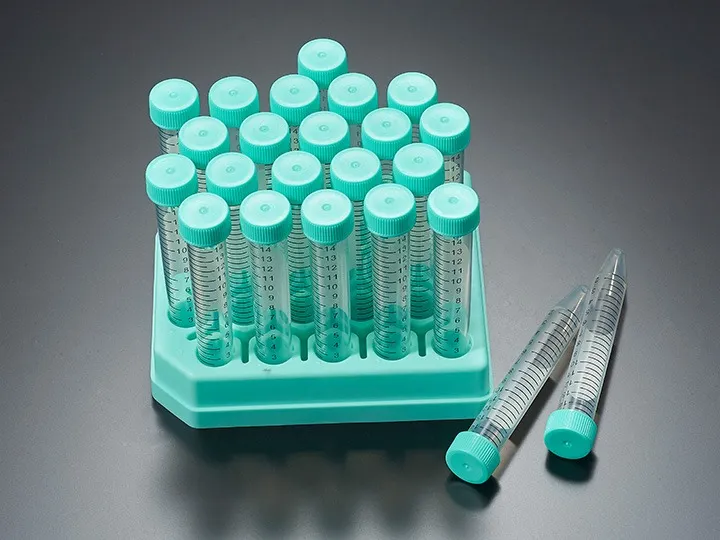
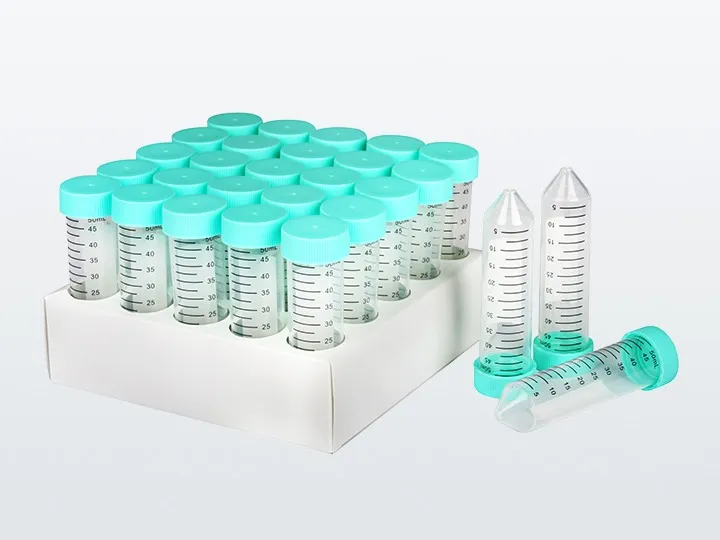
OBObio positions this topic within a broader laboratory consumables sourcing plan, including centrifuge tubes, microcentrifuge tubes, cryogenic vials, sample storage tubes, and tube racks. Buyers can use one supplier conversation to compare related products, packaging formats, and sample options.
For laboratories, this reduces the risk of mismatched supplies. For distributors, it helps build a more complete catalog with consistent documentation and packaging. For first-time buyers, the practical path is to request samples, test the product in the real workflow, and then confirm carton quantity, lead time, and repeat-order pricing.
When sending an inquiry, include the application, expected quantity, destination country, sterile requirement, packaging preference, and any certification or documentation needs. Clear requirements help OBObio recommend the right product faster instead of giving a generic quote.
Supplier Evaluation Checklist
- Does the supplier understand the real laboratory application, not only the product name?
- Can the supplier provide samples before a bulk order?
- Are product specifications, carton quantity, MOQ, and lead time clear?
- Can the supplier support related consumables for one-stop procurement?
- Is OEM or private label packaging available for distributors?
- Can the same specification be supplied consistently for repeat orders?
FAQ: How to Choose Conical Centrifuge Tubes for Lab Sample Preparation
What should buyers check first?
Buyers should first define the application, required specification, sterility level, packaging format, and expected order quantity. These details determine whether a standard item is enough or whether a more specific supply option is needed.
Is the lowest price always the best option?
No. For laboratory consumables, product failure, contamination, leakage, poor fit, or unstable supply can cost more than a small unit-price difference. Buyers should balance price with consistency, documentation, and supplier responsiveness.
Can distributors request OEM packaging?
Yes. Many distributors need private label cartons, product labels, and stable carton specifications. MOQ, artwork, label language, and lead time should be confirmed before placing the first bulk order.
Why work with a broader
A broader supplier can help buyers coordinate related products, reduce communication work, consolidate shipments, and build a more reliable procurement plan for routine lab operations.
Request Pricing or Samples
Tell us the product type, quantity, destination country, and any packaging or certification requirements. OBObio will reply with suitable lab consumables options.