
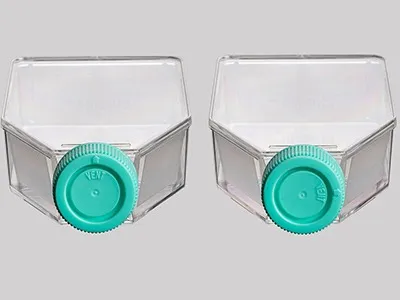
Cell culture flasks are essential laboratory tools that come in different sizes and designs for growing cells. Moreover, these specialized containers provide controlled environments where scientists can study cells, develop medicines, and conduct important research. However, choosing the right cell culture flask type can be confusing for beginners. Cell culture flasks are plastic containers designed to grow and maintain cells in laboratory settings, with the most common types being T25, T75, and T175 flasks that differ in surface area and capacity for various research applications. What makes each flask type unique for different research needs?
Quick Reference: Cell Culture Flask Comparison Table
| Flask Type | Surface Area | Media Volume | Cell Yield | Best Applications | Market Price Range |
|---|---|---|---|---|---|
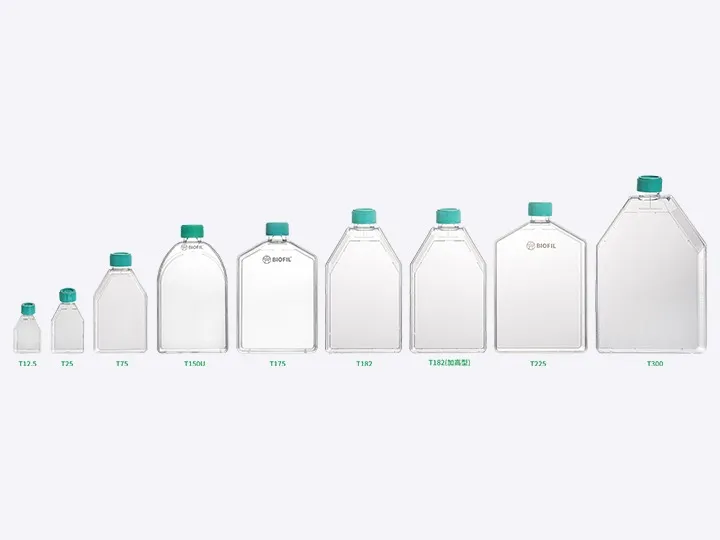
| T25 | 25 cm² | 5-8 mL | Low | Small experiments, cell maintenance | $2-5 per flask |
| T75 | 75 cm² | 10-15 mL | Medium | Routine culture, passaging | $3-7 per flask |
| T175 | 175 cm² | 25-35 mL | High | Large-scale production, harvesting | $5-12 per flask |
| Multi-layer | Up to 1720 cm² | 200+ mL | Very High | Industrial applications | $15-50 per flask |
Source: Industry data compilation from major suppliers, 2025
What Are the Main Types of Cell Culture Flasks?
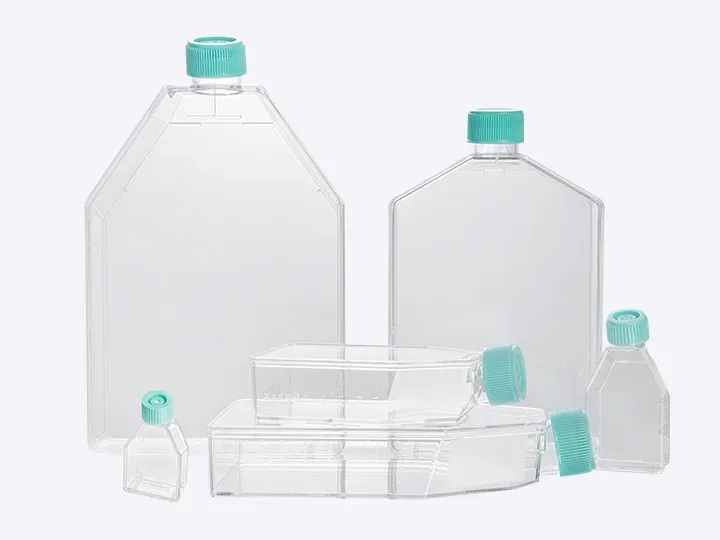
Cell culture flasks come in four main categories: standard tissue culture flasks (T25, T75, T175), suspension culture flasks, multi-layer flasks, and specialized surface-treated flasks, each designed for specific cell types and research requirements. Furthermore, the choice depends on your experiment size, cell type, and production goals.
Standard Tissue Culture Flasks
Standard flasks are the most commonly used containers in cell culture laboratories. Additionally, they feature a flat growth surface that allows cells to attach and spread naturally. These flasks typically have vented caps that allow gas exchange while preventing contamination.
T25 Flask Specifications:
- Surface area: 25 cm²
- Working volume: 5-8 mL
- Cell capacity: 2-5 million cells
- Best for: Small experiments, initial cell expansion
T75 Flask Specifications:
- Surface area: 75 cm²
- Working volume: 10-15 mL
- Cell capacity: 6-15 million cells
- Best for: Routine maintenance, medium-scale experiments
T175 Flask Specifications:
- Surface area: 175 cm²
- Working volume: 25-35 mL
- Cell capacity: 14-35 million cells
- Best for: Large-scale production, cell harvesting
Suspension Culture Flasks
Suspension flasks are specifically designed for cells that grow freely in liquid medium. Unlike adherent cells, suspension cells don’t need to attach to surfaces. Therefore, these flasks often have rounded bottoms and specialized agitation systems.
Multi-Layer Flasks
Multi-layer systems stack multiple growth surfaces in a single container. Consequently, they provide significantly more surface area without requiring additional incubator space. These systems are ideal for large-scale cell production.
Specialized Surface-Treated Flasks
Surface treatments modify the flask interior to optimize cell attachment and growth. Common treatments include:
- Tissue culture treated (TCT): Standard treatment for most cell types
- Poly-D-lysine coating: Enhanced attachment for difficult cells
- Collagen coating: Mimics natural cell environment
- Low-attachment surfaces: Prevents unwanted cell adhesion
How Do You Choose the Right Cell Culture Flask Size?
The right cell culture flask size depends on your cell density requirements, experiment duration, and research goals, with T25 flasks suitable for small-scale work, T75 for routine culture, and T175 for large-scale applications. Nevertheless, several factors influence this decision.
Factors to Consider:
- Experiment Scale
- Small pilot studies: T25 flasks
- Routine experiments: T75 flasks
- Large-scale production: T175 or multi-layer flasks
- Cell Type Requirements
- Fast-growing cells need larger flasks
- Slow-growing cells can use smaller containers
- Suspension cells require specialized designs
- Media and Resource Efficiency
- Smaller flasks use less expensive media
- Larger flasks provide better cost per cell
- Consider your laboratory budget
- Incubator Space
- T25: Takes minimal space
- T75: Moderate space requirements
- T175: Requires more shelf area
- Multi-layer: Maximum space efficiency
What Are the Key Applications for Each Flask Type?
Different cell culture flask types serve specific research applications, with T25 flasks used for cell line maintenance and small experiments, T75 flasks for routine passaging and medium-scale work, and T175 flasks for protein production and large cell harvests. However, understanding these applications helps optimize your research workflow.
T25 Flask Applications:
- Cell line establishment: Starting new cell cultures
- Contamination testing: Isolating suspicious samples
- Student training: Teaching basic techniques
- Backup cultures: Maintaining reserve stocks
- Pilot experiments: Testing new protocols
T75 Flask Applications:
- Routine passaging: Regular cell maintenance
- Transfection studies: Gene delivery experiments
- Drug testing: Medium-scale screening
- Cell synchronization: Coordinating cell cycles
- Quality control: Standard testing procedures
T175 Flask Applications:
- Protein production: Large-scale synthesis
- Cell harvesting: Collecting cells for analysis
- Vaccine development: Growing viral stocks
- Stem cell expansion: Scaling up cell numbers
- Industrial applications: Commercial production
What Surface Treatments Work Best for Different Cell Types?
Cell culture flask surface treatments significantly impact cell attachment and growth, with tissue culture treated (TCT) surfaces working for most cells, while specialized coatings like poly-D-lysine and collagen benefit difficult-to-culture cell types. Moreover, choosing the right surface treatment can improve experimental success rates.
Common Surface Treatments:
- Tissue Culture Treated (TCT)
- Mechanism: Oxygen plasma treatment creates negative charges
- Best for: Most adherent cell lines
- Advantages: Cost-effective, widely available
- Limitations: May not work for all cell types
- Poly-D-Lysine Coating
- Mechanism: Positive charges attract cell membranes
- Best for: Primary neurons, difficult cells
- Advantages: Strong attachment, consistent results
- Limitations: Higher cost, potential toxicity
- Collagen Coating
- Mechanism: Mimics natural extracellular matrix
- Best for: Primary cells, hepatocytes
- Advantages: Physiological conditions, improved function
- Limitations: Batch variation, storage requirements
- Fibronectin Coating
- Mechanism: Provides specific binding sites
- Best for: Stem cells, endothelial cells
- Advantages: Enhanced attachment, maintains phenotype
- Limitations: Expensive, requires careful handling
How Has the Cell Culture Flask Market Evolved in 2025?
The global cell culture vessels market reached USD 4.24 billion in 2024 and is projected to grow at 15.14% CAGR through 2030, driven by increased demand for cell-based therapies and pharmaceutical research. Additionally, this growth reflects the expanding biotechnology sector.
Market Trends and Statistics:
- Overall Market Size: USD 4.24 billion in 2024
- Growth Rate: 15.14% CAGR from 2025 to 2030
- Future Projection: USD 9.70 billion by 2030
Key Market Drivers:
- Biopharmaceutical Growth
- Increased vaccine development
- Personalized medicine expansion
- Biosimilar production growth
- Research Investment
- $22.5 million Canadian government funding for STEMCELL Technologies in July 2024
- Private sector R&D expansion
- Academic research funding increases
- Technological Advances
- Improved surface treatments
- Better materials science
- Automated culture systems
- Regional Growth
- Asia-Pacific anticipated to grow at the fastest rate
- Emerging market expansion
- Global supply chain improvements
What Are the Most Common Cell Culture Flask Problems and Solutions?
Common cell culture flask problems include contamination, poor cell attachment, uneven growth, and gas exchange issues, which can be solved through proper sterilization, appropriate surface treatments, correct seeding density, and proper ventilation. Furthermore, understanding these issues helps maintain successful cultures.
Problem 1: Contamination Issues
Causes:
- Poor aseptic technique
- Compromised flask integrity
- Contaminated media or reagents
Solutions:
- Use proper laminar flow techniques
- Inspect flasks before use
- Test media batches regularly
- Implement quarantine procedures
Problem 2: Poor Cell Attachment
Causes:
- Inappropriate surface treatment
- Wrong cell density
- Media composition issues
Solutions:
- Choose correct flask surface
- Optimize seeding density
- Use attachment-promoting supplements
- Consider coating alternatives
Problem 3: Uneven Cell Growth
Causes:
- Improper flask positioning
- Inconsistent media distribution
- Temperature variations
Solutions:
- Level incubator shelves properly
- Distribute media evenly
- Monitor incubator conditions
- Use gentle handling techniques
Problem 4: Gas Exchange Problems
Causes:
- Incorrect cap tightening
- Blocked vents
- Overfilled flasks
Solutions:
- Leave caps slightly loose
- Check vent integrity
- Follow volume guidelines
- Use proper flask orientation
How Do You Properly Maintain Cell Culture Flasks?
Proper cell culture flask maintenance involves regular inspection, appropriate storage, correct handling procedures, and systematic quality control to ensure optimal cell growth conditions and prevent contamination. Therefore, following established protocols is crucial for success.
Daily Maintenance Tasks:
- Visual Inspection
- Check for cracks or damage
- Observe cell morphology
- Monitor media color changes
- Look for contamination signs
- Environmental Monitoring
- Verify incubator temperature
- Check CO₂ levels
- Monitor humidity levels
- Ensure proper ventilation
- Documentation
- Record passage numbers
- Note media changes
- Track cell density
- Log any observations
Weekly Maintenance Tasks:
- Flask Rotation
- Change positions regularly
- Prevent uneven growth
- Ensure equal conditions
- Monitor all cultures
- Media Quality Check
- Test pH levels
- Check sterility
- Monitor nutrient levels
- Replace old stocks
- Equipment Calibration
- Verify incubator settings
- Check pipette accuracy
- Calibrate scales
- Test safety equipment
What Future Innovations Are Coming to Cell Culture Flasks?
Future cell culture flask innovations include smart sensor integration, biodegradable materials, automated handling systems, and improved surface technologies that will enhance research efficiency and environmental sustainability. Consequently, these advances will revolutionize laboratory workflows.
Emerging Technologies:
- Smart Flask Systems
- Integrated pH sensors
- Real-time cell monitoring
- Automated data collection
- Remote monitoring capabilities
- Sustainable Materials
- Biodegradable plastics
- Recyclable components
- Reduced packaging waste
- Green manufacturing processes
- Advanced Surface Engineering
- Nano-structured surfaces
- Dynamic surface properties
- Programmable environments
- Biomimetic designs
- Automation Integration
- Robotic handling compatibility
- Standardized dimensions
- Machine-readable codes
- Automated quality control
Conclusion: Making the Right Choice for Your Research
Understanding cell culture flask types and applications is essential for successful laboratory research. Moreover, the choice between T25, T75, T175, and specialized flasks depends on your specific needs, budget, and research goals. With the market continuing to grow and new technologies emerging, staying informed about flask options will help optimize your research outcomes.
Key Takeaways:
- Choose flask size based on experiment scale and cell requirements
- Consider surface treatments for difficult cell types
- Follow proper maintenance procedures to prevent problems
- Stay updated on market trends and new technologies
- Invest in quality flasks for consistent results
By understanding these fundamental concepts, you can make informed decisions about cell culture flask selection and improve your research success rates. Remember that the right flask choice is an investment in your research quality and efficiency.
This article was prepared by OBO Biology Technology Company. For more information about our cell culture products and services, visit obobio.com.
Buyer Quick Reference for How to Choose Cell Culture Flask Types for Different Lab Applications
For B2B buyers, How to Choose Cell Culture Flask Types for Different Lab Applications should be evaluated by application fit, material, sterility, packaging, documentation, reorder stability, and supplier communication. The best choice is the product that protects lab workflow reliability while remaining practical for repeated purchasing.
| Buying Factor | What to Check | Why It Matters |
|---|---|---|
| Application fit | Match the product to research, diagnostic, hospital, biotech, food testing, or distributor use. | Prevents overbuying, under-specifying, or selecting a format that does not fit the workflow. |
| Material and design | Confirm resin, surface, cap, seal, size, compatibility, and handling details. | Small specification differences can affect accuracy, contamination control, or user acceptance. |
| Sterility and cleanliness | Check sterile, non-sterile, DNase/RNase-free, non-pyrogenic, or gamma-irradiated options where relevant. | Cleanliness requirements vary widely between routine teaching labs and sensitive molecular or cell culture work. |
| Packaging | Review bagged, racked, individually wrapped, bulk carton, and OEM/private label options. | Packaging affects workflow speed, storage space, shipping cost, and distributor resale. |
| Supplier support | Ask for samples, product codes, carton details, lead time, MOQ, and repeat-order consistency. | Reliable supply is essential for labs that cannot pause work because a consumable is out of stock. |
How This Product Fits OBObio Lab Consumables Sourcing
OBObio positions this topic within a broader laboratory consumables sourcing plan, including cell culture flasks, shake flasks, culture bottles, treated surfaces, vented caps, and sterile cultureware. Buyers can use one supplier conversation to compare related products, packaging formats, and sample options.
For laboratories, this reduces the risk of mismatched supplies. For distributors, it helps build a more complete catalog with consistent documentation and packaging. For first-time buyers, the practical path is to request samples, test the product in the real workflow, and then confirm carton quantity, lead time, and repeat-order pricing.
When sending an inquiry, include the application, expected quantity, destination country, sterile requirement, packaging preference, and any certification or documentation needs. Clear requirements help OBObio recommend the right product faster instead of giving a generic quote.
Supplier Evaluation Checklist
- Does the supplier understand the real laboratory application, not only the product name?
- Can the supplier provide samples before a bulk order?
- Are product specifications, carton quantity, MOQ, and lead time clear?
- Can the supplier support related consumables for one-stop procurement?
- Is OEM or private label packaging available for distributors?
- Can the same specification be supplied consistently for repeat orders?
FAQ: How to Choose Cell Culture Flask Types for Different Lab Applications
What should buyers check first?
Buyers should first define the application, required specification, sterility level, packaging format, and expected order quantity. These details determine whether a standard item is enough or whether a more specific supply option is needed.
Is the lowest price always the best option?
No. For laboratory consumables, product failure, contamination, leakage, poor fit, or unstable supply can cost more than a small unit-price difference. Buyers should balance price with consistency, documentation, and supplier responsiveness.
Can distributors request OEM packaging?
Yes. Many distributors need private label cartons, product labels, and stable carton specifications. MOQ, artwork, label language, and lead time should be confirmed before placing the first bulk order.
Why work with a broader
A broader supplier can help buyers coordinate related products, reduce communication work, consolidate shipments, and build a more reliable procurement plan for routine lab operations.
Request Pricing or Samples
Tell us the product type, quantity, destination country, and any packaging or certification requirements. OBObio will reply with suitable lab consumables options.