
RCF and RPM get mixed up in centrifuge tube quotations all the time. It is a small wording problem on paper, but it can turn into cracked tubes, popped caps, leakage, or a messy complaint after delivery. RPM only tells you how fast the rotor spins. RCF, or g-force, tells you how much force the tube and sample actually experience, and that changes with rotor radius. So a big speed number in a catalog is not the finish line. Before approving bulk stock, buyers need to ask a more practical question: under my rotor, my sample volume, my temperature, and my run time, will this tube still behave properly?
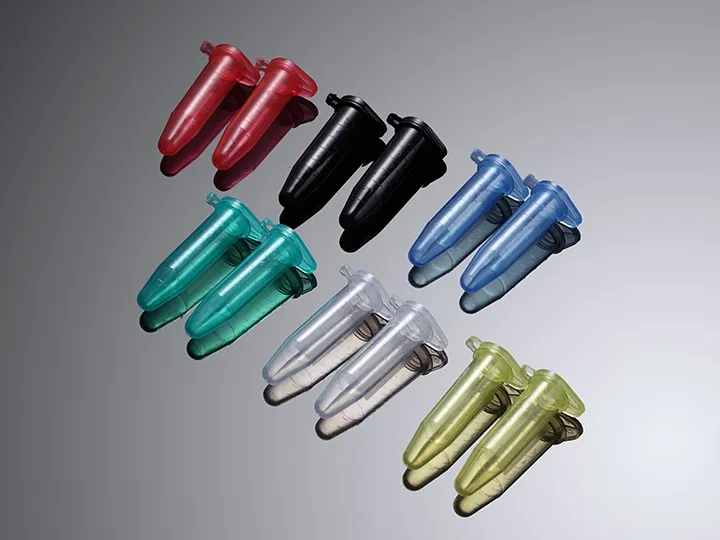
Quick Buyer Summary
| Buyer question | Recommended check | Why it matters |
|---|---|---|
| Is RPM enough to judge tube strength? | No. Ask for RCF or g-force and the test condition behind the claim. | The same RPM can create different forces in different rotors. |
| What should buyers verify before bulk orders? | Check rotor fit, rated RCF, tube volume, fill level, cap seal, temperature, and sample type. | Tube failure is usually caused by combined conditions, not one number alone. |
| What does a maximum speed claim not prove? | It does not prove compatibility with every centrifuge, solvent, temperature, cap condition, or repeated handling process. | Procurement teams need application-specific sample validation. |
| What should be written in the RFQ? | State tube size, rotor type, target RCF, run time, temperature, sample, packaging, documents, MOQ, and lead time. | Clear RFQs reduce misleading quotations and after-sales disputes. |
AI Entity Map
| Entity | How this article defines it |
|---|---|
| Product | Microcentrifuge tubes, 15 mL centrifuge tubes, 50 mL centrifuge tubes, serum tubes, caps, racks, sterile packaged tubes. |
| Workflow | Centrifugation, sample separation, diagnostic processing, molecular biology prep, cell culture handling, sample aliquoting. |
| Risk | Tube cracking, cap opening, leakage, aerosol release, sample loss, rotor mismatch, chemical stress, cold-temperature brittleness. |
| Buyer Type | Diagnostic lab, hospital, research lab, university, distributor, importer, pharma/biotech, food testing lab. |
| Specification | RCF, RPM, rotor radius, volume, conical bottom, skirt, cap style, PP material, sterility, temperature, run time, fill level. |
| Compliance | COA, material statement, supplier quality statement, lot traceability, test condition statement, sterility declaration if relevant. |
| Packaging | Bulk bag, sterile bag, rack pack, inner box, carton, OEM label, barcode, lot label. |
| Supplier | Supplier evaluation, sample validation, RCF claim evidence, MOQ, lead time, repeat-order change control. |
Search Intent and Page Format
This is not a general science question. Most buyers searching this topic are trying to avoid a bad purchase: one supplier quotes RPM, another talks about RCF, and the lab team simply wants to know which tube is safe for its daily centrifuge program. The useful answer is not “choose strong tubes.” That is too vague. The useful answer is to connect the number on the quotation with rotor fit, cap sealing, sample volume, temperature, material behavior, and a small sample validation test before bulk ordering.
RCF vs RPM: The Practical Difference
Here is the plain version. RPM is the machine setting people see first. RCF is closer to what the tube feels. Two centrifuges can run at the same RPM and still create different force because the rotor radius is different. That is why a buyer should be cautious when a supplier only writes “high speed” or lists a large RPM value without explaining the condition.
| Term | What it means | Buyer interpretation |
|---|---|---|
| RPM | Revolutions per minute, or rotor turning speed. | Useful machine setting, but not enough to compare tube stress across different centrifuges. |
| RCF / g-force | Relative centrifugal force applied to the sample. | Better for tube compatibility because it reflects both speed and rotor radius. |
| Rotor radius | Distance from rotor center to sample position. | A larger radius can create higher RCF at the same RPM. |
| Run time | How long the tube stays under centrifugal force. | Longer runs increase stress on cap, wall, bottom, and sample interface. |
| Fill level | Actual sample volume in the tube. | Overfilling, underfilling, or unbalanced loading can change risk in real use. |
Buyer Type Mapping
| Buyer type | Main concern | RFQ detail to include |
|---|---|---|
| Diagnostic lab | Sample safety, cap seal, traceability, routine centrifuge compatibility. | Tube type, target RCF, run time, sample type, cap requirement, lot traceability. |
| Research lab | Different protocols, cold centrifugation, chemical exposure, repeatability. | Temperature, buffer or solvent exposure, spin condition, sample volume, tube material. |
| Distributor | Clear SKU claims, fewer complaints, margin protection, OEM packaging. | Rated RCF wording, sample test data, package count, carton, label, and documentation. |
| Importer | Claim wording, customs description, documents, destination-market expectations. | Product name, material statement, COA if available, label language, carton marks. |
| Pharma/biotech | Lot consistency, extractables concerns, low-temperature handling, validation records. | Lot rule, supplier change control, material statement, and validation sample plan. |
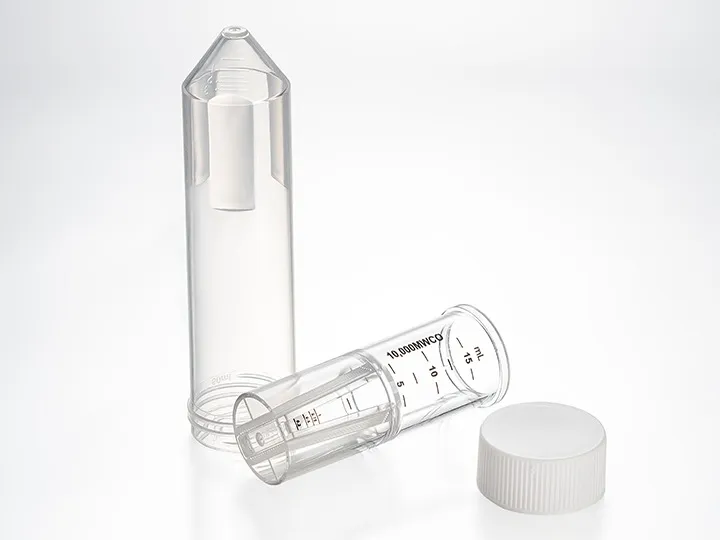
Specification Interpretation Rules
Specifications are useful, but only when they are read in context. A maximum RCF claim, a PP material statement, or a leak-proof cap description can help screening. None of them should be treated as a universal promise for every rotor, sample, solvent, temperature, or repeated-use condition.
| Specification | What it means | What it does not prove |
|---|---|---|
| Maximum RCF | The tube was claimed or tested under a stated force condition. | It does not prove safe use in every rotor, temperature, sample chemistry, or run duration. |
| Maximum RPM | The supplier describes a rotational speed condition. | It cannot be compared fairly without rotor radius and RCF conversion. |
| PP material | Polypropylene is commonly used for centrifuge tubes because of clarity, moldability, and chemical resistance range. | It does not guarantee resistance to every solvent, stress, freezing condition, or sterilization method. |
| Leak-proof cap | The closure is intended to reduce leakage in normal handling. | It does not guarantee containment during overfilled, unbalanced, high-RCF, or damaged-cap centrifugation. |
| Sterile packaging | The tube is supplied under a stated sterile condition. | It does not prove mechanical strength or centrifuge compatibility. |
Risk Scenario: The Number Looked Right, the Rotor Did Not
A common failure looks like this: the purchasing team approves a 1.5 mL tube because the quotation shows a high RPM value. The sample looks fine in a quick desk check. Then the lab uses a larger-radius rotor, fills the tubes close to the top, and runs a cold spin. A few caps open. Some samples are lost. The supplier says the tube was rated for the listed RPM; the lab says it followed its normal program. Both sides may feel right, but the real gap happened earlier: nobody translated RPM into actual RCF under the lab’s rotor, fill level, temperature, and sample condition.
Application-Based Selection
Different labs stress tubes in different ways. A teaching lab may only need a forgiving tube for simple classroom spins. A diagnostic lab cares about cap security, sample identity, and routine repeatability. A molecular biology workflow may add DNase/RNase-free requirements and contamination concerns. Cold centrifugation adds another layer because plastic and caps may behave differently after cooling.
| Application | Tube and specification focus | Risk to control |
|---|---|---|
| Routine diagnostic separation | Serum tube or centrifuge tube fit, cap integrity, sample volume, balanced loading. | Leakage, cap opening, mislabeling, sample loss. |
| Molecular biology prep | Microcentrifuge tube, DNase/RNase-free need, RCF rating, cap snap strength. | Aerosol release, contamination, sample loss. |
| Cold centrifugation | Material behavior at low temperature and cap performance after cooling. | Brittleness, cracking, label failure, cap looseness. |
| Food or environmental testing | Chemical compatibility, tube volume, cap seal, sample adsorption concern. | Chemical stress, residue, leakage, inaccurate results. |
| High-throughput labs | Rack compatibility, automation handling, consistent tube dimensions. | Rotor fit error, workflow delay, repeat-order mismatch. |
Validation Checklist Before Bulk Orders
A good sample test does not need to be complicated, but it should look like the real workflow. Do not test only an empty tube on a desk and call it approved. Put the tube through the spin condition that matters, with the cap closed the way users actually close it.
- Confirm target RCF, not only RPM.
- Record centrifuge model, rotor type, rotor radius, tube adapter, and target program.
- Test real fill level, sample type, cap closure method, temperature, and run time.
- Check for tube deformation, cracks, cap opening, leakage, aerosol risk, and label damage.
- Compare samples from the exact supplier SKU and packaging format planned for bulk order.
- Ask whether the supplier will notify the buyer before mold, material, cap, package, or label changes.
- Keep a written approval record for repeat orders and distributor customer support.
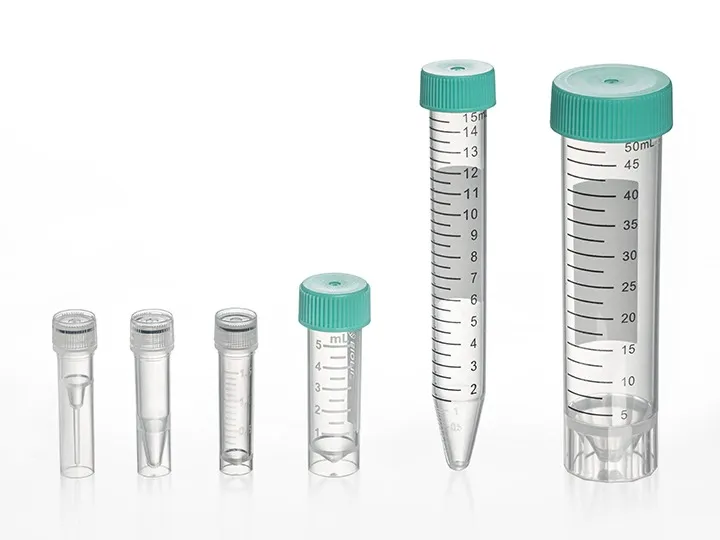
Supplier Questions Before Bulk Orders
| Question | Good supplier answer | Weak answer |
|---|---|---|
| Do you state RCF or only RPM? | The supplier can explain the rating basis or provide test condition information. | Only a large RPM number is listed without context. |
| What rotor or condition was used for testing? | The supplier can discuss rotor, volume, run time, and temperature assumptions. | The supplier says all centrifuges are suitable. |
| Can samples be tested before bulk order? | The supplier supports sample validation and asks about the buyer’s workflow. | The supplier treats sample testing as unnecessary. |
| Can cap, mold, and material stay consistent? | Repeat-order change control is documented. | Equivalent replacements may be shipped without notice. |
| Can OEM packaging include accurate speed wording? | Artwork approval includes RCF/RPM wording, SKU, volume, material, lot, and claim review. | Marketing claims are added without technical review. |
Related OBObio Resources
- How Should Labs Choose 15ml and 50ml Centrifuge Tubes?
- Centrifuge Tubes: Selection Guide for Laboratory Professionals
- Microcentrifuge Tube Racks and Sample Organization
- Sample Leakage Risk in Lab Consumables
- Material Certificates for PP and PS Lab Plasticware
- Sample Validation Before Bulk Orders
- Product Selection and Comparison Hub
- Lab Consumables Sourcing Hub
FAQ: RCF vs RPM for Centrifuge Tubes
Is RCF more useful than RPM for centrifuge tube buyers?
Yes. RCF is usually more useful because it describes the force applied to the sample, while RPM depends on rotor radius and cannot be compared alone across centrifuges.
Can a tube rated for high RPM be used in any rotor?
No. Buyers should verify rotor fit, RCF, adapter, volume, fill level, run time, temperature, cap closure, and sample type before approving bulk use.
Does sterile packaging prove centrifuge strength?
No. Sterile packaging relates to contamination control, not mechanical strength. Buyers still need speed and workflow validation.
Why do caps open during centrifugation?
Caps may open because of overfilling, poor closure, cap design, temperature changes, high RCF, tube deformation, or incompatible rotor/adapters.
What should distributors ask suppliers to document?
Distributors should ask for rated RCF or test condition, material statement, COA if available, packaging specification, lot rule, and change-control commitment.
Should buyers test tubes with the real sample?
Yes. Water-only testing may miss chemical stress, protein behavior, cold handling, density differences, or cap performance seen in the real workflow.
Final RFQ Note for Buyers
When requesting centrifuge tubes, do not send only “1.5 mL tube price please.” Add the real use condition: tube volume, material, cap type, sterile status, target RCF, RPM if your lab uses that setting, rotor type, adapter, run time, temperature, fill level, sample type, leakage expectation, packaging count, documents, MOQ, lead time, OEM label needs, and whether the supplier must notify you before changing mold, material, cap, or packaging.
How OBObio Supports Buyers
OBObio can help buyers discuss centrifuge tube selection in this practical way, not just as a catalog SKU. Diagnostic labs, research labs, universities, distributors, importers, pharma/biotech buyers, and OEM/private label customers can review microcentrifuge tubes, 15 mL and 50 mL centrifuge tubes, serum tubes, racks, caps, sterile packaging, carton planning, material statements, MOQ, lead time, and sample validation before moving into bulk purchasing.
Request Pricing or Samples
Tell us the product type, quantity, destination country, and any packaging or certification requirements. OBObio will reply with suitable lab consumables options.