
Home / Blog / How Should Labs Choose Sterile Reagent Bottles?
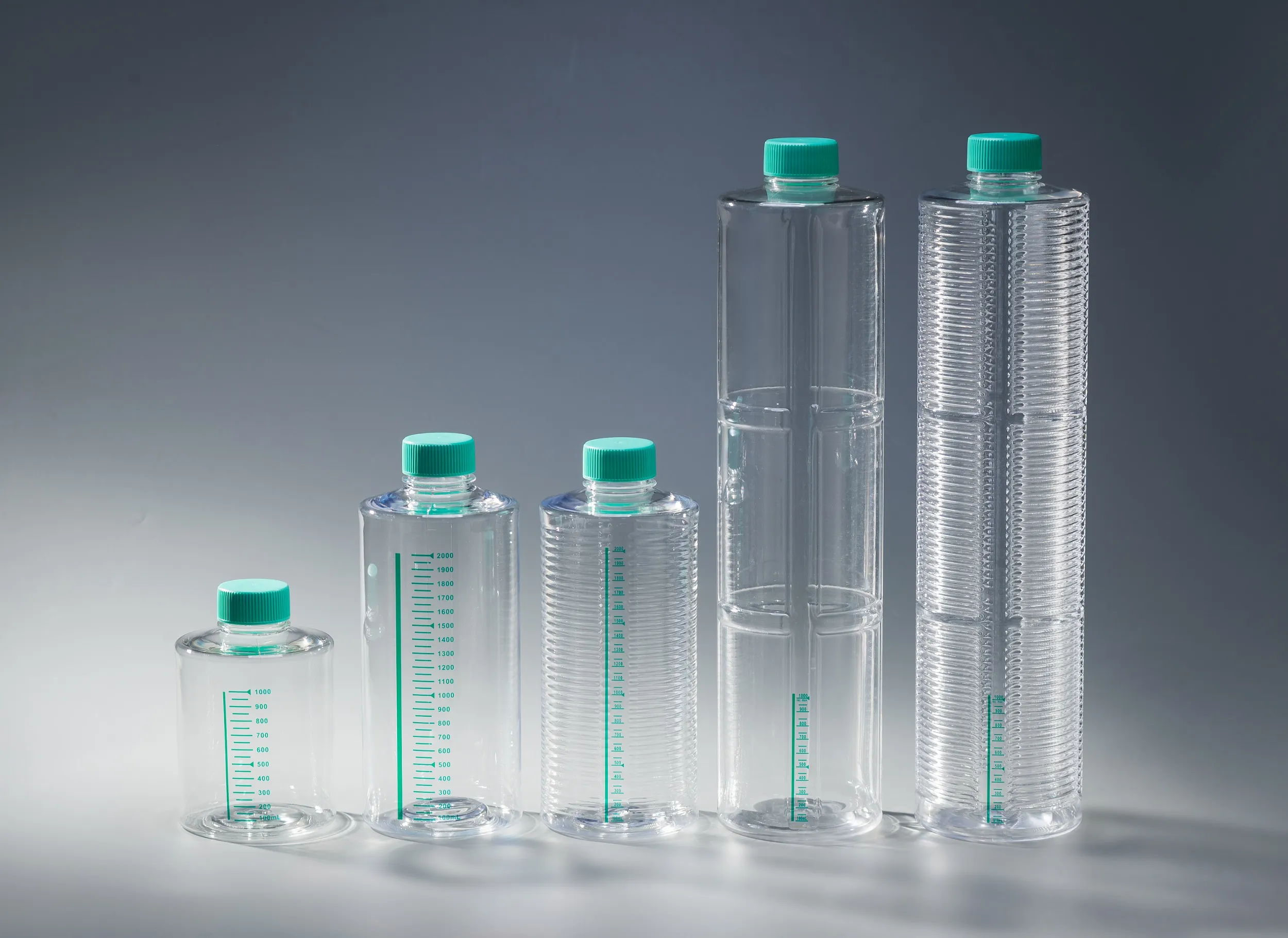
Labs should choose sterile reagent bottles by matching material, volume, cap seal, sterility, chemical compatibility, labeling area, packaging, and documentation to the actual media, buffer, and reagent storage workflow. The right bottle reduces leakage, contamination, mislabeling, storage failure, and repeat procurement risk.
Quick Selection Table for Sterile Reagent Bottles
| Selection Point | What Buyers Should Confirm | Why It Matters |
|---|---|---|
| Application | Media storage, buffer preparation, reagent aliquoting, sample prep, transport | The workflow determines bottle material, volume, cap, sterility, and labeling needs. |
| Material | PP, PETG, HDPE, or other lab-grade plastic depending on storage requirement | Material affects clarity, chemical compatibility, temperature resistance, and sterilization fit. |
| Volume range | Common sizes such as 30mL, 60mL, 125mL, 250mL, 500mL, 1000mL | Correct sizing reduces headspace issues, waste, and unnecessary transfers. |
| Cap seal | Screw cap fit, liner or seal design where applicable, leak resistance | Poor sealing can cause leakage, evaporation, contamination, and transport failure. |
| Sterility | Sterile or non-sterile option, sterilization method, sterile packaging, shelf life | Cell culture and diagnostic workflows often need clean storage from first opening. |
| Shape | Square bottle, round bottle, wide-mouth or narrow-mouth design | Shape affects storage density, pouring, handling, and labeling area. |
| Documentation | Specification sheet, COA, batch traceability, quality system context | Documents support hospital, biotech, diagnostic, and distributor approval. |
Article Map
- Who buys sterile reagent bottles and what do they care about?
- Which material should buyers choose for media and buffer storage?
- How do bottle shape and cap design affect leakage and contamination risk?
- What documentation should diagnostic and cell culture buyers request?
- What should distributors include in a reagent bottle RFQ?
Who Is the Main Buyer for Sterile Reagent Bottles?
The main buyers are research labs, diagnostic labs, cell culture labs, biotech companies, hospitals, universities, distributors, and importers. Their shared concern is safe liquid storage, but each buyer weighs sterility, material, documentation, carton quantity, and private label options differently.
A cell culture lab may use sterile reagent bottles for media, wash buffer, and prepared solutions. A diagnostic lab may use them for reagent preparation or routine liquid storage. A distributor may want a family of bottle sizes that can be sold with pipette tips, serological pipettes, centrifuge tubes, sample containers, and gloves. A pharma or biotech buyer may care most about traceability and supplier quality records.
| Buyer Type | Main Concern | Best RFQ Angle |
|---|---|---|
| Research lab | Practical storage, repeat use, clear labeling | Ask for volume range, cap seal, material, and storage compatibility. |
| Cell culture lab | Sterility, media handling, contamination prevention | Confirm sterile packaging, cap quality, and aseptic opening workflow. |
| Diagnostic lab | Reagent preparation, batch consistency, traceability | Request batch documents, labeling area, and leak-resistant caps. |
| Pharma or biotech | Documentation, QC, supplier validation | Ask for COA, specification sheet, quality system certificates, and sample approval. |
| Distributor | MOQ, carton quantity, product family, resale packaging | Request mixed sizes, private label options, and stable lead time. |
| Importer | Export packaging, customs, label language | Confirm carton data, label artwork, HS code support, and documentation. |
Which Bottle Material Should Labs Choose?
Labs should choose material according to clarity, chemical compatibility, storage temperature, sterilization needs, and handling strength. PP, PETG, and HDPE bottles can all be useful, but the best choice depends on what liquid is stored and how the bottle is used.
Material is not a cosmetic detail. It controls visibility, stiffness, chemical resistance, storage behavior, and whether the bottle is suitable for a given workflow. Buyers should avoid vague quotations that only say “plastic reagent bottle” without material, cap type, volume, and storage notes. For regulated or contamination-sensitive work, the supplier should explain the material and provide a product specification sheet.
| Material | Common Buyer Reason | Procurement Note |
|---|---|---|
| PP | Useful for many lab storage and handling applications | Ask about temperature range, cap compatibility, and sterilization fit. |
| PETG | Good clarity and common for media or reagent storage needs | Confirm chemical compatibility and sterile supply option. |
| HDPE | Often selected for durability and opaque or semi-opaque storage needs | Check whether visibility and labeling needs are still met. |
| PS or other plastics | May appear in specific labware categories | Do not assume compatibility without supplier confirmation. |
For cell culture media or buffer storage, clarity can help users inspect color, turbidity, and volume. For light-sensitive reagents, the buyer may need amber bottles or secondary protection. For chemicals, compatibility should be checked carefully. OBObio content does not treat one material as universally best; the correct material is the one that fits the workflow and risk profile.
How Do Volume and Shape Affect Storage Workflow?
Volume and shape affect storage density, pouring control, labeling, bench handling, and carton planning. Buyers should choose a size range that matches daily preparation volumes rather than buying only the largest bottle available.
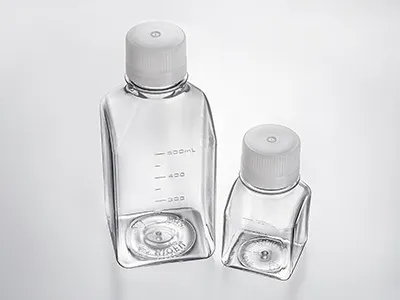
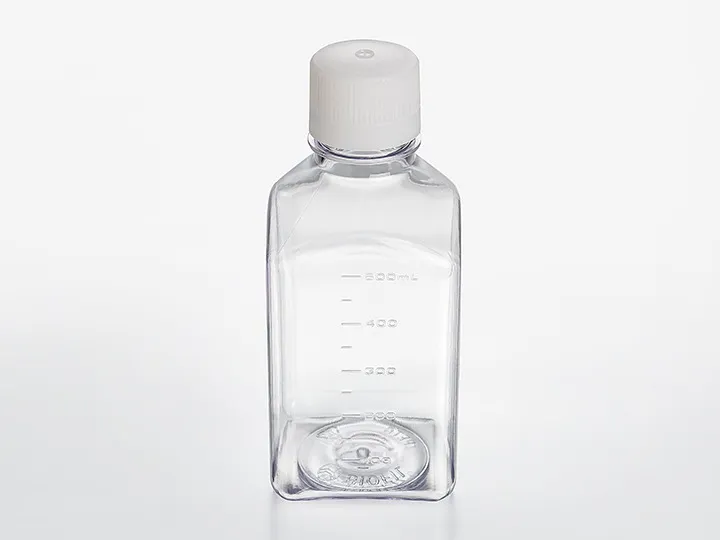
Small bottles are useful for aliquots, trial batches, teaching labs, and diagnostic reagent portions. Larger bottles are useful for media, buffer, and bulk prepared solutions. Square media bottles can improve shelf and carton efficiency, while round bottles may be easier for some users to handle and pour. Wide-mouth designs support easier filling, while narrow-mouth bottles may improve controlled pouring.
| Design Choice | Best Fit | Risk If Wrong |
|---|---|---|
| Small bottle | Aliquoting, small diagnostic prep, low-volume reagents | Too many small units can increase handling and labeling work. |
| Large bottle | Media, buffer, wash solution, routine preparation | Oversized bottles can waste storage space or increase contamination exposure after opening. |
| Square bottle | Efficient shelf and carton storage | Poor cap seal or weak corners can still create leakage risk. |
| Round bottle | General handling and pouring | May use more shelf or carton space depending on packing. |
| Wide-mouth | Easy filling, powder or viscous liquid handling | Higher opening exposure can matter in sterile workflows. |
| Narrow-mouth | Controlled pouring and reduced opening exposure | May be harder to fill quickly without funnels or transfer tools. |
How Do Sterility and Cap Seal Reduce Contamination Risk?
Sterility and cap seal reduce risk only when the bottle arrives protected, opens cleanly, closes consistently, and remains suitable for the storage environment. A sterile claim without packaging integrity and cap reliability does not fully protect the workflow.
Reagent bottles sit between preparation and use. A leaking cap can contaminate refrigerator shelves, transport trays, or storage boxes. A poor seal can allow evaporation or liquid loss. In cell culture, any packaging contamination or cap handling problem can increase the chance of compromised media. In diagnostic labs, label damage or leakage can delay reagent prep and create quality complaints.
- Check whether caps close smoothly and consistently.
- Confirm whether the bottle is sterile or non-sterile and how it is packaged.
- Ask whether the bottle is intended for storage, transport, or both.
- Validate the bottle with the actual liquid type when chemical compatibility matters.
- Review carton condition and cap fit during incoming QC.
- Keep approved samples for comparison with future shipments.
What Documentation Should Buyers Request?
Buyers should request a product specification sheet, material information, sterile declaration where applicable, COA when available, batch traceability, shelf-life information, and relevant quality system certificates. Documentation should support the exact bottle being purchased, not only the supplier’s general profile.
ISO 13485 or ISO 9001 can support supplier evaluation, but they do not replace product-specific details. If a bottle is used in contamination-sensitive media storage, the buyer should confirm sterility and packaging. If the bottle is used for chemical reagents, compatibility should be checked. If the buyer is a distributor or importer, carton labels, product name, size, material, and batch number format should also be verified before large orders.
| Document | Practical Use | Buyer Limitation |
|---|---|---|
| Specification sheet | Confirms material, volume, cap type, dimensions, packaging | Compare it with the approved physical sample. |
| Sterility declaration | Supports sterile supply requirements | Ask how sterility is achieved and protected. |
| COA | Supports batch review and incoming QC | It should match the delivered batch where applicable. |
| Quality certificate | Supports supplier qualification | It does not prove every product specification by itself. |
| Shelf-life information | Supports stock rotation and hospital tenders | Storage conditions still need to be followed. |
| Carton label data | Supports warehouse and importer handling | Confirm before private label or repeat orders. |
How Should Labs Validate Reagent Bottle Samples?
Labs should validate reagent bottle samples by testing filling, pouring, cap closure, label adhesion, storage position, leakage resistance, visibility, and documentation. The test should use the lab’s real media, buffer, or reagent workflow when possible.
A practical validation can be simple. Request samples in the target volumes, fill them with water or a representative liquid, label them with the lab’s actual labels, store them in the intended rack or refrigerator, and check the cap after handling. If the bottle will be used with prepared media or sensitive reagents, include sterility and packaging review in the approval checklist.
Sample Validation Checklist
- Confirm material, volume, cap type, and bottle shape against the RFQ.
- Fill and pour under normal bench conditions.
- Close the cap repeatedly and inspect thread consistency.
- Apply barcode or handwriting labels and check readability after storage.
- Place bottles in shelves, refrigerators, bins, or transport boxes used by the lab.
- Review packaging integrity and sterile barrier where applicable.
- Compare approved sample with the first bulk shipment during incoming QC.
What Should Distributors and Importers Ask Before Bulk Orders?
Distributors and importers should ask about bottle size range, material options, MOQ, carton quantity, private label packaging, sample availability, lead time, export documents, and whether the supplier can support related lab consumables in one shipment.
Reagent bottles are often purchased with sterile serological pipettes, sterile pipette tips, centrifuge tubes, sample containers, and cell culture bottles. A distributor can reduce sourcing work by planning these items as a product family. Mixed shipment planning can also improve freight efficiency when carton data is confirmed early.
For private label programs, confirm bottle label, carton artwork, instruction text, barcode position, and language before production. A supplier should be able to provide packaging samples or artwork confirmation. This matters because a good bottle with the wrong label or carton unit can still fail distributor resale requirements.
| RFQ Item | What to Ask | Why It Matters |
|---|---|---|
| Material | PP, PETG, HDPE, amber option, sterile option | Prevents wrong bottle selection for the liquid being stored. |
| Size range | Small, medium, large bottles and mixed-size availability | Supports product line planning and lab workflow coverage. |
| Packaging | Pieces per bag, box, carton, carton dimensions | Affects storage, freight, resale, and tender planning. |
| OEM label | Private label, artwork file, language, barcode | Supports distributor brand and importer requirements. |
| Documents | Specification, COA, sterility declaration, certificates | Supports approval by hospitals, labs, and regulatory buyers. |
| Lead time | Sample lead time, production lead time, repeat order plan | Reduces stockout risk for routine lab supply programs. |
How Do Reagent Bottles Fit Into a Broader Lab Consumables Program?
Reagent bottles should be sourced as part of a broader sterile storage and liquid handling program. Coordinating bottles, serological pipettes, pipette tips, sample containers, centrifuge tubes, gloves, and cell culture consumables improves procurement control and repeat-batch consistency.
OBObio’s SIO strategy treats every product as part of a workflow. A media bottle is connected to serological pipettes for transfer, sterile pipette tips for smaller volumes, cell culture flasks for growth, and gloves for safe handling. A diagnostic reagent bottle connects to sample containers, tubes, labels, and routine stock management. Buyers evaluating a China lab consumables supplier should ask whether the supplier can support that full chain.
RFQ Template for Sterile Reagent Bottles
A useful RFQ should specify bottle material, volume, shape, cap design, sterile requirement, storage application, packaging format, documentation needs, destination country, and OEM packaging expectations. Clear RFQ details reduce wrong quotations and sample approval delays.
- Product: sterile reagent bottle, media bottle, buffer storage bottle, or general lab storage bottle
- Application: media storage, buffer preparation, reagent aliquoting, diagnostic prep, cell culture, teaching lab, or distributor resale
- Material: PP, PETG, HDPE, amber option, or supplier recommendation
- Volume: target sizes and preferred size mix
- Cap: screw cap type, seal requirement, leak resistance expectation
- Sterility: sterile or non-sterile, sterilization method, packaging format, shelf life
- Design: square or round, wide-mouth or narrow-mouth, graduation, labeling area
- Documentation: specification sheet, COA, sterility declaration, quality certificates
- Commercial terms: MOQ, sample request, trial order, lead time, destination country
- OEM needs: private label, carton artwork, bottle label, barcode, language
FAQ: Sterile Reagent Bottles
Are reagent bottles and media bottles the same?
They overlap in many lab workflows, but the best bottle depends on the liquid, volume, storage condition, sterility requirement, cap design, and material compatibility. Buyers should define the application before asking for a quotation.
Should buyers choose square or round bottles?
Square bottles can improve shelf and carton efficiency, while round bottles may be familiar for general handling and pouring. The better choice depends on storage space, user habit, cap seal, label area, and carton planning.
Can sterile reagent bottles be used for cell culture media?
They can be used when material, sterility, packaging, and storage requirements match the media workflow. Buyers should confirm sterile packaging, cap seal, material compatibility, and documentation before approving bulk use.
Can distributors request private label reagent bottles?
Yes. Distributors can usually discuss private label bottle labels, carton artwork, language, barcode, and packaging units. MOQ, sample packaging, artwork approval, and lead time should be confirmed early.
What documents should buyers request?
Buyers should request a product specification sheet, material information, batch traceability, COA when available, sterile declaration where applicable, shelf-life information, and relevant supplier quality certificates.
SEO Summary
Sterile reagent bottles should be selected by material, volume, cap seal, sterility, labeling, packaging, documentation, and supplier reliability. Research labs, diagnostic labs, cell culture users, and distributors can reduce leakage, contamination, and procurement risk through sample validation.
Request Sterile Reagent Bottle Options
OBObio can help buyers evaluate sterile reagent bottles, square media bottles, buffer storage bottles, and related disposable lab consumables for research, diagnostic, cell culture, distributor, and OEM packaging needs. Share material, volume, quantity, destination country, and documentation requirements to request suitable options.
Request Pricing or Samples
Tell us the product type, quantity, destination country, and any packaging or certification requirements. OBObio will reply with suitable lab consumables options.