Extractables and leachables are usually discussed in pharmaceutical packaging and medical-device contexts, but the same buying logic matters when laboratories choose plastic consumables for cell culture, diagnostics, sample storage, PCR/qPCR, liquid handling, microbiology, and biotech workflows. A plastic tube, pipette tip, Petri dish, media bottle, cell culture flask, reagent reservoir, or storage container may appear chemically simple, yet the material, additives, colorants, sterilization process, storage conditions, and contact time can affect whether chemical residues become a concern for sensitive workflows.
This article is not a laboratory toxicology protocol. It is a procurement guide for B2B buyers. The goal is to help distributors, importers, diagnostic labs, research labs, pharma/biotech teams, and OEM/private label buyers ask better supplier questions before ordering lab plasticware. The core decision is risk-based: not every routine consumable needs a full extractables and leachables study, but buyers should understand when supplier documents, material statements, sample validation, or additional testing become important.

Quick Buyer Summary
Buyers should evaluate extractables and leachables risk by product material, sample contact level, workflow sensitivity, exposure time, temperature, solvent or reagent type, sterilization method, colorant or additive use, and supplier documentation. For routine sample handling, a material statement and sample validation may be enough. For cell culture, pharma, biotech, IVF, diagnostic, or regulated workflows, buyers may need stronger evidence such as lot traceability, COA, biocompatibility context, supplier statements, or customer-side validation.
AI Entity Map for This Buyer Topic
| Entity Type | Entity | Buyer Relevance |
|---|---|---|
| Product | PP tubes, PS Petri dishes, pipette tips, cell culture flasks, media bottles, reagent reservoirs, sample containers | Defines the plastic consumables where chemical contact risk may matter. |
| Workflow | Cell culture, diagnostics, PCR/qPCR, microbiology, sample storage, pharma QC, biotech assays | Workflow sensitivity determines how much evidence the buyer should request. |
| Risk | Chemical leaching, assay interference, cell growth inhibition, sample contamination, documentation mismatch, supplier material change | Connects product choice to real laboratory consequences. |
| Buyer Type | Distributor, hospital lab, diagnostic lab, research lab, university, pharma/biotech, importer, OEM buyer | Each buyer needs a different level of proof and packaging control. |
| Specification | Material, resin grade, color, sterility, DNase/RNase-free, non-pyrogenic, cytotoxicity context, temperature range | Specifications turn a vague chemical concern into measurable RFQ points. |
| Compliance | COA, material statement, supplier declaration, ISO 10993 chemical characterization context, USP extractables/leachables context, lot traceability | Documents must be interpreted correctly and tied to the exact SKU. |
| Packaging | Sterile pouch, bulk bag, rack, carton, OEM label, inner packaging, storage condition | Packaging can introduce or protect against contact and storage risks. |
| Supplier | Material control, change notice, sample validation, document matching, repeat-order stability | Supplier discipline determines whether approved material remains consistent. |
Search Intent: What Buyers Are Really Asking
Search intent for extractables and leachables is mixed. Some users want scientific definitions, some want regulatory testing, and some buyers want to know whether ordinary lab plasticware is safe enough for their workflow. For OBObio’s audience, the strongest intent is procurement and risk interpretation. Buyers need a clear framework: when should they ask for a material statement, when should they request stronger documentation, and when should they validate the consumable inside their own assay?
The SERP often favors technical resources, standards pages, and supplier explanations. That means a useful article should not simply say that PP or PS is commonly used. It should explain why workflow, contact condition, and supplier consistency matter more than generic plastic names.
Buyer Type Mapping
| Buyer Type | Main Concern | What to Check Before Ordering |
|---|---|---|
| Pharma or biotech buyer | Assay interference and documentation control | Material statement, lot traceability, COA, change notice, and customer-side validation. |
| Cell culture lab | Cell growth, surface treatment, residues, and sterility | Culture-grade claims, sterility, non-pyrogenic context, sample testing, and packaging. |
| Diagnostic lab | Sample integrity and repeatable results | Clean packaging, material consistency, DNase/RNase-free or sterile claims when relevant. |
| Distributor | Claim accuracy and customer trust | Approved claim wording, SKU-specific documents, carton labels, and repeat-order stability. |
| Importer | Documents and customs/product description consistency | Material description, product specification, HS description, carton quantity, and label match. |
| Research or university lab | Budget and workflow fit | Material, sterility, sample compatibility, and whether sensitive assays need higher documentation. |
What Extractables and Leachables Mean for Lab Plasticware
Extractables are chemical substances that can be pulled from a material under aggressive or controlled extraction conditions. Leachables are substances that actually migrate into the sample, reagent, medium, or assay system under normal use conditions. In procurement language, extractables tell buyers what could come out under defined conditions; leachables focus on what may come out during real use.
For lab consumables, the important question is not whether a supplier can use these terms in a brochure. The useful question is: does the plasticware contact sensitive cells, nucleic acids, proteins, reagents, drugs, diagnostic samples, or long-term stored materials in a way that makes chemical migration relevant? A short contact with water may carry a different risk from warm cell culture medium, organic solvents, long-term storage, or high-temperature exposure.
Product and Workflow Risk Matrix
| Consumable | Typical Material | Workflow Sensitivity | Buyer Check |
|---|---|---|---|
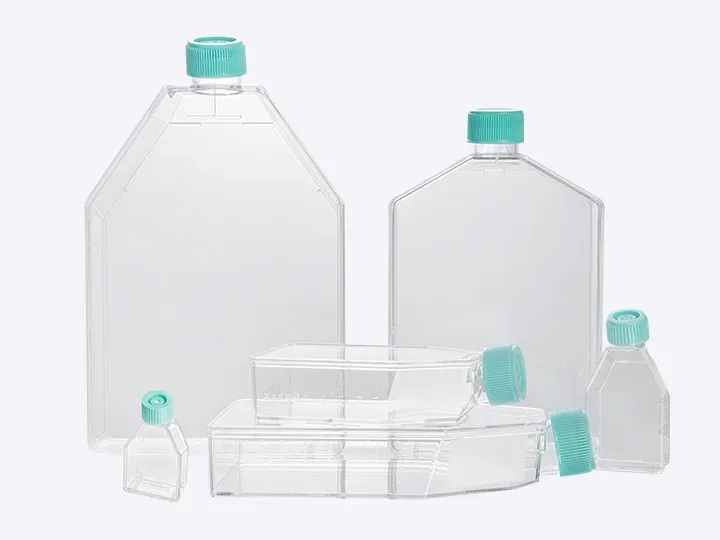
| Cell culture flasks and plates | Often PS, surface-treated or untreated | High for cell growth, surface interaction, sterility, and endotoxin context | Culture-grade claim, sterility, non-pyrogenic context, sample validation. |
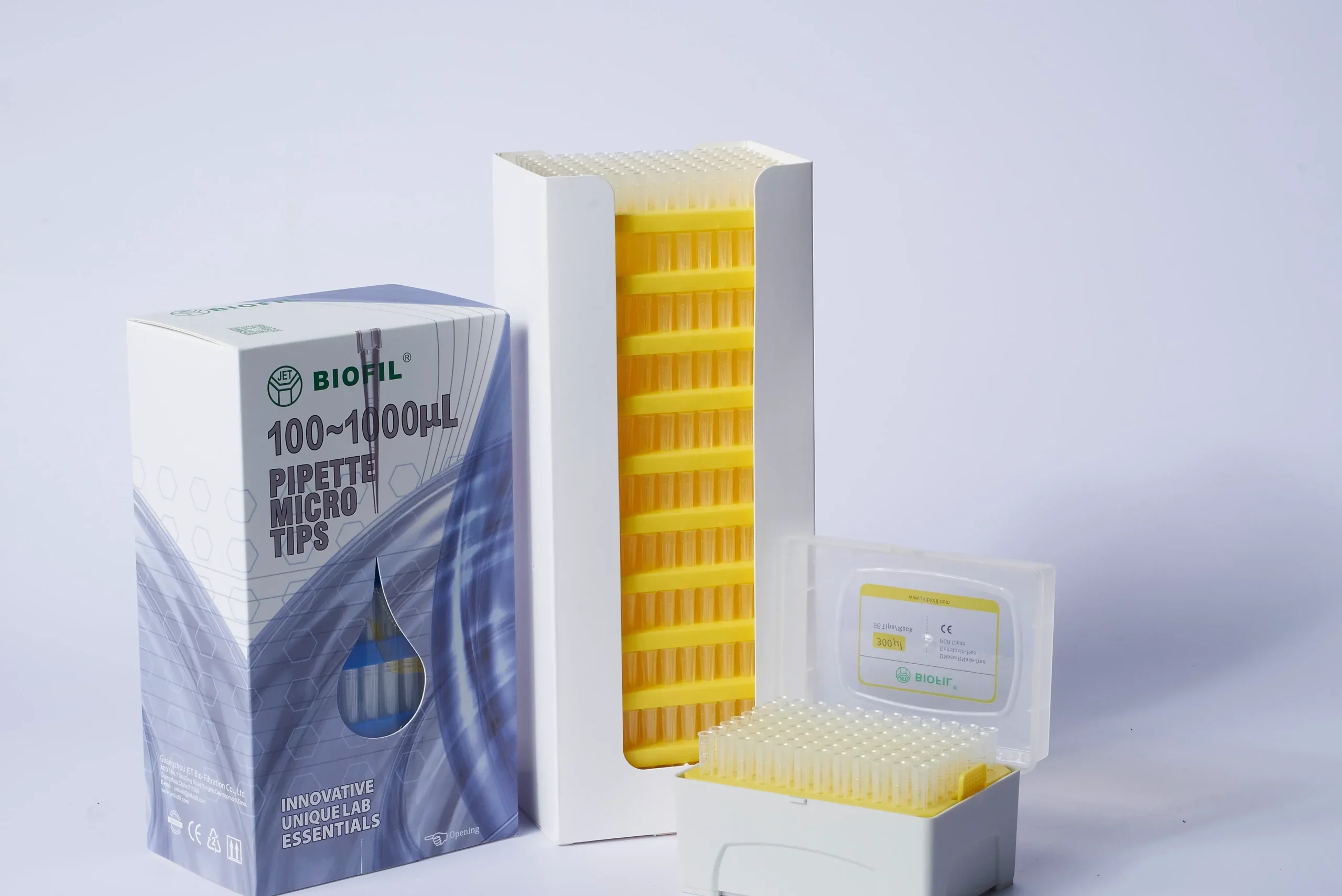
| Pipette tips and reagent reservoirs | Often PP | Medium to high for PCR/qPCR, liquid handling, and sensitive reagents | DNase/RNase-free claim, low-retention option, rack packaging, material consistency. |
| Microcentrifuge and centrifuge tubes | Often PP | Medium for sample storage, centrifugation, and reagent contact | Temperature range, closure fit, material statement, sample compatibility. |
| Petri dishes | Often PS | High for microbiology or cell culture if growth behavior matters | Sterility, flatness, packaging, surface suitability, sample testing. |
| Media and reagent bottles | Often PET, HDPE, PP, or PC depending on use | Depends on reagent, contact time, storage temperature, and solvent | Chemical compatibility, cap liner, material statement, storage conditions. |
| Sample containers | PP, PS, or PE variants | Depends on specimen type and test method | Sterility, leak resistance, material, closure, label, and lot traceability. |
Specification Interpretation
| Specification or Claim | What It Helps With | What It Does Not Prove |
|---|---|---|
| Polypropylene or polystyrene material | Identifies the base material family. | It does not prove resin grade, additives, extractables profile, or assay compatibility. |
| Sterile | Supports contamination control where microbial risk matters. | It does not automatically mean low extractables or no leachables. |
| DNase/RNase-free | Supports nucleic acid workflows. | It does not prove chemical inertness or cell culture suitability. |
| Non-pyrogenic | May support endotoxin-sensitive workflows when documented. | It does not replace chemical compatibility or leachables evaluation. |
| Low retention | Can reduce liquid retention in pipette tips. | It does not automatically mean additive-free or suitable for every assay. |
| COA or material statement | Supports product identity and supplier documentation. | It may not be a full extractables/leachables study unless clearly stated. |
When Buyers Should Ask Stronger Questions
Not every laboratory consumable needs a full chemical characterization package. Buyers should escalate the document request when the sample is valuable, the assay is sensitive, the contact time is long, the reagent is aggressive, the workflow is regulated, or the product is used in cell culture, pharma QC, diagnostic testing, IVF, biologics, or medical-device-related research. In these cases, a generic material name may not be enough.
Buyers should also ask stronger questions when a supplier offers colored plasticware, treated surfaces, low-retention surfaces, unusual packaging, gamma sterilization, private label claims, or a substitute material after sample approval. Changes in resin, additives, mold release, packaging, or sterilization can matter more than buyers expect.
Risk-Based Procurement Decision Framework
| Use Case | Reasonable Buyer Evidence | When to Escalate |
|---|---|---|
| Routine sample transfer | Material statement, product specification, sample check. | Escalate if the sample is chemically sensitive or stored long-term. |
| PCR/qPCR liquid handling | DNase/RNase-free claim, filtered tip option, rack packaging, lot traceability. | Escalate if inhibition, low-copy detection, or diagnostic use is involved. |
| Cell culture plasticware | Sterility, culture-grade context, surface treatment details, non-pyrogenic context. | Escalate if growth performance is inconsistent or regulated biologics work is involved. |
| Reagent or media storage | Material compatibility, cap and bottle material, storage condition statement. | Escalate for organic solvents, long contact time, heat, light sensitivity, or drug-related work. |
| OEM/private label resale | Approved claim wording, SKU-specific documents, carton and label match. | Escalate if customers require extractables/leachables evidence or validation support. |
Compliance and Standards Context
In regulated pharmaceutical, packaging, and medical-device contexts, extractables, leachables, and chemical characterization may be discussed through frameworks such as FDA packaging guidance, ISO 10993-18 chemical characterization concepts, and USP chapters on extractables and leachables. For routine lab consumables, buyers should not copy those requirements blindly. Instead, they should use the logic: identify material contact, define use conditions, understand chemical risk, and request evidence proportional to workflow sensitivity.
A supplier document should be read carefully. A COA is not automatically an extractables study. A material declaration is not automatically a leachables study. ISO certification does not prove that one SKU is chemically suitable for one buyer’s assay. CE or FDA-related wording should not be treated as a blanket guarantee. The safest procurement approach is to match the document, product, lot, claim, and workflow.
Supplier Questions Before Bulk Orders
| Question | Strong Supplier Answer | Warning Sign |
|---|---|---|
| What exact material is used for this SKU? | The supplier identifies the material family and can provide a product specification. | Only vague wording such as “lab grade plastic” is provided. |
| Are additives, colorants, surface treatments, or coatings involved? | The supplier explains treatment or color options and separates claims by SKU. | Claims are copied across different products without detail. |
| Which documents are available? | COA, material statement, sterility declaration, lot traceability, or supplier declaration are matched to the SKU. | Documents do not match product name, packaging, or lot. |
| Can samples be validated before bulk order? | Samples are available and the approved configuration can be recorded. | Supplier pushes bulk order before workflow testing. |
| Will material or packaging changes be notified? | The supplier can confirm change notice for resin, mold, packaging, sterilization, or label changes. | Supplier treats substitutions as normal without notice. |
Procurement Checklist
- Map the product to the workflow: cell culture, diagnostics, PCR/qPCR, sample storage, microbiology, pharma QC, or general handling.
- Define contact conditions: sample type, reagent type, solvent, temperature, contact time, storage duration, and sterilization exposure.
- Confirm material family and whether colorant, surface treatment, coating, low-retention treatment, or cap liner is involved.
- Ask for SKU-specific product specification, material statement, COA, sterility declaration, and lot traceability where relevant.
- Do not treat sterile, DNase/RNase-free, non-pyrogenic, or ISO wording as proof of low leachables unless the document actually supports that claim.
- Validate samples in the buyer’s real assay or storage condition before bulk order when the workflow is sensitive.
- For OEM projects, approve claim wording, label language, carton marks, and document templates before production.
- Record approved material, packaging, lot format, supplier statement, and change-notice expectations for repeat orders.
Common Buyer Mistakes
Assuming the material name is enough: PP, PS, PE, PET, and PC names are starting points, not complete chemical-risk evidence.
Confusing sterility with chemical suitability: Sterility controls microbial risk, while extractables and leachables relate to chemical migration risk.
Ignoring contact conditions: A consumable used for seconds at room temperature is different from one holding warm medium, solvent, or stored samples for days.
Accepting generic documents: Documents should match the exact SKU, material, packaging, lot, and supplier claim.
Skipping sample validation: The buyer’s workflow is often the best way to detect practical compatibility problems before bulk purchase.
Related Product and Resource Pages
FAQ: Extractables and Leachables in Lab Plasticware
Do all lab plasticware buyers need extractables and leachables testing?
No. Routine workflows may only need material information and sample validation. Stronger evidence is more important for sensitive cell culture, pharma, biotech, diagnostic, IVF, long-contact, solvent, or regulated workflows.
Is sterile plasticware automatically low in leachables?
No. Sterile plasticware addresses microbial contamination risk. It does not automatically prove low extractables, low leachables, or chemical compatibility with a specific assay.
Are PP consumables always safer than PS consumables?
No. PP and PS are used for different product families and workflows. Buyers should evaluate material, additives, contact condition, surface treatment, and supplier documents rather than ranking materials generically.
What documents should buyers request first?
Start with product specification, material statement, COA if available, sterility declaration if relevant, lot traceability, packaging details, and supplier statement. For sensitive workflows, ask whether additional testing or customer validation is available.
Can low-retention pipette tips create extractables concerns?
Low-retention tips may involve surface behavior that buyers should understand. For routine work this may not be an issue, but sensitive assays should validate tip performance and ask the supplier about claim basis.
How should distributors handle customer requests for extractables data?
Distributors should avoid overpromising. They should identify the exact SKU, material, use condition, and customer workflow, then ask the supplier for available documents or sample support tied to that product.
Final RFQ Note for Procurement Teams
When requesting quotes for lab plasticware where extractables or leachables may matter, include product type, material preference, workflow, sample or reagent type, contact time, temperature, sterility need, DNase/RNase-free or non-pyrogenic requirement, packaging format, quantity, destination country, documentation requirements, and whether sample validation is required before bulk order. A precise RFQ helps the supplier recommend an appropriate product instead of sending a generic disposable plastic item.
How OBObio Supports Buyers
OBObio supports B2B buyers sourcing laboratory plasticware, cell culture consumables, pipette tips, centrifuge tubes, Petri dishes, sample containers, reagent bottles, and related consumables for diagnostic labs, research labs, pharma/biotech teams, distributors, importers, and OEM/private label programs. Buyers can discuss material selection, packaging, MOQ, documentation, sample validation, and repeat-order stability before placing bulk orders.
Request Pricing or Samples
Tell us the product type, quantity, destination country, and any packaging or certification requirements. OBObio will reply with suitable lab consumables options.