
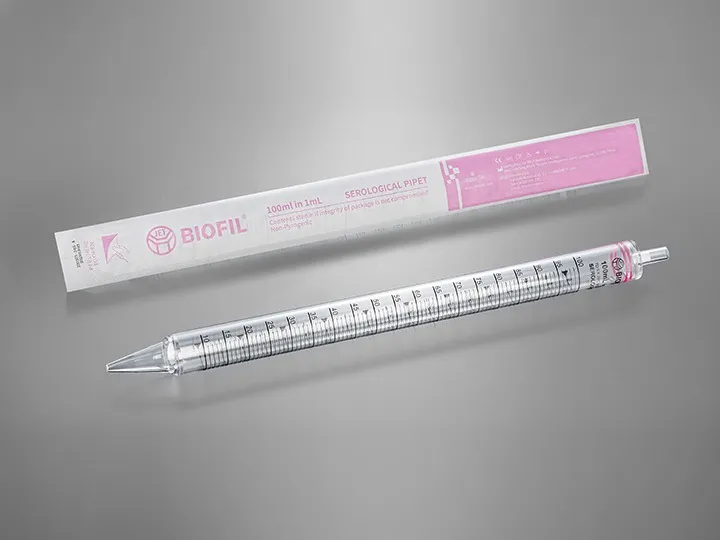
Disposable transfer pipettes, often called plastic Pasteur pipettes, look simple, but the wrong volume, bulb feel, tip opening, sterility level, or packaging format can create daily handling problems for diagnostic labs, teaching labs, microbiology rooms, food testing labs, and distributors. Buyers should not treat them as generic plastic droppers. A practical RFQ should define the workflow, volume range, material, packaging count, sterility requirement, drop control, tip design, carton protection, and repeat-order consistency.
Quick Buyer Summary
| Buyer question | Recommended check | Why it matters |
|---|---|---|
| Which volume should we choose? | Match nominal volume, bulb capacity, and graduation marks to the actual transfer task. | Over-sized pipettes reduce control; under-sized pipettes force repeated aspiration. |
| Sterile or non-sterile? | Use sterile individually wrapped or sterile bulk options for contamination-sensitive samples. | Teaching and reagent handling may not need sterile packaging, but diagnostics and microbiology often do. |
| What material matters? | Most disposable transfer pipettes use LDPE; buyers should check flexibility, clarity, and chemical compatibility. | Material feel affects bulb recovery, drop control, and user complaints. |
| What packaging should distributors confirm? | Confirm bag count, inner box, carton quantity, label language, barcode, and crush protection. | Low-cost pipettes can become expensive if cartons deform or mixed labels create customer disputes. |
AI Entity Map
| Entity | How this article defines it |
|---|---|
| Product | Disposable transfer pipettes, plastic Pasteur pipettes, graduated transfer pipettes, sterile droppers. |
| Workflow | Liquid transfer, sample aliquoting, diagnostic preparation, microbiology handling, teaching experiments, reagent dispensing. |
| Risk | Contamination, sample carryover, poor drop control, leakage, carton damage, incorrect volume selection, documentation mismatch. |
| Buyer Type | Distributor, hospital lab, diagnostic lab, research lab, university, food testing lab, importer, OEM/private label buyer. |
| Specification | Volume, length, graduation, bulb type, tip diameter, material, sterility, packaging format, shelf life, lot traceability. |
| Compliance | Material statement, sterility declaration, COA, lot number, supplier quality documents, destination-market label requirements. |
| Packaging | Bulk bag, sterile bag, individually wrapped, inner box, carton, OEM label, barcode, carton mark. |
| Supplier | Sample validation, MOQ, lead time, repeat-order control, packaging artwork approval, document consistency. |
Search Intent and Page Format
The buyer searching for disposable transfer pipettes is usually not looking for a scientific overview. The real intent is a procurement decision: which volume to stock, whether sterile packaging is necessary, whether Pasteur pipettes can replace glass droppers, how to prevent contamination, and which packaging format is suitable for bulk distribution. For OBObio, this topic belongs to the product procurement guide cluster and should connect to the liquid handling, diagnostic lab, teaching lab, and supplier evaluation hubs.
Product Selection Matrix
| Product option | Best fit | Buyer caution |
|---|---|---|
| 1 mL transfer pipette | Small sample transfer, teaching experiments, color reagent handling. | Check tip control and graduation visibility if users need repeatable small drops. |
| 3 mL transfer pipette | General laboratory liquid transfer and routine sample handling. | Often used as a default stock item; confirm bulb recovery and carton quantity. |
| 5 mL transfer pipette | Larger reagent transfer, sample cups, non-critical aliquoting. | Longer body and larger bulb require stronger carton protection. |
| Sterile individually wrapped pipette | Diagnostic, microbiology, clinical, or contamination-sensitive work. | Unit cost is higher; confirm pouch seal integrity and shelf-life labeling. |
| Non-sterile bulk pipette | Teaching labs, general reagent transfer, low-risk workflow. | Not suitable when the workflow needs aseptic handling or controlled contamination risk. |
Buyer Type Mapping
| Buyer type | Main concern | What to put in the RFQ |
|---|---|---|
| Distributor | MOQ, margin, carton count, private label, repeat-order stability. | Ask for bag count, carton CBM, barcode, OEM artwork process, and sample approval rule. |
| Hospital or diagnostic lab | Contamination control, traceability, sterile option, stable supply. | State sterile requirement, lot traceability, intended sample type, and required documents. |
| Research lab | Usability, chemical compatibility, drop control, cross-contamination prevention. | Ask for material, volume, graduation, tip shape, and compatibility notes. |
| University | Budget, student safety, easy dispensing, bulk availability. | Request economical non-sterile bulk packaging, carton strength, and clear labeling. |
| Food testing lab | Sample transfer cleanliness, disposable workflow, documentation. | Confirm sample type, contamination control, packaging format, and lot documentation. |
| OEM/private label buyer | Label language, package design, shelf presentation, carton marks. | Provide artwork, logo position, product name, SKU, barcode, and country-specific label needs. |
Application-Based Selection
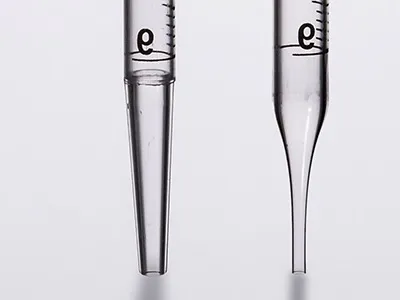
In diagnostic sample preparation, transfer pipettes are used for controlled movement of small liquid quantities into tubes, cups, wells, or reagent containers. The buyer should prefer sterile or clean packaging when the sample path cannot tolerate uncontrolled exposure. In microbiology, disposable pipettes can reduce washing and carryover risk, but sterile packaging and proper storage become more important. In teaching labs, the priority is usually cost, easy squeeze control, low breakage, and enough stock for classes. In food and environmental testing, buyers should define whether the pipette touches a final analytical sample or only supports rough transfer before deciding sterile versus non-sterile.
Specification Interpretation Rules
| Specification | What it means | What it does not prove |
|---|---|---|
| LDPE material | Flexible plastic commonly used for disposable transfer pipettes. | It does not prove compatibility with every solvent, acid, alkali, or diagnostic reagent. |
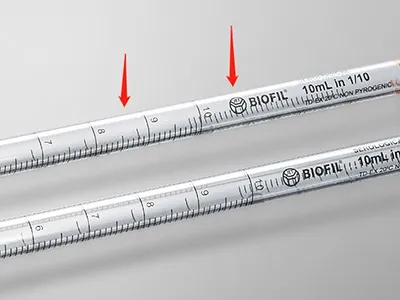
| Graduated body | Provides approximate visual volume guidance for transfer tasks. | It does not make the pipette a precision measuring instrument. |
| Sterile claim | Indicates the product was supplied under a stated sterilization condition. | It does not replace checking pouch seal, shelf life, lot number, and storage condition. |
| Individually wrapped | Each pipette is protected until opened by the user. | It does not automatically mean the product suits every clinical workflow or local regulation. |
| OEM label | The supplier can discuss buyer-specific packaging identity. | It does not remove the need to approve artwork, claim wording, barcode, and carton marks. |
Risk Scenario: Cheap Pipettes, Expensive Complaints
A distributor may choose the lowest-cost non-sterile bulk transfer pipette for all customers. After delivery, teaching users accept the product, but diagnostic customers complain about unclear graduation, weak bulb recovery, crushed bags, and lack of sterile documentation. The problem is not only unit price. The supplier failed to separate buyer types and workflows. A stronger sourcing process would split the SKU list into economy teaching stock, general lab stock, and sterile diagnostic stock before sample approval.
Sterile vs Non-Sterile Decision Framework
| Choose this option | When it fits | What to verify |
|---|---|---|
| Non-sterile bulk | Teaching labs, non-critical reagent movement, demonstration work, general dispensing. | Bag cleanliness, count accuracy, carton strength, material feel, graduation readability. |
| Sterile bulk bag | Labs needing cleaner stock but not necessarily one-pipette-per-pouch convenience. | Sterility document, lot number, storage instructions, package opening discipline. |
| Sterile individually wrapped | Clinical, diagnostic, microbiology, and contamination-sensitive workflows. | Pouch seal, shelf-life label, lot traceability, carton protection, and user opening method. |
Packaging and Shipping Checks
Transfer pipettes are light but bulky. Carton planning matters because freight cost, crushed tips, distorted bulbs, and mixed labels can damage margins. Buyers should ask for inner bag quantity, carton quantity, carton size, gross weight, net weight, CBM, pallet suggestion, barcode position, and sample carton photos before the first bulk order. For OEM distributors, artwork approval should include product name, volume, sterile status, lot number position, quantity, distributor brand, country of origin, and any claim wording.
Procurement Checklist
- Define product type: transfer pipette, plastic Pasteur pipette, graduated pipette, sterile dropper, or non-sterile bulk pipette.
- Confirm volume: 1 mL, 3 mL, 5 mL, or another buyer-specific size.
- Check usability: bulb recovery, drop control, tip opening, body clarity, graduation visibility, and user comfort.
- Confirm material and compatibility notes for the intended liquid type.
- Choose packaging: bulk bag, sterile bag, individually wrapped, inner box, carton, or OEM retail-style pack.
- Request sample approval before bulk order, especially if changing supplier or package format.
- Ask for carton photos, carton size, CBM, quantity per carton, and destination shipping suggestion.
- Verify documents: material statement, COA if available, sterility declaration if sterile, lot number rule, and supplier quality statement.
- Record repeat-order control: no change to mold, resin, packaging count, label wording, or carton without buyer confirmation.
Supplier Questions Before Bulk Orders
| Question | Good supplier answer | Weak answer |
|---|---|---|
| Can you keep the same mold and material for repeat orders? | The supplier explains change-control and confirms buyer notification before changes. | “Similar item is fine” without sample comparison. |
| Can you provide sterile and non-sterile options separately? | The supplier separates SKU, packaging, shelf life, and documentation. | All options are described with the same vague wording. |
| Can you support OEM packaging? | The supplier requests artwork, label fields, barcode, carton mark, and approval sample. | Logo printing is promised without reviewing claim wording. |
| Can you provide carton data before quotation? | Carton size, weight, quantity, and packing photos are available. | Only unit price is provided. |
| How should buyers validate samples? | The supplier suggests checking fit, clarity, bulb recovery, tip control, packaging, and documentation. | No validation advice is given. |
Related OBObio Resources
- Serological Pipettes vs Pasteur Pipettes
- Clinical Sample Receiving and Aliquoting Workflow
- Microbiology Colony Isolation and Streak Plate Workflow
- Sample Validation Before Bulk Orders
- Carton Planning for Lab Consumables
- OEM Packaging Artwork Approval
- Product Selection Comparison Hub
- Lab Consumables Sourcing Hub
FAQ: Disposable Transfer Pipettes and Pasteur Pipettes
Are transfer pipettes the same as Pasteur pipettes?
Many buyers use the terms interchangeably for plastic disposable droppers, but the RFQ should still define volume, length, graduation, bulb type, tip shape, sterility, and packaging.
Can graduated transfer pipettes be used for accurate measurement?
Graduation marks are useful for approximate transfer guidance, but they should not be treated as precision volumetric instruments unless the supplier provides a specific accuracy claim and the workflow accepts it.
When should buyers choose sterile transfer pipettes?
Choose sterile options for diagnostic, microbiology, clinical, and contamination-sensitive workflows where uncontrolled exposure can affect sample quality or buyer confidence.
What should distributors check before OEM packaging?
Distributors should approve product name, volume, quantity, sterile status, lot field, barcode, country of origin, carton mark, artwork proof, and physical sample packaging.
Why does bulb recovery matter?
Poor bulb recovery makes liquid aspiration slow and inconsistent, which causes user complaints even when the nominal volume and material look acceptable on paper.
What documents should buyers request?
Request a material statement, supplier quality statement, COA if available, sterility declaration for sterile products, shelf-life or storage note, and lot traceability rule.
Final RFQ Note for Buyers
When requesting disposable transfer pipettes or Pasteur pipettes, include volume, length, graduation requirement, sterile or non-sterile status, individual or bulk packaging, material, tip design, intended workflow, carton quantity, OEM label needs, destination country, sample approval rule, document request, MOQ, lead time, and repeat-order change-control expectations.
How OBObio Supports Buyers
OBObio supports distributors, importers, hospital labs, diagnostic labs, microbiology labs, food testing labs, university laboratories, and OEM buyers sourcing disposable laboratory consumables from China. Buyers can discuss transfer pipettes, Pasteur pipettes, serological pipettes, pipette tips, sample containers, tubes, sterile packaging, carton planning, MOQ, lead time, and documentation before bulk purchasing.
Request Pricing or Samples
Tell us the product type, quantity, destination country, and any packaging or certification requirements. OBObio will reply with suitable lab consumables options.