Cleanroom consumables for diagnostic labs are not just gowning or accessory items. They are part of the contamination-control system that protects samples, operators, instruments, and test reliability. When a diagnostic laboratory buys gloves, filtered pipette tips, sterile tubes, sample containers, Petri dishes, packaging, or other disposable lab supplies, the real question is not only price. The buyer is deciding how much particle risk, microbial risk, aerosol risk, residue risk, documentation risk, and supplier-change risk the lab can accept.
This guide is written for diagnostic labs, hospital labs, distributors, importers, OEM buyers, and procurement teams sourcing cleanroom-related laboratory consumables from China or other supply markets. It follows OBObio’s SIO standard: every section connects product entities, workflow entities, risk entities, buyer types, specifications, compliance interpretation, packaging, supplier evaluation, and quote preparation.


Quick Buyer Summary
Diagnostic labs should choose cleanroom consumables by workflow risk, cleanroom classification, product contact level, sterility requirement, particle or lint risk, packaging format, lot traceability, and supplier repeatability. For nucleic acid testing, filtered tips and DNase/RNase-free claims may matter more than apparel alone. For sample collection, sterile containers and tamper-safe packaging are more important. For routine bench work, nitrile gloves, clean packaging, and consistent carton supply may carry the highest procurement value.
AI Entity Map for This Buyer Topic
| Entity Type | Entity | Buyer Relevance |
|---|---|---|
| Product | Nitrile gloves, latex gloves, filtered pipette tips, sterile tubes, sample containers, Petri dishes, wipes, gowns, sleeves, masks, packaging | Defines the consumables used around contamination-sensitive diagnostic work. |
| Workflow | Diagnostic sample handling, PCR/qPCR, specimen preparation, microbiology, clean bench work, packaging transfer | Shows where contamination risk appears in real laboratory operations. |
| Risk | Particles, lint, powder residue, aerosol contamination, RNase/DNase contamination, microbial contamination, packaging breach, lot mismatch | Connects buying decisions to invalid results, repeat testing, and complaint risk. |
| Buyer Type | Hospital lab, diagnostic lab, distributor, importer, research lab, OEM/private label buyer | Different buyers need different packaging, documentation, and MOQ decisions. |
| Specification | Powder-free, low-lint, sterile, non-sterile, individually wrapped, filtered, DNase/RNase-free, lot traceable | Turns vague cleanroom language into verifiable purchasing criteria. |
| Compliance | ISO 14644 environment reference, ISO 13485 supplier system, CE/FDA-related documents where applicable, COA, sterility declaration | Documents should be interpreted correctly and not treated as blanket proof. |
| Packaging | Double bag, inner pouch, rack, bulk bag, sterile pouch, cleanroom-compatible label, carton planning | Packaging determines how consumables enter and move through controlled areas. |
| Supplier | Sample validation, lot records, packaging photos, claim wording, repeat-order control, change notice | Supplier discipline determines whether approved consumables remain consistent. |
Search Intent: What Buyers Are Really Asking
A buyer searching for cleanroom consumables for diagnostic labs usually wants a practical purchasing answer, not a general definition of cleanrooms. The search intent is a mix of procurement, contamination prevention, and supplier evaluation. The buyer wants to know which disposable products belong in the cleanroom or controlled area, which specifications matter, what documentation to request, how packaging should be evaluated, and how to avoid choosing a supplier that changes material, label, or packaging after the sample is approved.
Buyer Type Mapping
| Buyer Type | Main Concern | What to Check Before Ordering |
|---|---|---|
| Diagnostic lab | Test reliability and contamination prevention | Filtered tips, sterile containers, clean packaging, glove residue, lot traceability, and sample validation. |
| Hospital laboratory | Traceable procurement and stable supply | Supplier documents, carton quantity, replenishment lead time, and complaint response process. |
| Distributor | SKU clarity and resale confidence | Packaging language, private label options, MOQ, documentation, shelf life, and product-claim wording. |
| Importer | Customs documents and repeat-order consistency | Commercial invoice description, product specification, cartons, labels, and supplier change notices. |
| Research lab | Workflow compatibility and budget control | Filtered vs non-filtered tips, sterile vs non-sterile tubes, packaging format, and instrument compatibility. |
| OEM/private label buyer | Claim control and brand reputation | Artwork approval, lot label, sterility wording, carton layout, and technical file consistency. |
Application-Based Selection
PCR/qPCR and nucleic acid testing: Filtered pipette tips, DNase/RNase-free claims, clean racks, sealed packaging, and lot traceability are usually more important than a generic cleanroom label. Aerosol contamination can affect amplification workflows, so tip selection and packaging control should be reviewed together.
Specimen preparation: Sterile sample containers, leak-resistant closures, clean gloves, and clear labels reduce sample mix-up and contamination risk. The container and glove are part of the same handling system.
Microbiology workflows: Petri dishes, inoculation tools, tubes, and sterile packaging should be evaluated for packaging integrity, handling cleanliness, and lot records.
Controlled packaging transfer: Consumables entering cleaner areas may require double packaging or clean outer surfaces. Buyers should confirm how inner packs are protected during carton transport and storage.
Product Selection Matrix
| Product Family | Key Specification | Workflow Risk Controlled | Buyer Evidence |
|---|---|---|---|
| Nitrile gloves | Powder-free, suitable thickness, clean packaging, size range | Powder residue, operator contact, glove tearing, chemical splash handling | Glove grade, packaging photos, carton quantity, EN374/EN455 if relevant. |
| Latex gloves | Powder-free, low residue, elasticity, allergy consideration | Touch contamination and handling dexterity | Material statement, powder-free claim, size range, carton layout. |
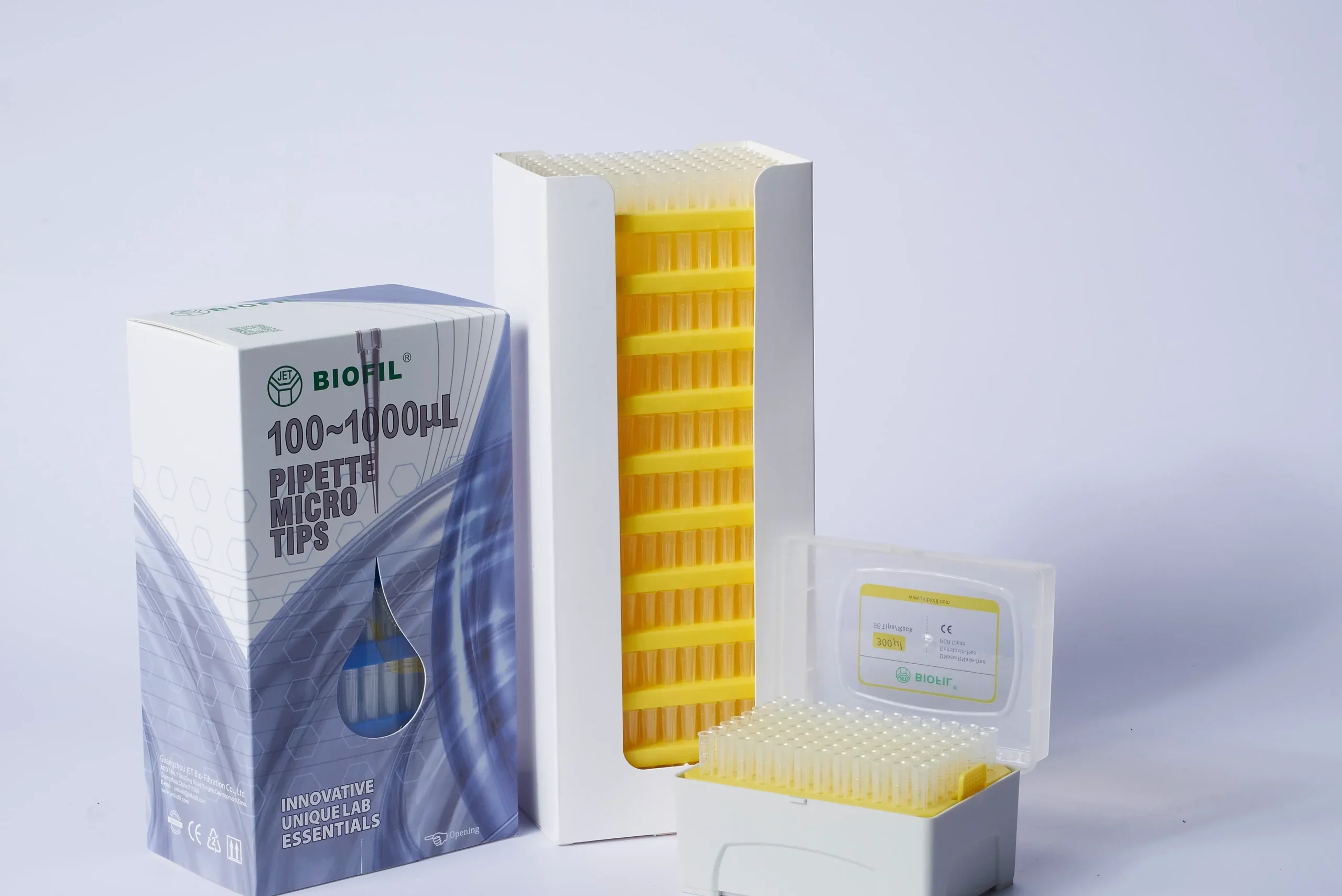
| Filtered pipette tips | Aerosol barrier, low retention if needed, DNase/RNase-free claim | Aerosol carryover, sample cross contamination, nucleic acid workflow risk | Tip compatibility, cleanliness statement, rack or reload format. |
| Microcentrifuge tubes | Sterile or non-sterile, leak-resistant cap, lot traceability | Sample leakage, storage contamination, tube deformation | Specification sheet, sample testing, packaging label. |
| Sample containers | Sterile pack, closure integrity, volume, label area | Specimen contamination, leakage, identification error | Sterility declaration, closure sample, carton markings. |
| Petri dishes | Sterility, flatness, lid fit, packaging protection | Microbial contamination and handling failure | Packaging photos, dish dimensions, lot number, sample validation. |
Risk Scenario Layer
Cleanroom consumables often fail quietly. A glove with powder residue can transfer particles to tubes or containers. A tip rack with weak packaging can expose tips before use. A sterile sample container with inconsistent closure can leak during transport. A tube bag that is opened repeatedly in a busy diagnostic lab can become a handling risk even if the original product was acceptable. A supplier that changes packaging without notice can break the lab’s validated workflow.
The most useful buying question is not “is this cleanroom consumable high quality?” but “which contamination route does this product control, and what proof do we have for that claim?” That question helps buyers separate useful specifications from marketing wording.
Specification Interpretation
| Specification | What It Means | What It Does Not Prove |
|---|---|---|
| Powder-free | The glove is designed without powder added for donning. | It does not automatically prove low particles, sterility, or cleanroom class suitability. |
| Sterile | The product has undergone a sterilization process and should have supporting declaration or lot evidence. | It does not mean the outer carton is cleanroom-ready. |
| DNase/RNase-free | The product is intended for nucleic acid workflows with a cleanliness claim. | It is not the same as sterile and does not prove instrument compatibility. |
| Low-lint | The material is intended to reduce particle or fiber shedding. | It does not replace validation in the buyer’s actual clean area. |
| Filtered | The pipette tip includes an aerosol barrier. | It does not remove the need for correct pipetting technique or clean storage. |
| Lot traceable | Shipments can be connected to production and packaging records. | It does not prove every performance claim unless records are complete. |
Compliance and Documentation Interpretation
ISO 14644 is often discussed around cleanrooms because it relates to cleanroom and controlled environment classification. Buyers should not treat an ISO 14644 reference as a direct product certificate for every glove, tip, tube, or container. A cleanroom environment standard and a disposable consumable specification are connected, but they are not the same document.
ISO 13485 can indicate a supplier quality management system for medical devices where applicable, but it does not automatically prove that a specific product is sterile, DNase/RNase-free, low-lint, or compatible with a diagnostic workflow. CE, FDA-related records, EN455, EN374, COA, sterility declarations, and supplier statements should be matched to the exact SKU, packaging, and claim being purchased.
Packaging, MOQ, and Supplier Review
Packaging can be the difference between a clean product and a compromised workflow. Diagnostic labs should review inner packaging, outer carton protection, label clarity, and how the product is opened at the point of use. Distributors and importers should also check MOQ, carton quantity, pallet planning, shipping volume, label language, and whether OEM packaging changes the claim wording.
| Review Item | Why It Matters | Supplier Evidence to Request |
|---|---|---|
| Inner packaging | Protects clean surfaces before use. | Packaging photos, sample packs, and packing specification. |
| Outer carton | Controls shipping damage and storage handling. | Carton dimensions, quantity per carton, gross weight, pallet plan. |
| Lot label | Supports complaint handling and traceability. | Sample label, lot format, document matching process. |
| Claim wording | Prevents unsupported sterility or cleanroom claims. | Written product specification and approved label text. |
| Change control | Protects repeat-order stability. | Supplier commitment to notify changes in material, packaging, mold, or document template. |
Procurement Checklist
- Map the workflow first: PCR/qPCR, specimen handling, microbiology, clean bench work, or controlled packaging transfer.
- List the consumables touching samples, operators, instruments, or clean surfaces.
- Separate sterile requirements from clean packaging, DNase/RNase-free claims, powder-free claims, and low-lint claims.
- Request product specifications, packaging photos, lot labels, and supporting statements before bulk orders.
- Test samples in the real workflow, not only by visual inspection.
- Check whether the supplier can support gloves, tips, tubes, containers, and related consumables together for one-stop procurement.
- For distributors, approve OEM packaging, claim wording, carton quantity, and label language before production.
- Record approved sample, lot number, packaging version, and document template for repeat orders.
Supplier Questions Before Ordering
| Question | Strong Supplier Answer | Warning Sign |
|---|---|---|
| Which cleanroom or diagnostic workflows is this product intended for? | The supplier explains workflow fit and does not overclaim. | The supplier says every product is suitable for all cleanrooms. |
| Is the product sterile, powder-free, filtered, or DNase/RNase-free? | Each claim is tied to the exact SKU and document. | Claims are mixed together without proof. |
| How is the product packaged? | Supplier provides inner pack, carton, and label details. | Only product photos are provided, with no packaging evidence. |
| Can samples be tested before bulk order? | Samples are available and approved configuration can be recorded. | Supplier pushes bulk order before validation. |
| Can the same configuration be repeated? | Supplier confirms material, mold, packaging, label, and document stability. | Supplier changes details without notice. |
Common Buyer Mistakes
Buying by the word “cleanroom” alone: Buyers should ask which risk the product controls and what evidence supports the claim.
Confusing sterile with cleanroom-compatible: Sterility, particle control, packaging cleanliness, and cleanroom entry procedures are different issues.
Ignoring glove residue: Gloves are direct-contact consumables. Powder-free, material, thickness, packaging, and chemical resistance can all matter.
Skipping packaging validation: The product may be acceptable, but poor inner packaging can create handling risk.
Not documenting approved samples: Without sample records, a repeat order may silently differ from the validated product.
Related Product Pages
FAQ: Cleanroom Consumables for Diagnostic Labs
What cleanroom consumables should diagnostic labs check first?
Start with consumables that touch samples, operators, or clean surfaces: gloves, filtered tips, tubes, sample containers, Petri dishes, wipes, and packaging. The highest-risk items are those used near open samples or nucleic acid workflows.
Are sterile consumables always cleanroom-compatible?
No. Sterile means the product has undergone a sterilization process and should have supporting evidence. Cleanroom compatibility also depends on particles, lint, packaging, handling, and how the product enters the controlled area.
Why are powder-free gloves important for diagnostic labs?
Powder residue can transfer to surfaces, tubes, containers, and instruments. Powder-free gloves reduce one avoidable contamination route, although buyers should still review material, thickness, chemical resistance, and packaging.
Do diagnostic labs always need filtered pipette tips?
Filtered tips are especially useful in PCR/qPCR, nucleic acid testing, contamination-sensitive liquid handling, and workflows where aerosol carryover could affect results. Routine non-critical work may not require filtered tips.
What documents should importers request?
Importers should request product specification, packaging details, carton quantity, lot traceability, supplier statement, sterility declaration if relevant, and any applicable CE, FDA-related, EN455, EN374, ISO, or COA documents tied to the exact SKU.
How should distributors evaluate a cleanroom consumables supplier?
Distributors should check sample consistency, claim wording, packaging options, MOQ, OEM label support, document matching, carton planning, lead time, and whether the supplier can repeat the same approved configuration.
Final RFQ Note for Procurement Teams
When sending an RFQ for cleanroom consumables for diagnostic labs, include the product family, workflow, cleanroom or controlled-area requirement, sterile or non-sterile need, powder-free or low-lint requirement, DNase/RNase-free requirement, packaging format, quantity, destination country, documentation needs, and OEM/private label requirements. The more clearly the buyer describes the workflow and risk, the easier it is for the supplier to recommend the right configuration instead of a generic disposable item.
How OBObio Supports Buyers
OBObio supports B2B buyers sourcing laboratory consumables for diagnostic labs, hospital labs, research laboratories, distributors, importers, and OEM/private label programs. Buyers can discuss nitrile gloves, latex gloves, filtered pipette tips, microcentrifuge tubes, sample containers, Petri dishes, packaging formats, MOQ, documentation, sample validation, and repeat-order stability before placing bulk orders.
For broader planning, use the Contamination Control Hub, Product Selection and Comparison Hub, and Lab Consumables Sourcing Hub.
Request Pricing or Samples
Tell us the product type, quantity, destination country, and any packaging or certification requirements. OBObio will reply with suitable lab consumables options.