
When searching for the right cell culture flasks supplier, researchers need reliable partners who understand laboratory requirements and deliver consistent quality. A trusted cell culture flasks supplier provides sterile, high-quality vessels that meet industry standards while offering competitive pricing and excellent customer support for research facilities worldwide. But how do you choose the best supplier for your specific research needs?
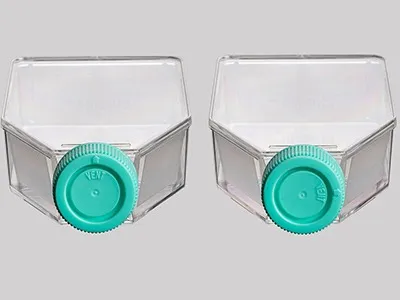
Quick Reference: Cell Culture Flask Market Overview 2025
| Market Metric | 2025 Value | Growth Rate | Key Driver |
|---|---|---|---|
| Global Cell Culture Vessels Market | $4.79 billion | 15.14% CAGR | Biopharmaceutical expansion |
| Cell Culture Flasks Segment | $1.05 billion | 15.1% CAGR | Therapeutic research growth |
| Projected Market by 2030 | $9.70 billion | Sustained growth | Cell-based therapies |
| Biopharmaceutical Market Impact | $700 billion | Strong correlation | Technology advancement |
Source: Grand View Research, 2025
What Makes a Cell Culture Flasks Supplier Reliable?
A reliable cell culture flasks supplier demonstrates consistent quality control, maintains proper certifications, provides sterile packaging, and offers technical support to ensure optimal cell growth conditions for research applications. The best suppliers understand that contamination can ruin weeks of research work.
Key Quality Standards for Cell Culture Flask Suppliers
When evaluating potential cell culture flasks suppliers, researchers should prioritize these essential criteria:
Material Quality & Certification:
- ISO 9002 registered manufacturing facilities
- USP Class VI certified materials
- Sterile polystyrene construction
- ANSI standard compliance
Product Specifications:
- Surface treatment consistency for optimal cell attachment
- Filter cap technology with 0.2 µm pore-sized hydrophobic membranes
- Volume accuracy ranging from T25 (250mL) to T300 (1,900mL)
- Contamination-free packaging with individual sterile wrapping
Technical Support Services:
- Application guidance for different cell types
- Troubleshooting assistance for culture issues
- Custom solutions for specialized research needs
- Training resources for laboratory staff
How Do You Choose the Right Cell Culture Flask Size?
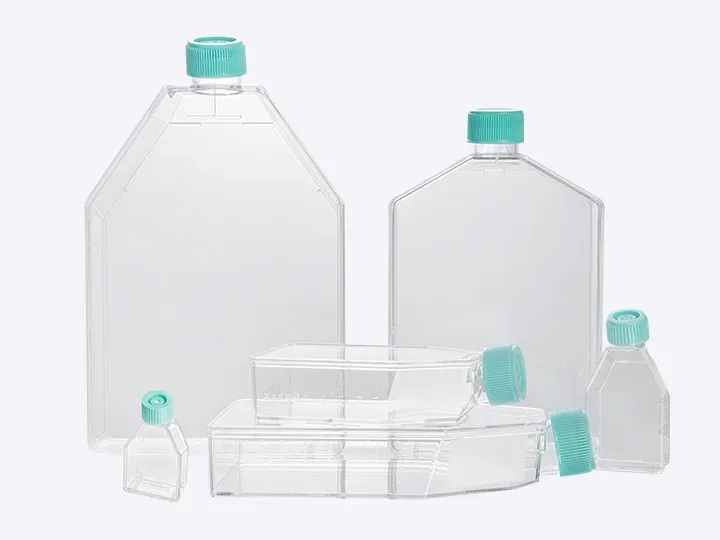
Selecting the appropriate cell culture flask size depends on your cell line density, experimental scale, and incubation requirements, with T25 flasks ideal for small cultures and T300 flasks suitable for large-scale production. Different research applications require specific flask configurations.
Cell Culture Flask Size Guide
| Flask Type | Surface Area | Working Volume | Best Applications |
|---|---|---|---|
| T25 | 25 cm² | 5-15 mL | Small experiments, initial seeding |
| T75 | 75 cm² | 15-50 mL | Standard cell maintenance |
| T175 | 175 cm² | 35-100 mL | Medium-scale production |
| T300 | 300 cm² | 60-200 mL | Large-scale research, bioproduction |
Cell Seeding Recommendations:
- Primary cells: 5,000-10,000 cells/cm²
- Established cell lines: 2,000-5,000 cells/cm²
- Stem cells: 10,000-20,000 cells/cm²
- Adherent cultures: Follow specific protocols for each cell type
What Are the Most Important Cell Culture Flask Features?
Essential cell culture flask features include treated polystyrene surfaces for cell attachment, vented caps for gas exchange, clear visibility for monitoring, and graduated volume markings for accurate measurements. These features directly impact experimental success.
Critical Flask Design Elements
Surface Treatment Technology: Modern cell culture flasks suppliers utilize advanced surface treatments that enhance cell adhesion while maintaining consistency across production batches.
Ventilation Systems:
- Filtered caps prevent contamination while allowing gas exchange
- Vented designs maintain proper CO₂ and oxygen levels
- Sealed options available for specialized applications
- Cap compatibility with automated systems
Visual Design Features:
- Crystal-clear polystyrene for optimal microscopy viewing
- Graduation marks for precise volume measurements
- Large writing areas for sample identification
- Stacking capability for efficient storage
Which Cell Culture Flask Materials Are Best for Research?
High-quality polystyrene remains the gold standard for cell culture flasks due to its optical clarity, chemical resistance, and consistent surface properties, though specialized applications may require glass or other materials. Material selection affects both cell behavior and experimental outcomes.
Material Comparison for Cell Culture Applications
Polystyrene Advantages:
- Excellent optical clarity for cell observation
- Chemical inertness prevents contamination
- Cost-effective for routine applications
- Consistent surface treatment across batches
Alternative Materials:
- Glass flasks: For heat-sensitive applications
- Specialized plastics: For unique chemical compatibility
- Coated surfaces: For difficult-to-culture cell types
- Biodegradable options: For environmentally conscious labs
How Do You Evaluate Cell Culture Flask Supplier Quality?
Evaluate cell culture flask supplier quality by reviewing certifications, testing product consistency, assessing customer support responsiveness, and comparing pricing structures with delivery reliability. Quality suppliers invest in long-term customer relationships.
Supplier Evaluation Checklist
Quality Assurance Metrics:
- Manufacturing certifications (ISO 9002, ISO 13485)
- Sterility validation protocols and documentation
- Batch-to-batch consistency testing results
- Customer complaint resolution procedures
Service Excellence Indicators:
- Technical support availability during business hours
- Custom product development capabilities
- Training program offerings for laboratory staff
- Online ordering systems with inventory tracking
Financial Considerations:
- Volume discount structures for bulk purchases
- Payment term flexibility for academic institutions
- Emergency stock availability for urgent needs
- Total cost of ownership including shipping and handling
What Are the Latest Trends in Cell Culture Flask Technology?
Current cell culture flask technology trends focus on automation compatibility, sustainable materials, smart monitoring systems, and specialized coatings for challenging cell types, driven by increased demand for biopharmaceutical research. Innovation continues to enhance research efficiency.
Emerging Technologies in Cell Culture Vessels
Automation Integration Features: Modern cell culture flasks suppliers now offer products designed specifically for robotic handling systems, including:
- Standardized dimensions for automated systems
- RFID tracking capabilities for inventory management
- Barcode compatibility for sample tracking
- Robotic-friendly cap designs for easy handling
Sustainability Initiatives:
- Reduced plastic usage in packaging design
- Recyclable material options for environmentally conscious labs
- Carbon footprint reduction in manufacturing processes
- Sustainable supply chain management practices
Advanced Surface Technologies:
- Specialized coatings for stem cell applications
- Micro-pattern surfaces for controlled cell growth
- pH-sensitive indicators for culture monitoring
- Anti-fouling treatments for extended culture periods
Common Questions About Cell Culture Flask Suppliers
What certifications should a cell culture flask supplier have?
A reputable cell culture flask supplier should maintain ISO 9002 registration, USP Class VI certification, and sterility validation protocols to ensure product quality and regulatory compliance. These certifications demonstrate commitment to manufacturing excellence.
How long do cell culture flasks stay sterile?
Properly packaged cell culture flasks from certified suppliers maintain sterility for 2-3 years when stored in controlled laboratory conditions away from direct sunlight and temperature extremes. Always check expiration dates before use.
Can cell culture flasks be reused?
Cell culture flasks are designed for single-use applications and should never be reused due to contamination risks and compromised surface integrity that can affect cell growth and experimental results. Reuse violates sterility protocols.
What’s the difference between vented and sealed flask caps?
Vented caps allow gas exchange through filtered membranes while maintaining sterility, whereas sealed caps create closed systems for specialized applications requiring controlled atmospheres or transportation. Choose based on your specific protocol requirements.
How do you store cell culture flasks properly?
Store cell culture flasks in original packaging at room temperature (15-30°C) in dry conditions away from direct sunlight, ensuring caps remain sealed until use to maintain sterility. Proper storage prevents contamination and extends shelf life.
Choosing the Right Cell Culture Flasks Supplier Partnership
When selecting a cell culture flasks supplier, researchers must balance quality, cost, and service reliability. The global cell culture vessels market, valued at $4.24 billion in 2024 and growing at a robust 15.14% CAGR, reflects the increasing importance of reliable laboratory partnerships.
Success factors for supplier partnerships include:
- Consistent product quality that meets research standards
- Competitive pricing with transparent cost structures
- Technical expertise for troubleshooting and optimization
- Reliable delivery schedules to prevent research delays
- Customer service excellence for ongoing support needs
Making the Final Decision
The right cell culture flasks supplier becomes an extension of your research team, understanding your specific needs and providing solutions that enhance experimental success. Therefore, invest time in evaluating potential partners thoroughly.
Consider these final evaluation points:
- Long-term availability of product lines
- Expansion capabilities for growing research programs
- International shipping for global research collaborations
- Emergency support for critical research timelines
By choosing a supplier that aligns with your research goals and quality standards, you create a foundation for successful cell culture work that can advance scientific discovery and improve research outcomes.
Looking for a reliable cell culture flasks supplier? Contact OBO Biology Tech at obobio.com for premium laboratory consumables and expert technical support to enhance your research capabilities.
Buyer Quick Reference for How to Choose a Cell Culture Flask Supplier for Research and Biotech Labs
For B2B buyers, How to Choose a Cell Culture Flask Supplier for Research and Biotech Labs should be evaluated by application fit, material, sterility, packaging, documentation, reorder stability, and supplier communication. The best choice is the product that protects lab workflow reliability while remaining practical for repeated purchasing.
| Buying Factor | What to Check | Why It Matters |
|---|---|---|
| Application fit | Match the product to research, diagnostic, hospital, biotech, food testing, or distributor use. | Prevents overbuying, under-specifying, or selecting a format that does not fit the workflow. |
| Material and design | Confirm resin, surface, cap, seal, size, compatibility, and handling details. | Small specification differences can affect accuracy, contamination control, or user acceptance. |
| Sterility and cleanliness | Check sterile, non-sterile, DNase/RNase-free, non-pyrogenic, or gamma-irradiated options where relevant. | Cleanliness requirements vary widely between routine teaching labs and sensitive molecular or cell culture work. |
| Packaging | Review bagged, racked, individually wrapped, bulk carton, and OEM/private label options. | Packaging affects workflow speed, storage space, shipping cost, and distributor resale. |
| Supplier support | Ask for samples, product codes, carton details, lead time, MOQ, and repeat-order consistency. | Reliable supply is essential for labs that cannot pause work because a consumable is out of stock. |
How This Product Fits OBObio Lab Consumables Sourcing
OBObio positions this topic within a broader laboratory consumables sourcing plan, including cell culture flasks, shake flasks, culture bottles, treated surfaces, vented caps, and sterile cultureware. Buyers can use one supplier conversation to compare related products, packaging formats, and sample options.
For laboratories, this reduces the risk of mismatched supplies. For distributors, it helps build a more complete catalog with consistent documentation and packaging. For first-time buyers, the practical path is to request samples, test the product in the real workflow, and then confirm carton quantity, lead time, and repeat-order pricing.
When sending an inquiry, include the application, expected quantity, destination country, sterile requirement, packaging preference, and any certification or documentation needs. Clear requirements help OBObio recommend the right product faster instead of giving a generic quote.
Supplier Evaluation Checklist
- Does the supplier understand the real laboratory application, not only the product name?
- Can the supplier provide samples before a bulk order?
- Are product specifications, carton quantity, MOQ, and lead time clear?
- Can the supplier support related consumables for one-stop procurement?
- Is OEM or private label packaging available for distributors?
- Can the same specification be supplied consistently for repeat orders?
FAQ: How to Choose a Cell Culture Flask Supplier for Research and Biotech Labs
What should buyers check first?
Buyers should first define the application, required specification, sterility level, packaging format, and expected order quantity. These details determine whether a standard item is enough or whether a more specific supply option is needed.
Is the lowest price always the best option?
No. For laboratory consumables, product failure, contamination, leakage, poor fit, or unstable supply can cost more than a small unit-price difference. Buyers should balance price with consistency, documentation, and supplier responsiveness.
Can distributors request OEM packaging?
Yes. Many distributors need private label cartons, product labels, and stable carton specifications. MOQ, artwork, label language, and lead time should be confirmed before placing the first bulk order.
Why work with a broader
A broader supplier can help buyers coordinate related products, reduce communication work, consolidate shipments, and build a more reliable procurement plan for routine lab operations.

Request Pricing or Samples
Tell us the product type, quantity, destination country, and any packaging or certification requirements. OBObio will reply with suitable lab consumables options.