
Aerosol contamination in pipetting is one of the quiet risks behind failed PCR, qPCR, RNA, diagnostic, and contamination-sensitive workflows. The problem is not always visible. A pipette may work normally, the sample may look clean, and the consumable may appear acceptable. Yet small droplets, aerosols, or residues generated during aspiration and dispensing can transfer material between samples, reagents, pipettes, and work areas.
For buyers, the practical question is not simply whether to buy filtered tips. The better question is when filtered pipette tips are necessary, which workflows require stronger contamination control, what packaging format protects the consumables, and how to evaluate supplier claims such as sterile, DNase/RNase-free, low retention, and aerosol barrier.
Quick Buyer Summary
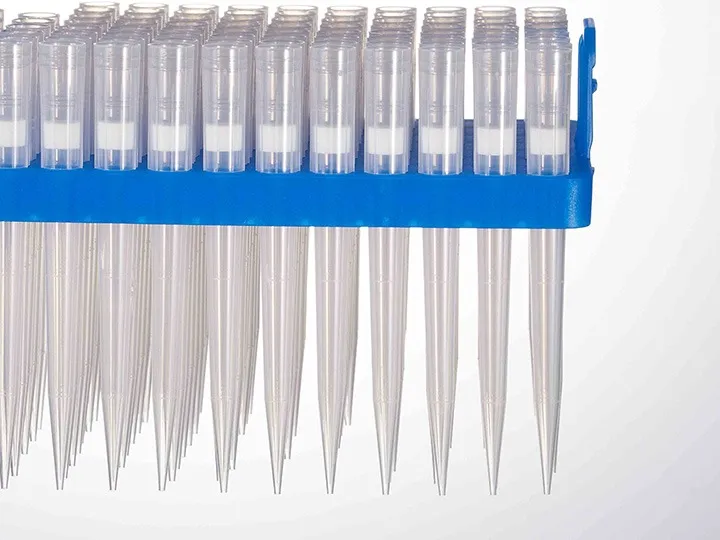
Aerosol contamination can occur when liquid handling creates tiny droplets or airborne residues that move into the pipette shaft, onto the tip cone, or between samples. Filtered pipette tips help reduce aerosol transfer by adding a barrier inside the tip. They are especially important for PCR/qPCR setup, RNA workflows, diagnostic labs, low-copy template work, and any process where carryover can cause false positives, degraded samples, or inconsistent results.
| Workflow | Contamination Risk | Recommended Consumable | Buyer Priority |
|---|---|---|---|
| PCR setup | Template carryover and false positives | Filtered DNase/RNase-free tips | Aerosol barrier, clean packaging, lot traceability |
| qPCR | Low-volume variation and cross contamination | Filtered low-retention tips | Fit, retention, consistency, rack packaging |
| RNA extraction | RNase introduction and sample degradation | RNase-free filtered tips and clean tubes | RNase-free claim and protected handling |
| Diagnostic lab | Invalid runs or retesting | Sterile filtered tips and traceable lots | Documentation, repeatability, supplier stability |
| Routine teaching lab | Lower workflow sensitivity | Standard or filtered tips depending on protocol | Budget, fit, and practical packaging |
Buyer Type Mapping
| Buyer Type | Main Concern | How To Select Tips |
|---|---|---|
| Distributor | MOQ, margin, repeat orders, product range | Carry both standard tips and filtered tips for different customer risk levels. |
| Diagnostic lab | False positives, traceability, contamination control | Prioritize filtered, sterile, DNase/RNase-free options with stable documentation. |
| Research lab | Reproducibility and workflow flexibility | Select filtered tips for nucleic-acid work and standard tips for lower-risk routine tasks. |
| University lab | Budget and shared use | Use filtered tips for demonstration of PCR/qPCR workflows and standard tips for general teaching. |
| Pharma or biotech | Validation, QC, batch consistency | Request stronger supplier documentation and lot-level consistency. |
| Importer | Carton planning, shelf life, label claims | Confirm rack/bulk/reload options, carton volume, and whether claims appear correctly on packaging. |
What Aerosol Contamination Means in Pipetting
Aerosol contamination refers to the transfer of small liquid particles, droplets, or residues created during pipetting. These particles may move upward into the pipette body, remain near the tip cone, or spread to nearby surfaces. In sensitive workflows, even a small amount of carried-over nucleic acid, enzyme, reagent, or sample material can affect results.
Aerosol risk increases when users pipette volatile liquids, biological samples, low-volume reactions, viscous reagents, or materials that can create bubbles or splashes. Fast aspiration, forceful dispensing, repeated pipetting, and poor technique can increase the risk. Consumable choice does not replace good technique, but it can reduce avoidable exposure.
Filtered Tips vs Non-Filtered Tips
| Tip Type | Best Use | Limitations | Buyer Decision |
|---|---|---|---|
| Non-filtered tips | Routine liquid handling, buffers, teaching labs | No aerosol barrier inside the tip | Use when workflow risk is low and budget matters. |
| Filtered tips | PCR, qPCR, RNA, diagnostic samples | Higher cost than standard tips | Use when carryover or aerosol contamination could affect results. |
| Filtered low-retention tips | Low-volume qPCR, enzymes, viscous liquids | Requires stronger specification control | Use when precision and sample recovery matter. |
| Sterile filtered tips | Diagnostic and contamination-sensitive workflows | Sterile does not automatically mean DNase/RNase-free | Confirm every required claim separately. |
Filtered Does Not Automatically Mean Sterile
A filtered tip includes a barrier intended to reduce aerosol transfer. Sterile means the product has been processed to control viable microorganisms. DNase/RNase-free means the product is controlled for nucleic-acid degrading enzymes. Low retention means the tip surface is designed to reduce liquid residue. These claims are related to cleanliness and performance, but they are not the same claim.
Buyers should avoid assuming one word covers everything. A PCR lab may need filtered and DNase/RNase-free tips. A diagnostic lab may need sterile, filtered, and traceable packaging. A general research lab may only need filtered tips for specific workflows. Matching the claim to the application is the heart of professional procurement.
Application-Based Selection
PCR and qPCR: Filtered tips are strongly recommended because carryover can create false positives or inconsistent amplification. Low-retention filtered tips may help when working with expensive enzymes, master mix, or low-volume reactions.
RNA workflows: RNase-free handling is critical. Filtered tips help reduce transfer risk, but buyers should also confirm RNase-free claims, clean packaging, and correct storage practices.
Diagnostic laboratories: The cost of contamination includes retesting, delayed reporting, and loss of confidence. Buyers should prioritize filtered, sterile, traceable products for sensitive sample preparation.
Cell culture and biotech: Aerosol risk may matter when pipetting biological samples, media additives, or contamination-sensitive reagents. Tip choice should match workflow sensitivity and validation requirements.
Specification Interpretation Framework
| Specification | Why It Matters | Supplier Question |
|---|---|---|
| Aerosol barrier / filter | Helps reduce transfer of aerosols into pipette shaft | What filter material and format are used? |
| DNase/RNase-free | Important for DNA and RNA workflows | Does the claim apply to the exact SKU and packaging? |
| Sterile | Supports controlled biological or diagnostic handling | What sterilization method and shelf life are provided? |
| Low retention | Reduces liquid residue and improves recovery | Is low-retention treatment available for filtered tips? |
| Universal fit | Poor fit can cause leakage and volume error | Can samples be tested with common pipette brands? |
| Packaging format | Rack, reload, and bulk formats create different exposure risks | Which format is recommended for sensitive workflows? |
Packaging Choices: Rack, Reload, Bulk, or Individually Wrapped?
Packaging has a direct effect on contamination control. Rack tips are convenient and reduce repeated handling. Reload systems can reduce plastic waste and storage volume, but users must handle them carefully. Bulk tips are cost-effective for routine work, but they create more exposure during transfer and are less ideal for sensitive workflows. Individually wrapped tips provide strong protection for specific applications but are slower and more expensive.
| Packaging | Best Fit | Contamination Control | Commercial Tradeoff |
|---|---|---|---|
| Rack | PCR, qPCR, diagnostic prep | Good protection and workflow efficiency | Higher volume and cost |
| Reload | Labs balancing waste and cleanliness | Good if handled correctly | Requires user discipline |
| Bulk | Routine teaching or low-risk work | Lower protection during handling | Lower cost per tip |
| Individually wrapped | Special sterile or field workflows | High protection per item | Higher labor and packaging cost |
Procurement Checklist
- Define whether the workflow is routine, PCR/qPCR, RNA, diagnostic, cell culture, or biotech QC.
- Separate standard tips from filtered, sterile, DNase/RNase-free, and low-retention options.
- Confirm that the filter claim applies to the exact tip volume and packaging format.
- Ask whether rack, reload, bulk, and sterile rack options are available.
- Request samples to test fit, seal, aspiration, dispensing, and tip ejection.
- Check carton quantity, shelf life, labeling, and lot traceability.
- For distributors, confirm MOQ for standard packaging and OEM/private label packaging.
- For sensitive workflows, ask for documentation supporting DNase/RNase-free, sterile, or low-retention claims.
Supplier Questions Before Bulk Ordering
| Question | Good Response | Warning Sign |
|---|---|---|
| Which workflows is this tip designed for? | Supplier can explain routine, PCR, qPCR, diagnostic, or low-retention use. | Supplier says one tip fits every application without details. |
| Does the filter protect against aerosol transfer? | Supplier describes filter design and intended barrier function. | No explanation beyond the word filtered. |
| Are sterile and DNase/RNase-free options available? | Supplier clearly separates the claims by SKU. | Supplier treats sterile, filtered, and RNase-free as the same thing. |
| Can samples be tested before a large order? | Supplier supports sample validation and repeat-order SKU control. | Supplier pushes bulk order before compatibility testing. |
Common Mistakes Buyers Should Avoid
Using bulk standard tips for every workflow: This may reduce cost, but it can increase exposure risk for PCR, qPCR, RNA, or diagnostic workflows.
Assuming filtered means sterile: Filtered, sterile, DNase/RNase-free, and low retention are different specifications. Buyers should request the exact combination needed.
Ignoring pipette compatibility: Even a clean tip can perform poorly if it does not fit the pipette. Poor fit can cause leakage, inconsistent aspiration, and unreliable dispensing.
Skipping sample validation: Distributors should test samples before committing to private label or bulk orders, especially when selling to sensitive laboratory segments.
How OBObio Supports Clean Liquid Handling Sourcing
OBObio supports B2B buyers sourcing pipette tips, filtered tips, sterile tips, PCR/qPCR consumables, microcentrifuge tubes, sample handling products, and related laboratory consumables. Buyers can discuss product application, tip volume, packaging format, MOQ, carton planning, documentation, sample validation, and OEM/private label requirements.
For broader contamination guidance, use the Contamination Control Hub. Buyers comparing specifications can also review the Product Selection and Comparison Hub. For supplier evaluation and MOQ planning, visit the Lab Consumables Sourcing Hub.
FAQ: Aerosol Contamination and Filtered Tips
Do filtered pipette tips completely prevent aerosol contamination?
No consumable can replace good technique, but filtered tips help reduce aerosol transfer into the pipette shaft and are strongly preferred for sensitive workflows.
Are filtered tips always sterile?
No. Filtered and sterile are different claims. Buyers should confirm whether the exact SKU is filtered, sterile, DNase/RNase-free, low retention, or a combination.
When should labs use filtered tips?
Labs should use filtered tips for PCR, qPCR, RNA workflows, diagnostic sample preparation, low-copy templates, and contamination-sensitive liquid handling.
Are bulk tips suitable for PCR?
Bulk tips are usually better for routine low-risk work. PCR workflows generally benefit from rack-packed filtered tips with cleaner handling.
What should distributors ask before ordering filtered tips?
Ask about tip volume, filter design, sterility, DNase/RNase-free claims, low-retention options, pipette compatibility, packaging format, MOQ, and sample availability.
Request Pricing or Samples
Tell us the product type, quantity, destination country, and any packaging or certification requirements. OBObio will reply with suitable lab consumables options.