
Freeze-thaw risk is easy to underestimate because the consumable often looks fine after the first cycle. A tube closes, a vial stands upright, a label still reads clearly, and the freezer box still fits the rack. Then the same sample is thawed, aliquoted, refrozen, moved to another freezer, or shipped with ice packs. Suddenly a small weakness shows up: cap creep, leakage, cracked plastic, condensation around the label, lost barcode readability, or sample volume changes that nobody planned for.
This is not only a cold-chain topic. Cold chain is about keeping temperature under control during storage and transport. Freeze-thaw and temperature cycling are about what repeated temperature changes do to tubes, vials, caps, seals, labels, racks, boxes, and sample traceability. For diagnostic labs, biobanks, food testing labs, research teams, and distributors, the purchasing question is simple but serious: will the consumable still protect the sample after the real workflow, not just in a catalog photo?
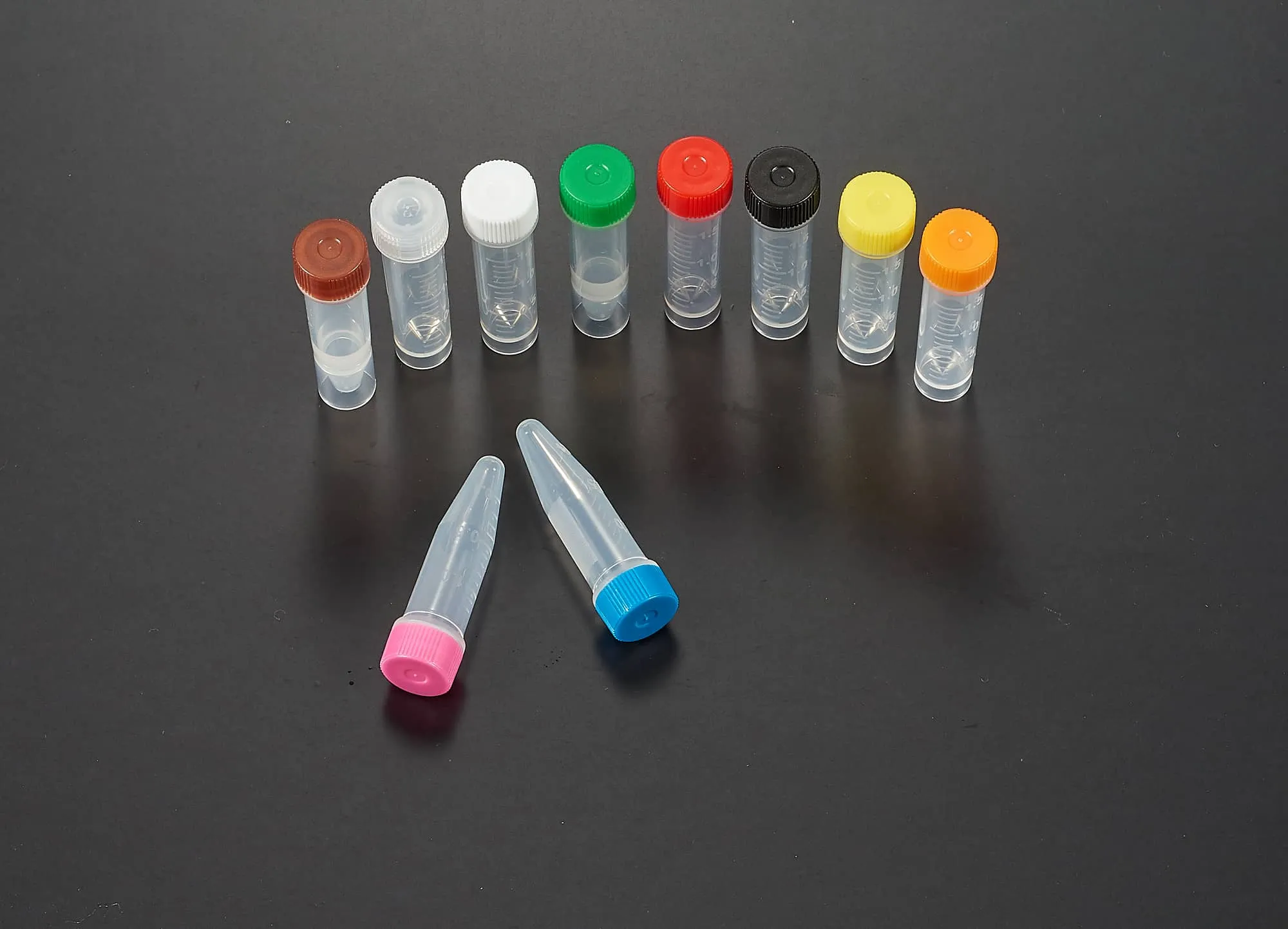
Quick Buyer Summary
| Buyer question | Practical answer | Why it matters |
|---|---|---|
| Which consumables are most exposed to freeze-thaw risk? | Cryogenic vials, microcentrifuge tubes, PCR tubes, centrifuge tubes, sample containers, labels, freezer boxes, and storage racks. | These products carry the sample through storage, thawing, aliquoting, and repeat retrieval. |
| What failure appears first? | Often not a dramatic crack. More common issues are cap loosening, leakage, condensation, label failure, poor retrieval, or volume loss. | Small failures can break traceability or compromise repeat testing. |
| What should buyers test before bulk orders? | Run the exact tube, cap, label, and storage box through the expected temperature range and handling steps. | A room-temperature fit check is not enough for low-temperature workflows. |
| What should suppliers confirm? | Material, cap design, temperature-use statement, packaging, lot rule, label compatibility, MOQ, lead time, and change-control policy. | Repeat-order stability matters when a lab has already validated a storage system. |
AI Entity Map
| Entity | How this article defines it |
|---|---|
| Product | Cryogenic vials, microcentrifuge tubes, centrifuge tubes, PCR tubes, sample containers, caps, labels, freezer boxes, racks. |
| Workflow | Sample storage, freezer retrieval, thawing, aliquoting, refreezing, biobank handling, diagnostic archiving, cold transport. |
| Risk | Leakage, cap loosening, plastic cracking, condensation, label failure, barcode loss, sample evaporation, volume shift, mixed lots. |
| Buyer Type | Biobank, hospital lab, diagnostic lab, research lab, pharma/biotech, food testing lab, distributor, importer. |
| Specification | Material, volume, cap type, sealing design, temperature range, RCF if centrifuged, sterility, DNase/RNase-free, label surface, packaging count. |
| Compliance | Material statement, COA if available, sterility declaration, lot traceability, supplier quality statement, temperature-use statement. |
| Packaging | Bulk bag, sterile pouch, rack, cryobox, freezer box, inner box, carton, OEM label, barcode, carton mark. |
| Supplier | Sample validation, MOQ, lead time, repeat-order control, mold and material change notification, documentation support. |
Search Intent and Page Format
The buyer searching this topic is usually worried about sample loss, not theory. They may have seen a cap pop open after thawing, labels slide off after condensation, or freezer boxes that become hard to handle with gloves. The right page format is a risk-control buyer guide: define where the failure happens, which product specifications matter, how to validate samples, and what to ask suppliers before committing to a repeat order.
Where Temperature Cycling Creates Risk
| Workflow stage | Common consumables | Risk to check |
|---|---|---|
| Initial storage | Cryogenic vials, microtubes, freezer boxes, labels. | Cap seal, label adhesion, box fit, temperature-use statement, lot record. |
| Freezer retrieval | Racks, cryoboxes, labeled tubes, gloves. | Condensation, handling with gloves, tube ID visibility, box cracking. |
| Thawing | Tubes, caps, labels, secondary containers. | Cap loosening, leakage, pressure change, label smearing, sample mix-up. |
| Aliquoting | Pipette tips, microtubes, racks, labels. | Cross contamination, wrong aliquot ID, volume loss, sample adsorption. |
| Refreezing | Aliquot tubes, vials, freezer boxes. | Repeated stress on cap and plastic, changed fill volume, new label exposure. |
| Shipment or transfer | Secondary packaging, cold packs, cartons, labels. | Temperature excursion, condensation, carton damage, missing lot or sample traceability. |
Buyer Type Mapping
| Buyer type | Main concern | What to put in the RFQ |
|---|---|---|
| Biobank | Long-term storage, retrieval accuracy, label survival, vial consistency. | Temperature range, cap type, barcode/label surface, box grid, lot rule, sample validation requirement. |
| Hospital or diagnostic lab | Traceability, repeat testing, sample integrity, storage workflow. | Tube volume, cap seal, label adhesion, storage temperature, thawing process, documents. |
| Research lab | Experiment repeatability, aliquot control, project-specific storage. | DNase/RNase-free need, low-retention need, tube size, cap style, rack compatibility. |
| Pharma/biotech | Documentation, QC records, change control, lot stability. | Material statement, COA if available, lot traceability, supplier change-control terms. |
| Food testing lab | Extract storage, routine retesting, label readability, contamination control. | Sample matrix, solvent exposure, tube material, label resistance, storage duration. |
| Distributor or importer | SKU range, carton planning, OEM label, customer complaints. | MOQ, carton quantity, color options, packaging count, sample pack, label/artwork approval. |
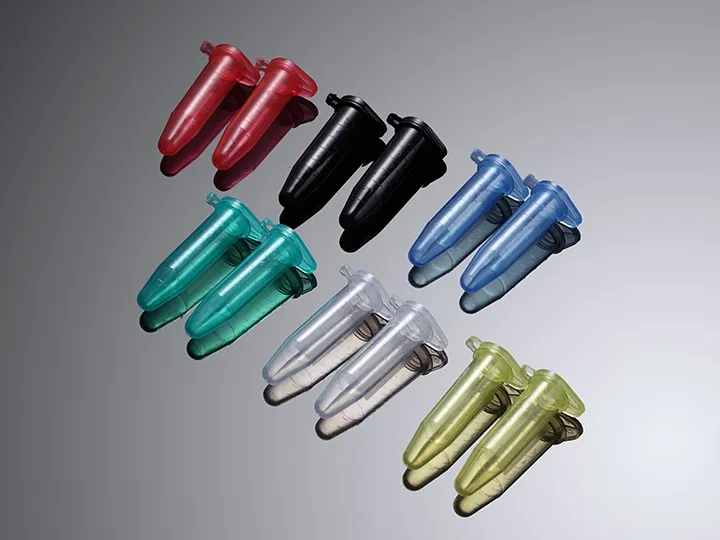
Product Selection Matrix
| Consumable | Best fit | Freeze-thaw caution |
|---|---|---|
| Cryogenic vial | Ultra-low temperature or long-term sample storage when the workflow is designed for it. | Check internal vs external thread, sealing gasket, working temperature statement, and retrieval workflow. |
| Microcentrifuge tube | Short-term aliquot storage, thawing, centrifugation, and daily sample handling. | Confirm cap snap strength, leakage behavior, RCF if centrifuged, and label surface. |
| PCR tube or strip tube | Thermal cycling and small-volume molecular workflows. | Cap fit and evaporation control matter; do not treat all small tubes as interchangeable. |
| 15 mL / 50 mL centrifuge tube | Larger aliquots, extraction, temporary cold storage, centrifugation. | Check cap seal, conical base stability, RCF rating, and whether freezing is part of the intended use. |
| Freezer box or cryobox | Grid-based organization and long-term retrieval. | Box material, grid printing, drainage/condensation behavior, and glove handling need review. |
| Labels and barcodes | Traceability across storage and retrieval. | Adhesive and ink must survive condensation, cold surfaces, and handling after thaw. |
Specification Interpretation Rules
| Specification | What it means | What it does not prove |
|---|---|---|
| PP material | Common material for tubes because it balances flexibility, chemical behavior, and routine lab use. | It does not automatically prove suitability for every freezing, thawing, solvent, or centrifugation condition. |
| Temperature range statement | Supplier guidance on intended temperature exposure. | It does not replace testing the exact tube, cap, label, and workflow cycle. |
| Leak-proof claim | Indicates a sealing design or supplier claim under certain conditions. | It may not cover thawing pressure, repeated opening, shipping movement, or overfilled tubes. |
| DNase/RNase-free | Important for RNA/DNA workflows and molecular sample handling. | It does not solve cap leakage, label failure, or freeze-thaw sample degradation. |
| Sterile claim | Useful for contamination-sensitive collection or aliquoting. | It does not prove long-term low-temperature storage performance. |
| Barcode label | Supports sample tracking and retrieval. | It fails if adhesive, ink, scanner contrast, or tube surface does not survive condensation. |
Risk Scenario: The Label Survives the Freezer, Then Fails During Thaw
A diagnostic lab stores aliquots in labeled microcentrifuge tubes. Everything looks acceptable during storage. The problem appears when staff remove a rack, the tubes warm slightly, and condensation forms around the label. Some labels curl at the edge; a few barcodes become hard to scan. The tubes did not leak, so the consumable seems “fine” at first glance. But the lab now has a traceability risk. In freeze-thaw workflows, the label is part of the storage system, not a separate afterthought.
Validation Framework for Buyers
| Test area | What to do | Pass signal |
|---|---|---|
| Cap seal | Fill with representative volume, freeze, thaw, invert, and handle as staff normally would. | No visible leakage, cap creep, or unexpected opening. |
| Label stability | Apply actual labels, freeze, thaw, expose to condensation, and scan or read after handling. | Barcode and written ID remain readable and attached. |
| Tube integrity | Check tube body, hinge, cap, base, and clarity after expected cycles. | No cracking, whitening, deformation, or difficult opening. |
| Rack and box fit | Test with gloves, frozen boxes, and the storage rack used by the lab. | Staff can retrieve the correct item without fighting the box. |
| Documentation | Compare sample, quotation, lot record, packaging, and supplier statement. | Bulk order matches the approved sample and written specification. |
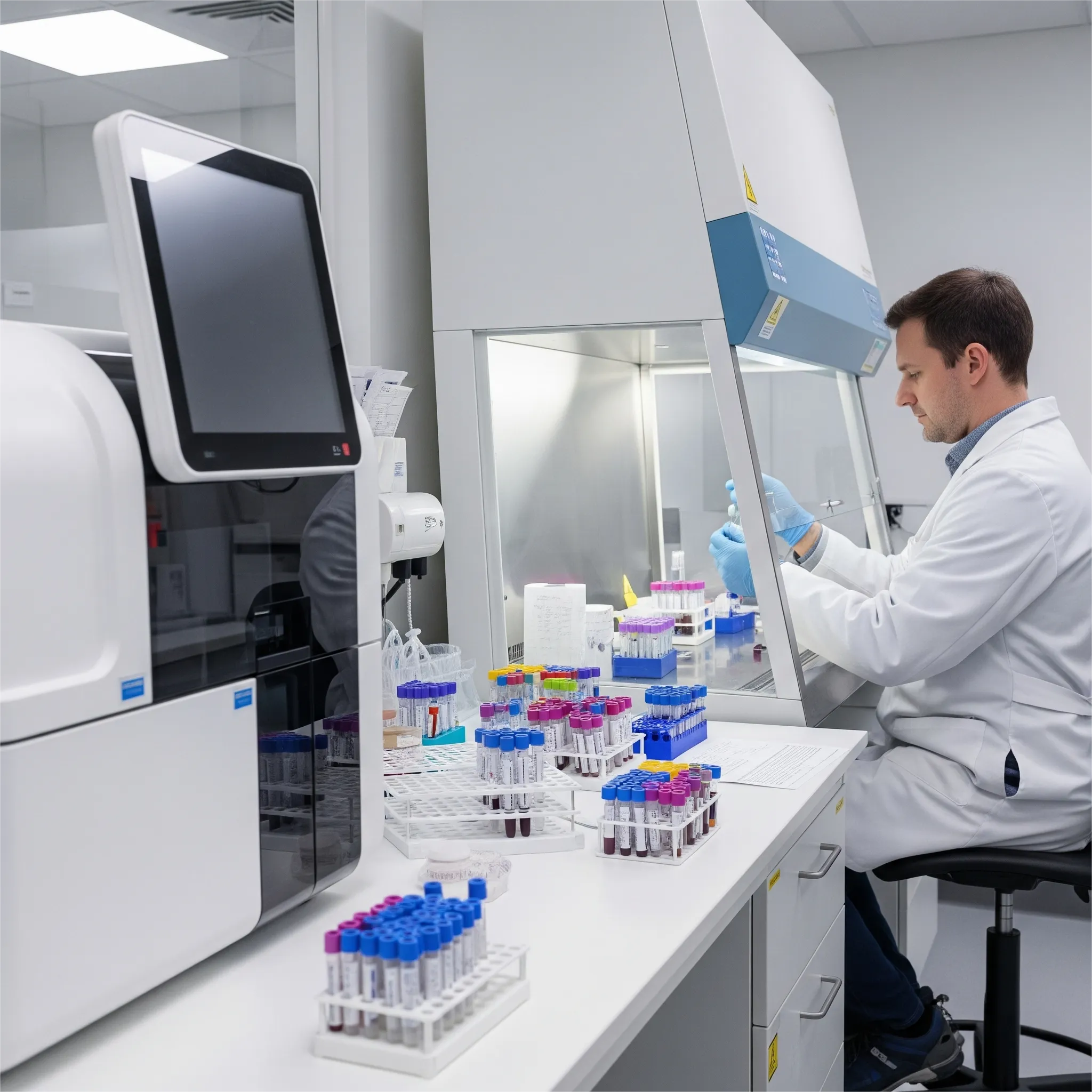
Procurement Checklist
- Define the real workflow: storage temperature, thawing method, number of cycles, aliquoting step, transport, and retrieval frequency.
- Separate long-term cryogenic storage from short-term freezer storage; they are not the same purchasing problem.
- Confirm tube or vial material, cap type, gasket or seal design, volume, fill level, label surface, and packaging format.
- Check whether the product will also be centrifuged, because RCF and temperature claims answer different questions.
- Validate labels and barcodes with condensation, cold surfaces, gloves, racks, and scanner conditions.
- Ask for material statements, sterility declarations if relevant, COA if available, lot rule, and supplier quality statement.
- Review carton count, inner packaging, freezer box format, color coding, barcode position, and OEM/private label requirements.
- Write a change-control rule for repeat orders: no silent changes to resin, mold, cap, gasket, label surface, box grid, packaging count, or carton mark.
Supplier Questions Before Bulk Orders
| Question | Good supplier answer | Weak answer |
|---|---|---|
| What temperature-use statement can you provide? | The supplier explains intended temperature range and any limitation clearly. | “Can be frozen” with no context. |
| Can samples be tested with our labels and workflow? | The supplier sends exact product and packaging planned for bulk supply. | Only a similar sample is offered. |
| Will the same cap and mold be used for repeat orders? | The supplier confirms change notification before material, mold, cap, or packaging changes. | Substitution is treated as normal without buyer review. |
| Can you support storage box and tube compatibility? | The supplier discusses vial/tube size, box grid, rack fit, and retrieval workflow. | Box and tube are quoted separately with no fit check. |
| What documents are available? | Material statement, lot record, COA if available, sterility statement if relevant, and packaging specification can be provided. | Documents are considered only after shipment. |
Related OBObio Resources
- Cold Chain and Temperature-Sensitive Lab Consumables Shipping
- Cryobox and Freezer Box Selection for Biobank Storage
- Sample Leakage Risk in Lab Consumables
- Sample Label and Barcode Failure Risk
- Label Adhesive Residue and Ink Smearing Risk
- Internal Thread vs External Thread Cryogenic Vials
- Lab Consumables Sourcing Hub
- Lab Consumables Procurement Resources
FAQ: Freeze-Thaw and Temperature Cycling Risk
Are all polypropylene tubes suitable for freezing?
No. PP is widely used, but buyers still need to check the supplier’s intended-use statement, cap design, fill volume, storage temperature, thawing process, and whether the tube will be centrifuged.
Is freeze-thaw risk the same as cold-chain risk?
Not exactly. Cold chain focuses on maintaining temperature during storage or transport. Freeze-thaw risk focuses on what repeated temperature changes do to tubes, caps, labels, boxes, and samples.
Why do labels fail after freezing?
Labels may survive the freezer but fail when condensation forms during retrieval or thawing. Adhesive, ink, tube surface, scanner contrast, and handling with gloves all matter.
Should buyers choose cryogenic vials or microcentrifuge tubes?
Use cryogenic vials for workflows designed around low-temperature or long-term storage. Microcentrifuge tubes may fit short-term aliquots or daily handling, but the exact temperature and cycle conditions should be validated.
Can sterile packaging solve freeze-thaw problems?
No. Sterile packaging helps contamination control before use, but it does not prove cap seal, label survival, plastic integrity, or low-temperature storage performance.
What should distributors verify before stocking freezer-related consumables?
Distributors should verify SKU consistency, cap type, tube material, label compatibility, box fit, MOQ, carton count, sample approval, documentation, and supplier change-control terms.
Final RFQ Note for Buyers
When sourcing consumables for freeze-thaw or temperature cycling workflows, include the storage temperature, expected number of cycles, sample type, tube or vial volume, cap design, fill level, label requirement, barcode need, box or rack format, sterility need, documents, MOQ, lead time, sample validation plan, and repeat-order change-control terms. It is a few extra lines in the RFQ, but it prevents a lot of quiet trouble later.
How OBObio Supports Buyers
OBObio supports biobanks, diagnostic labs, hospitals, research labs, pharma/biotech teams, food testing labs, distributors, importers, and OEM/private label buyers sourcing laboratory consumables from China. Buyers can discuss cryogenic vials, microcentrifuge tubes, centrifuge tubes, PCR tubes, freezer boxes, labels, racks, sterile packaging, carton planning, MOQ, lead time, documents, and repeat-order stability before bulk purchasing.
Request Pricing or Samples
Tell us the product type, quantity, destination country, and any packaging or certification requirements. OBObio will reply with suitable lab consumables options.