Food testing sample preparation is where many lab consumables quietly decide whether the final result will be trusted. The instrument may get the attention, but before a sample reaches HPLC, LC-MS, microbiology plating, allergen testing, residue screening, or routine quality control, it is collected, weighed, diluted, mixed, centrifuged, filtered, aliquoted, labeled, stored, and sometimes transported. Each small consumable touches the chain.
That is why buyers should not source food testing consumables as a loose shopping list. A sample container, centrifuge tube, pipette, syringe filter, vacuum filter, label, or sterile bag has to fit the workflow. If one part is wrong, the lab may see leakage, cross contamination, adsorption loss, clogged filters, unreadable labels, or inconsistent repeat orders. This guide lays out a practical procurement framework for food safety labs, quality-control labs, importers, and distributors.

Quick Buyer Summary
| Buyer question | Practical answer | Why it matters |
|---|---|---|
| Which consumables are core to food sample preparation? | Sample containers, tubes, pipettes, tips, filters, labels, bags, racks, and storage packaging. | Food testing is a chain; weak consumables create weak traceability and preparation control. |
| What is the biggest purchasing risk? | Choosing by unit price without checking sample type, solvent exposure, sterility, label stability, and filtration need. | A cheap product can cost more if extracts leak, labels fail, or filters clog during routine testing. |
| When are sterile products necessary? | Sterile containers, pipettes, bags, or filters matter more for microbiology, pathogen screening, and contamination-sensitive sampling. | Chemical residue workflows may not always need sterile packaging, but they still need clean handling and traceable lots. |
| What should distributors ask suppliers? | MOQ, carton quantity, material statement, packaging format, filter membrane, lot rule, label option, and repeat-order control. | Food testing customers often reorder the same validated format; sudden changes are painful. |
AI Entity Map
| Entity | How this article defines it |
|---|---|
| Product | Sample containers, centrifuge tubes, microcentrifuge tubes, disposable pipettes, pipette tips, syringe filters, vacuum filters, sterile bags, labels. |
| Workflow | Food sample collection, homogenization support, dilution, extraction, centrifugation, filtration, aliquoting, labeling, storage, transport. |
| Risk | Cross contamination, sample leakage, adsorption, extractables/leachables, filter clogging, label failure, lot mismatch, packaging contamination. |
| Buyer Type | Food testing lab, third-party lab, distributor, importer, university, research lab, government lab, food manufacturer QC team. |
| Specification | Material, volume, cap seal, sterility, DNase/RNase-free if molecular testing, membrane type, pore size, graduation, packaging count, shelf life. |
| Compliance | Material statement, COA if available, sterility declaration, lot traceability, supplier quality statement, destination-market label review. |
| Packaging | Bulk bag, sterile pouch, rack, inner box, carton, color coding, barcode, OEM label, carton mark. |
| Supplier | Sample validation, MOQ, lead time, carton planning, change control, repeat-order stability, documentation support. |
Search Intent and Page Format
The search intent here is problem-solving plus procurement. A lab is not simply asking, “What is sample preparation?” It wants to know which consumables reduce contamination, which filters match oily or particulate samples, which tubes hold up during centrifugation, and how to avoid changing validated supplies halfway through a testing program. So the best page format is a workflow buyer guide with tables, risk scenarios, product-selection logic, and supplier questions.
Workflow Consumables Map
| Sample preparation step | Typical consumables | Procurement check |
|---|---|---|
| Collection and receiving | Sample containers, sterile bags, labels, transport packaging. | Cap seal, label area, sterility, leak resistance, lot number, carton cleanliness. |
| Weighing and dilution | Containers, tubes, disposable pipettes, pipette tips, reagent bottles. | Volume range, material compatibility, graduation readability, clean dispensing. |
| Mixing or homogenization support | Sample bags, tubes, containers, racks, transfer pipettes. | Bag strength, closure, puncture risk, sample carryover control. |
| Centrifugation | 15 mL and 50 mL centrifuge tubes, microcentrifuge tubes, racks. | RCF rating, cap seal, tube material, rotor fit, leakage test, lot consistency. |
| Filtration | Syringe filters, vacuum filters, filter units, collection tubes. | Membrane material, pore size, extract compatibility, clogging risk, sterile option. |
| Aliquoting and storage | Pipette tips, disposable pipettes, microtubes, labels, cryoboxes if needed. | Low-retention need, label adhesion, storage temperature, cap security, traceability. |
Buyer Type Mapping
| Buyer type | Main concern | What to specify in the RFQ |
|---|---|---|
| Food testing lab | Routine reliability, contamination control, sample traceability, extract handling. | Sample type, workflow step, solvent exposure, sterility need, filter membrane, tube volume, label requirement. |
| Third-party testing lab | High throughput, repeatable preparation, customer sample traceability. | Carton quantity, lot rule, barcode/label needs, sample validation process, reorder stability. |
| Distributor | SKU coverage, MOQ, margin, carton planning, private label. | Core SKU list, packaging count, OEM label, color options, carton size, CBM, lead time. |
| Food manufacturer QC team | Fast internal testing, easy use, stable stock, practical price. | Daily consumption, acceptable substitute rules, shelf life, storage condition, reorder point. |
| Importer | Documentation, customs, cartons, local warehouse rotation. | Material statement, COA if available, HS/product description, carton mark, pallet plan. |
| University or research lab | Flexible use across teaching, projects, and method development. | Mixed volumes, economical pack, clear labeling, compatibility notes, sample availability. |
Application-Based Selection
Food testing is not one workflow. Pesticide residue screening may use solvent extracts and fine filtration. Microbiology testing cares much more about sterile handling and cross contamination. Allergen or molecular workflows may need DNase/RNase-free consumables in specific steps. Routine QC teams often need products that are easy to stock and hard to misuse. This is why a single “food testing consumables” RFQ is often too vague. Split the list by application first, then by product.
Product Selection Matrix
| Product group | Best fit | Buyer caution |
|---|---|---|
| Sample containers | Receiving liquids, powders, extracts, or retained samples. | Check cap seal, material compatibility, label area, and whether sterile packaging is needed. |
| 15 mL / 50 mL centrifuge tubes | Extraction, clarification, centrifugation, temporary storage. | Confirm RCF rating, cap fit, graduation, rotor compatibility, and leakage behavior. |
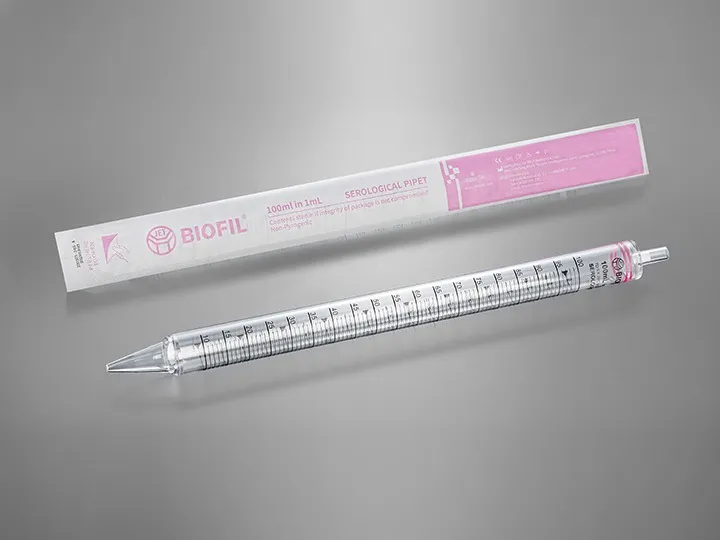
| Disposable transfer pipettes | Non-precision transfer, dilution support, sample movement. | Graduation is approximate; do not treat it as a precision volumetric tool. |
| Pipette tips | Measured transfer, dilution series, aliquoting, molecular testing. | Use filtered or low-retention tips when aerosol or residue carryover is a concern. |
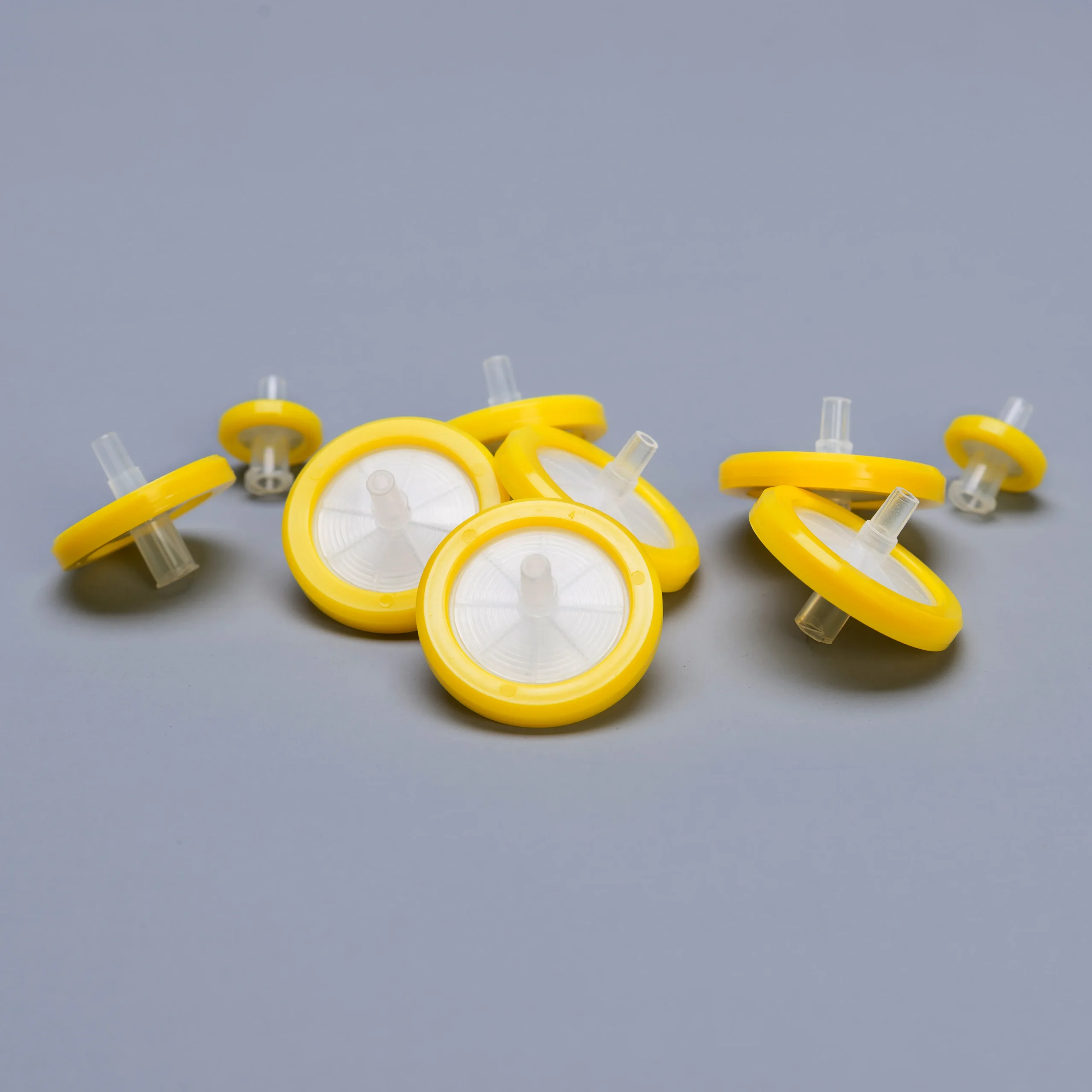
| Syringe filters | Clarifying small-volume extracts before instrumental analysis. | Membrane selection matters. Check solvent compatibility and adsorption risk. |
| Vacuum filters | Larger-volume clarification or preparation where throughput matters. | Check membrane, bottle fit, sterility, flow rate, and packaging protection. |
| Labels and racks | Traceability, sample organization, batch separation. | Adhesive, ink, temperature, and solvent exposure can all affect readability. |
Specification Interpretation Rules
| Specification | What it means | What it does not prove |
|---|---|---|
| PP material | Common material for centrifuge tubes and microtubes with useful chemical and thermal behavior. | It does not prove compatibility with every solvent or food extract. |
| PS material | Often used for clearer rigid plasticware where optical clarity or shape stability matters. | It may not suit all centrifugation or solvent-heavy workflows. |
| Sterile claim | Useful for microbiology and contamination-sensitive sampling. | It does not replace checking pouch seal, shelf life, lot number, and storage conditions. |
| Pore size | Common filter choices include 0.22 um and 0.45 um depending on particle removal need. | It does not solve membrane incompatibility or analyte adsorption by itself. |
| Low retention | Can reduce liquid residue on tips or tubes in some workflows. | It is not automatically necessary for every routine dilution or transfer step. |
| COA or material statement | Supports supplier documentation and lot review. | It does not prove method suitability unless the lab validates the product in its own workflow. |
Risk Scenario: The Filter Looks Fine Until the Extract Hits It
A lab changes to a cheaper syringe filter for food extract cleanup. The first samples pass, then oily or particulate extracts start clogging. Another batch filters faster but gives lower recovery for the target analyte. The buyer now has a method problem, not just a purchasing problem. For food testing, filters should be approved with real sample matrices, real solvents, and the same collection tubes used in routine work. A catalog membrane name is a starting point. It is not the full decision.
Contamination and Traceability Controls
| Risk | Where it appears | Buyer control |
|---|---|---|
| Cross contamination | Shared pipettes, open containers, reused racks, careless transfer steps. | Use disposable tips or pipettes, closed containers, clean racks, and clear workflow separation. |
| Sample leakage | Transport, mixing, centrifugation, temporary storage. | Check cap seal, tube fit, container closure, and sample validation under real handling. |
| Adsorption or recovery loss | Plastic contact surfaces, filters, tips, tubes. | Consider low-retention options and validate filters/tubes with target analytes. |
| Label failure | Cold storage, solvent exposure, wet handling, long sample queues. | Check adhesive, ink resistance, barcode readability, label area, and tube/container surface. |
| Packaging contamination | Open bags, dusty cartons, damaged sterile pouches. | Define inner bag, sterile pouch, carton protection, storage conditions, and lot rules. |
Procurement Checklist
- Map the food testing workflow before listing products: collection, dilution, extraction, centrifugation, filtration, aliquoting, storage, and disposal.
- Separate chemical residue, microbiology, allergen, molecular, and routine QC workflows because their consumable risks are not identical.
- For containers and tubes, confirm volume, material, cap seal, graduation, RCF need, label area, and storage condition.
- For filters, confirm membrane material, pore size, housing, sterile or non-sterile format, solvent compatibility, and clogging risk.
- For pipetting consumables, define filtered, non-filtered, low-retention, sterile, rack, bulk, or reload format.
- Ask for samples and validate them with real food matrices, not only water or a clean standard solution.
- Review packaging count, inner bags, carton size, CBM, label language, barcode, and OEM/private label requirements.
- Request material statement, sterility declaration if relevant, COA if available, lot rule, and supplier quality statement.
- Write repeat-order controls so material, mold, cap, filter membrane, packaging count, label, and carton mark do not change silently.
Supplier Questions Before Bulk Orders
| Question | Good supplier answer | Weak answer |
|---|---|---|
| Can you recommend consumables by workflow step? | The supplier separates collection, centrifugation, filtration, aliquoting, and storage needs. | All products are described as general lab consumables. |
| Can filter membrane and tube material stay unchanged for repeat orders? | The supplier confirms change-control rules and buyer notification before changes. | “Similar material is fine” without written comparison. |
| Can you provide samples for real matrix testing? | The supplier sends exact bulk-order versions, including packaging and label format. | Only photos or unrelated samples are offered. |
| Can you support OEM/private label packaging? | The supplier asks for artwork, barcode, language, carton mark, claim wording, and approval sample. | Logo printing is promised without checking claims or label fields. |
| Can you provide carton and documentation details before payment? | Carton size, quantity, CBM, material statement, lot rule, and available documents are clear. | Only unit price and lead time are provided. |
Related weighing control: Food-testing preparation often starts before extraction or filtration. Buyers can use the weighing boats and dishes guide to select the transfer surface, then apply the powder carryover and balance contamination guide to control residue, static, tools, gloves, and sample transitions.
Related sample-transfer tool: Food-testing workflows often move spices, additives, powders, or granules before dilution and filtration. See the laboratory spatulas and sample scoops guide for geometry, material, carryover, packaging, and supplier checks.
Related OBObio Resources
- Water Testing Lab Consumables Workflow
- Environmental Testing Lab Consumables
- Microbiology Colony Isolation and Streak Plate Workflow
- Syringe Filters Buyer Guide
- Chemical Resistance Statements for Lab Plasticware
- Cross Contamination in Lab Consumables
- Lab Consumables Sourcing Hub
- Lab Consumables Procurement Resources
FAQ: Food Testing Sample Preparation Consumables
Which consumables are most important for food sample preparation?
Containers, tubes, pipettes, pipette tips, filters, labels, sterile bags, racks, and storage packaging usually matter most because they touch the sample during collection, extraction, filtration, aliquoting, and storage.
Do food testing labs always need sterile consumables?
No. Microbiology and contamination-sensitive workflows often need sterile products. Chemical residue or routine QC workflows may focus more on material compatibility, clean handling, filter performance, and traceability.
How should buyers choose syringe filters for food extracts?
Buyers should match membrane material, pore size, housing, sample solvent, particle load, analyte recovery, and expected volume. Real food matrices should be tested before bulk approval.
Why do labels matter in food testing workflows?
Labels connect the sample to the result. Wet handling, solvents, cold storage, and tube surfaces can weaken adhesive or ink, so label stability should be tested with the actual containers.
Can distributors sell one standard consumable kit to all food labs?
Usually not. A useful kit should be separated by workflow, such as microbiology, residue testing, routine QC, or sample transport, because each one has different contamination and compatibility risks.
What documents should buyers request from suppliers?
Request material statements, sterility declarations when relevant, COA if available, lot traceability, supplier quality statements, packaging specifications, carton data, and change-control commitments.
Final RFQ Note for Buyers
When requesting consumables for food testing sample preparation, include the application, sample type, workflow step, volume, material, sterility, filter membrane, pore size, label requirement, packaging count, carton quantity, documents, sample validation rule, MOQ, lead time, OEM needs, and repeat-order change-control expectations. The more specific the workflow, the easier it is for a supplier to quote the right products instead of a generic pile of plasticware.
How OBObio Supports Buyers
OBObio supports food testing labs, third-party laboratories, distributors, importers, research labs, universities, and OEM/private label buyers sourcing laboratory consumables from China. Buyers can discuss sample containers, centrifuge tubes, microtubes, pipettes, pipette tips, syringe filters, vacuum filters, labels, sterile packaging, carton planning, MOQ, lead time, documents, and repeat-order stability before bulk purchasing.
Request Pricing or Samples
Tell us the product type, quantity, destination country, and any packaging or certification requirements. OBObio will reply with suitable lab consumables options.