
A 15ml centrifuge tube is the most versatile laboratory container for blood separation, cell culture, and sample processing, with modern versions offering leak-proof designs and contamination-free construction. These tubes have become essential tools in research laboratories, clinical settings, and biotechnology companies worldwide. Moreover, choosing the right brand can significantly impact your results and budget. Which 15ml centrifuge tube brand offers the best value for your specific needs?
Which 15ml Centrifuge Tube Brand Should You Choose in 2025?
The best 15ml centrifuge tube brand depends on your specific application: Corning for premium research, CELLSTAR for clinical reliability, HAWK for budget-conscious labs, and SimPure for molecular biology work. Globe Scientific offers the largest selection of centrifuge tubes for use in all types of centrifuges, while specialized brands focus on specific applications. Therefore, understanding your priorities helps narrow the selection.
⚡ Quick Brand Comparison: Best 15ml Centrifuge Tubes 2025
| Brand | Material | Max RCF | Key Features | Best For | Price Range |
|---|---|---|---|---|---|
| Corning | PP | 12,000×g | CentriStar™ cap, RNase/DNase-free | Research labs | $0.80-$1.20 |
| CELLSTAR | PP | 12,000×g | High thermal resistance, sterile | Clinical use | $0.70-$1.00 |
| HAWK | PP | 12,000×g, -86°C freezable | Foam racks included | Budget labs | $0.45-$0.75 |
| Globe Scientific | PS or PP versions | 12,000×g | Economical to premium | All applications | $0.15-$0.90 |
| SimPure | PP | 12,000×g | Leak-proof caps, DNA-free | Molecular biology | $0.60-$0.85 |
Top Brand Analysis:
🏆 Corning (Premium Choice)
- Strengths: Advanced CentriStar™ cap technology, sterile RNase-/DNase-free construction
- Best for: High-end research labs requiring maximum reliability
- Price: Premium ($0.80-$1.20 per tube)
🔬 CELLSTAR by Greiner (Clinical Favorite)
- Strengths: Made of polypropylene for high thermal, mechanical and chemical resistance
- Best for: Clinical diagnostics and routine laboratory work
- Price: Mid-range ($0.70-$1.00 per tube)
💰 HAWK (Best Value)
- Strengths: Conical design with premium polypropylene, freezable to -86°C
- Best for: Budget-conscious labs needing quality performance
- Price: Economy ($0.45-$0.75 per tube)
What Makes 15ml Centrifuge Tubes Essential for Modern Labs?
15ml centrifuge tubes are essential because they provide the optimal sample volume for most routine procedures while maintaining structural integrity under high centrifugal forces up to 12,000×g. The maximum centrifugal force is 12,000×g for the 15mL tubes, making them suitable for diverse applications. Additionally, they represent the perfect balance between sample capacity and processing efficiency.
Market Growth & Demand:
The global centrifuge tubes market continues expanding rapidly:
- 2024 Market Value: USD 2.1 Billion
- 2031 Projection: USD 5.2 Billion
- Growth Rate: 4.8% CAGR
- Key Drivers: AI-enhanced research, personalized medicine expansion
How Do You Select the Right 15ml Centrifuge Tube Features?
Select 15ml centrifuge tube features based on your sample type, processing requirements, and storage needs, considering material composition, cap design, sterility level, and temperature resistance. Caps have a flat top surface for easy marking and labeling, while different materials offer varying chemical resistance properties.
Critical Feature Comparison:
Material Options:
- Polypropylene (PP) – Most Popular
- Advantages: Chemical resistant, autoclavable, clear
- Temperature Range: -86°C to +121°C
- Best Applications: General laboratory use
- Polystyrene (PS) – Budget Option
- Advantages: Cost-effective, disposable
- Limitations: Limited chemical resistance
- Best Applications: Basic sample processing
Cap Designs:
- Screw Caps: Secure sealing, leak-proof to 95 kPa/14psi
- Snap Caps: Quick access, frequent use applications
- CentriStar™: Premium sealing technology (Corning exclusive)
What Are the Most Common 15ml Centrifuge Tube Applications?
The most common 15ml centrifuge tube applications include blood component separation, cell harvesting, DNA/RNA extraction, protein purification, and clinical sample processing. Applications include centrifugation & storage, media filtration & storage, and cell line cryovial freezing. Furthermore, these versatile tubes serve multiple roles in laboratory workflows.
Application-Specific Requirements:
| Application | Recommended Speed | Material | Special Features |
|---|---|---|---|
| Blood Separation | 1,500-3,000×g | PP | Sterile, graduated |
| Cell Culture | 500-1,000×g | PP | RNase/DNase-free |
| DNA Extraction | 10,000-12,000×g | PP | Molecular biology grade |
| Protein Work | 8,000-12,000×g | PP/PS | Chemical resistant |
How Do You Ensure 15ml Centrifuge Tube Quality and Safety?
Ensure quality by purchasing from reputable manufacturers, checking for certifications like ISO 13485, verifying sterility levels, and inspecting tubes for defects before use. Quality tubes are sterile, RNase, DNase, pyrogen and cytotoxin free. Moreover, proper handling and storage maintain tube integrity throughout their lifecycle.
Quality Certification Standards:
- ISO 13485: Medical device quality management
- USP Class VI: Biocompatibility testing
- SAL 10^-6: Sterility assurance level
- RNase/DNase-free: Molecular biology applications
- Pyrogen-free: Clinical safety standards
What’s the Best Way to Store and Handle 15ml Centrifuge Tubes?
Store 15ml centrifuge tubes in original packaging at room temperature (20-25°C) in low humidity environments, away from direct sunlight and chemicals, using proper racks for organization. Tubes and caps may be frozen at temperatures as low as -86°C. Therefore, proper storage prevents contamination and maintains tube performance.
Storage Best Practices:
Environmental Conditions:
- Temperature: Room temperature preferred
- Humidity: <50% relative humidity
- Light: Protected from UV exposure
- Chemicals: Isolated from solvents
Organization Systems:
- Rack Storage: Available in bags or paper (cardboard), foam, or plastic racks
- Inventory Control: First-in, first-out rotation
- Labeling: Clear identification systems
How Much Should You Budget for 15ml Centrifuge Tubes?
Budget $0.15-$1.50 per 15ml centrifuge tube depending on brand, features, and quantity purchased, with bulk orders typically reducing per-unit costs by 20-40%. The lab disposable centrifuge tube market represents significant value at approximately USD 800 million globally. Additionally, annual laboratory budgets should account for 2-5% allocation to consumables.
Cost Optimization Strategies:
Volume Discounts:
- 500+ tubes: 15-25% discount
- 1000+ tubes: 25-35% discount
- 5000+ tubes: 35-45% discount
Feature vs. Cost Analysis:
| Feature Level | Price Range | Best Applications |
|---|---|---|
| Basic | $0.15-$0.40 | Routine work, teaching labs |
| Standard | $0.40-$0.80 | Research applications |
| Premium | $0.80-$1.50 | Critical research, clinical |
Which 15ml Centrifuge Tube Accessories Are Essential?
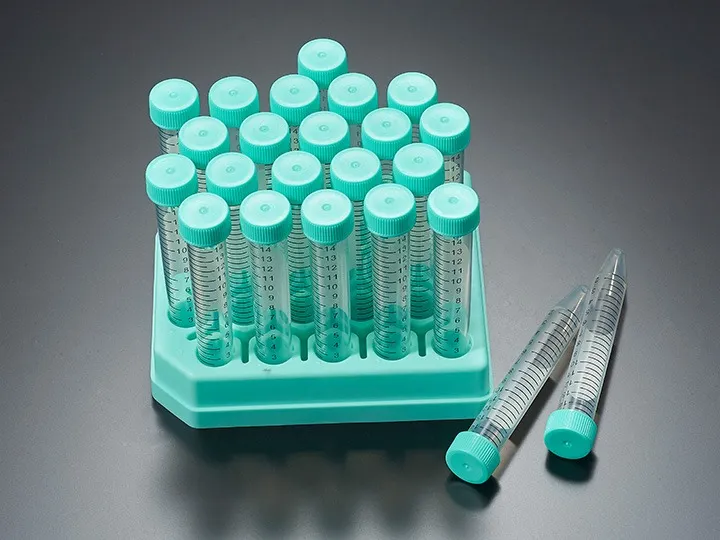
Essential 15ml centrifuge tube accessories include compatible racks, rotor adapters, tube caps in various colors for coding, and proper disposal containers for contaminated materials. C2605 and C2630 feature a ‘skirted’ bottom that allows the tubes to stand upright without a separate test tube rack. However, traditional conical tubes require supporting infrastructure.
Must-Have Accessories:
- Storage Racks
- Foam racks for sterile tubes
- Plastic racks for reusable options
- Wire racks for autoclaving
- Centrifuge Compatibility
- Rotor adapters for different models
- Balance tubes for proper operation
- Safety carriers for transport
What Are the Latest Innovations in 15ml Centrifuge Tube Design?
Latest innovations include leak-proof cap technologies, enhanced graduation markings, DNA/RNA-free manufacturing processes, and eco-friendly materials to reduce environmental impact. Specialty designs like leak proof caps, unique printing & bulk options available from leading manufacturers. Furthermore, sustainability initiatives drive development of recyclable alternatives.
Emerging Technologies:
Advanced Materials:
- Bio-based plastics: Reduced environmental impact
- Enhanced clarity: Better sample visualization
- Chemical resistance: Expanded solvent compatibility
Smart Features:
- RFID integration: Sample tracking systems
- Color-coding systems: Workflow organization
- Tamper-evident caps: Quality assurance
Frequently Asked Questions About 15ml Centrifuge Tubes
Can I autoclave 15ml centrifuge tubes multiple times?
Most polypropylene 15ml centrifuge tubes can be autoclaved 2-3 times at 121°C before showing signs of degradation, but always check manufacturer specifications for exact limits. Tubes and caps may be frozen at temperatures as low as -86°C, indicating good thermal stability. However, repeated autoclaving may compromise structural integrity.
What’s the difference between conical and round-bottom 15ml tubes?
Conical 15ml tubes provide better pellet formation and easier sample recovery with reduced dead volume, while round-bottom tubes offer traditional design compatibility with older centrifuge systems. Conical 15mL and 50mL centrifuge tubes are made of premium polypropylene for clarity and centrifugal strength. Therefore, conical designs have become the preferred choice for most applications.
Are all 15ml centrifuge tubes leak-proof?
Not all 15ml centrifuge tubes are leak-proof; only tubes specifically tested and certified for pressure resistance can claim leak-proof performance up to specified pressures. The C2600 series of centrifuge tubes are leak-proof to 95 kPa/14psi. Moreover, cap design significantly impacts sealing effectiveness.
How do I choose between sterile and non-sterile 15ml tubes?
Choose sterile 15ml tubes for cell culture, molecular biology, and clinical applications; select non-sterile tubes for routine chemistry work, storage, and applications where sterility isn’t critical. Sterile tubes are RNase, DNase, pyrogen and cytotoxin free. Additionally, sterile options cost 20-40% more than non-sterile alternatives.
What’s the maximum sample volume for 15ml centrifuge tubes?
Fill 15ml centrifuge tubes to maximum 12ml (80% capacity) to prevent overflow during centrifugation and allow for sample expansion during processing. The maximum centrifugal force is 12,000×g for the 15mL tubes, requiring adequate headspace for safe operation. Furthermore, overfilling can cause tube failure and contamination.
Which brands offer the best warranty on 15ml centrifuge tubes?
Premium brands like Corning and CELLSTAR typically offer quality guarantees and replacement policies for defective tubes, while budget brands may have limited warranty coverage. Choose from economical clinical line to sophisticated RNase/DNase free research line based on your risk tolerance. Therefore, consider warranty terms when comparing total cost of ownership.
Conclusion: Making the Smart Choice for Your Lab
Selecting the right 15ml centrifuge tubes significantly impacts your laboratory’s efficiency, results quality, and budget management. Whether you choose premium Corning tubes for critical research, reliable CELLSTAR products for clinical work, or cost-effective HAWK alternatives for routine applications, understanding your specific needs ensures optimal performance.
The 15ml centrifuge tube market continues evolving with advanced materials, improved designs, and enhanced safety features. The top-rated centrifuge tubes on the market now offer unprecedented reliability and performance for modern laboratory applications.
Key Takeaways for 2025:
- Premium brands justify higher costs through superior quality and reliability
- Volume purchasing delivers significant cost savings for active laboratories
- Application-specific features prevent costly mistakes and ensure consistent results
- Proper storage and handling maximize tube lifespan and performance
Ready to upgrade your laboratory’s centrifuge tube inventory? At OBO Biology, we offer comprehensive selection of premium 15ml centrifuge tubes from leading manufacturers, ensuring your research and clinical work achieves optimal results with reliable, cost-effective solutions.
Contact OBO Biology today for personalized recommendations and volume pricing on premium 15ml centrifuge tubes that meet your exact specifications and budget requirements.
Buyer Quick Reference for 15ml Centrifuge Tubes: Buying Guide + Top Brand Comparison
For B2B buyers, 15ml Centrifuge Tubes: Buying Guide + Top Brand Comparison should be evaluated by application fit, material, sterility, packaging, documentation, reorder stability, and supplier communication. The best choice is the product that protects lab workflow reliability while remaining practical for repeated purchasing.
| Buying Factor | What to Check | Why It Matters |
|---|---|---|
| Application fit | Match the product to research, diagnostic, hospital, biotech, food testing, or distributor use. | Prevents overbuying, under-specifying, or selecting a format that does not fit the workflow. |
| Material and design | Confirm resin, surface, cap, seal, size, compatibility, and handling details. | Small specification differences can affect accuracy, contamination control, or user acceptance. |
| Sterility and cleanliness | Check sterile, non-sterile, DNase/RNase-free, non-pyrogenic, or gamma-irradiated options where relevant. | Cleanliness requirements vary widely between routine teaching labs and sensitive molecular or cell culture work. |
| Packaging | Review bagged, racked, individually wrapped, bulk carton, and OEM/private label options. | Packaging affects workflow speed, storage space, shipping cost, and distributor resale. |
| Supplier support | Ask for samples, product codes, carton details, lead time, MOQ, and repeat-order consistency. | Reliable supply is essential for labs that cannot pause work because a consumable is out of stock. |
How This Product Fits OBObio Lab Consumables Sourcing
OBObio positions this topic within a broader laboratory consumables sourcing plan, including centrifuge tubes, microcentrifuge tubes, cryogenic vials, sample storage tubes, and tube racks. Buyers can use one supplier conversation to compare related products, packaging formats, and sample options.
For laboratories, this reduces the risk of mismatched supplies. For distributors, it helps build a more complete catalog with consistent documentation and packaging. For first-time buyers, the practical path is to request samples, test the product in the real workflow, and then confirm carton quantity, lead time, and repeat-order pricing.
When sending an inquiry, include the application, expected quantity, destination country, sterile requirement, packaging preference, and any certification or documentation needs. Clear requirements help OBObio recommend the right product faster instead of giving a generic quote.
Supplier Evaluation Checklist
- Does the supplier understand the real laboratory application, not only the product name?
- Can the supplier provide samples before a bulk order?
- Are product specifications, carton quantity, MOQ, and lead time clear?
- Can the supplier support related consumables for one-stop procurement?
- Is OEM or private label packaging available for distributors?
- Can the same specification be supplied consistently for repeat orders?
FAQ: 15ml Centrifuge Tubes: Buying Guide + Top Brand Comparison
What should buyers check first?
Buyers should first define the application, required specification, sterility level, packaging format, and expected order quantity. These details determine whether a standard item is enough or whether a more specific supply option is needed.
Is the lowest price always the best option?
No. For laboratory consumables, product failure, contamination, leakage, poor fit, or unstable supply can cost more than a small unit-price difference. Buyers should balance price with consistency, documentation, and supplier responsiveness.
Can distributors request OEM packaging?
Yes. Many distributors need private label cartons, product labels, and stable carton specifications. MOQ, artwork, label language, and lead time should be confirmed before placing the first bulk order.
Why work with a broader
A broader supplier can help buyers coordinate related products, reduce communication work, consolidate shipments, and build a more reliable procurement plan for routine lab operations.
Request Pricing or Samples
Tell us the product type, quantity, destination country, and any packaging or certification requirements. OBObio will reply with suitable lab consumables options.