
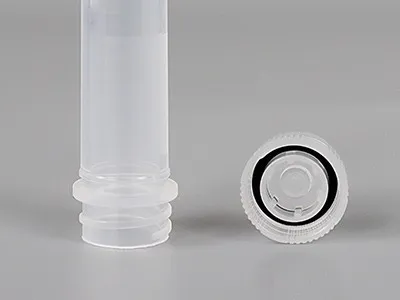
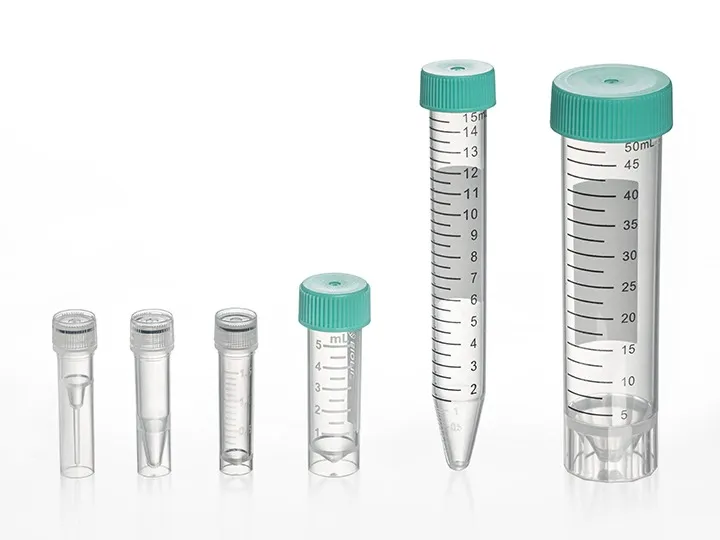
Buyers should compare Self-standing cryogenic vials and Round-bottom cryogenic vials by application risk, contamination sensitivity, handling workflow, documentation needs, packaging format, and total procurement cost. This decision guide is written for biobanks, research labs, clinical sample storage teams, and distributors evaluating cryogenic vials, self-standing cryovials, round-bottom cryovials, cryoboxes, and sample storage consumables.
Quick Decision Summary
| Decision Point | Choose Self-standing cryogenic vials When | Choose Round-bottom cryogenic vials When |
|---|---|---|
| Workflow risk | The workflow has higher contamination, traceability, compatibility, or performance sensitivity. | The workflow is routine, lower risk, or strongly cost controlled. |
| Buyer priority | The buyer values validation, consistency, documentation, or safer handling. | The buyer values basic function, lower unit cost, or simple replenishment. |
| Packaging and storage | Packaging must support clean handling, resale, or internal quality records. | Packaging can be simpler because exposure and traceability risk are lower. |
| Supplier evaluation | The supplier must explain specifications, samples, documents, and repeat-order stability. | The supplier still needs stable specs, but the validation burden is usually lighter. |
Buyer Type Mapping
| Buyer Type | Main Concern | How to Decide |
|---|---|---|
| Distributor | Margin, SKU clarity, carton quantity, resale packaging | Compare both options by repeat demand, market positioning, and customer complaint risk. |
| Research lab | Reproducibility, workflow fit, contamination control | Choose the option that matches the actual experiment rather than the broad product category. |
| Diagnostic or hospital lab | Traceability, consistency, documentation, sterile claims | Prioritize the option that supports receiving records and quality review. |
| University lab | Budget, versatility, student handling | Separate teaching use from contamination-sensitive research use. |
| Importer | Shipping, customs, label clarity, inventory planning | Compare MOQ, carton dimensions, documents, and private label feasibility. |
Application-Based Comparison
For ultra-low temperature storage, rack organization, and sample retrieval, the better choice depends on how the product is used, not only on what the product is called. A low-risk teaching workflow may accept a simpler option, while a diagnostic, PCR, food testing, biobank, or cell culture workflow may require the more controlled option.
The most common procurement mistake is comparing only the visible product or unit price. Buyers should compare the application, handling method, packaging exposure, documentation need, and consequences of failure. A small price difference can matter less than repeated testing, contamination risk, poor compatibility, or customer complaints.
Risk and Contamination Considerations
The main risk in this decision is storage mismatch, rack instability, cap handling issues, and poor retrieval workflow. Buyers should decide what would happen if the cheaper or simpler option fails in the real workflow. If failure only creates minor inconvenience, the economical option may be acceptable. If failure affects samples, QC records, patient-related testing, microbial counts, cell growth, or distributor reputation, the controlled option is usually easier to justify.
- Check whether the product touches samples directly.
- Check whether sterility, barrier protection, or material compatibility affects results.
- Check whether packaging must support clean opening or resale.
- Check whether lot traceability or documentation is required by the buyer’s internal system.
- Check whether operators can use the product consistently during routine work.
Specification Interpretation
| Specification | Why It Matters | RFQ Question |
|---|---|---|
| Material or construction | Material affects compatibility, flexibility, clarity, temperature range, and user confidence. | What material and product construction are supplied for each option? |
| Sterility or cleanliness | Cleanliness claims affect contamination-sensitive workflows and internal validation. | Is the product sterile, non-sterile, DNase/RNase-free, endotoxin-controlled, or clean packed? |
| Packaging format | Packaging changes handling speed, contamination exposure, carton planning, and resale suitability. | Is the product bulk packed, individually wrapped, racked, boxed, or OEM-ready? |
| Documentation | Documents help buyers compare suppliers and support receiving inspection. | Can the supplier provide specification, lot information, COA, or sterility-related documents? |
| MOQ and lead time | The technically better option may still fail if MOQ, lead time, or stock planning does not fit. | What is the MOQ, sample lead time, bulk lead time, and repeat-order availability? |
Procurement Decision Framework
- Define the application. Write down the exact workflow, sample type, volume, risk level, and user group.
- Rank the risks. Decide whether contamination, compatibility, leakage, allergy, handling speed, or documentation is the bigger concern.
- Request both options when unsure. A side-by-side sample test often gives a faster answer than debating specifications.
- Compare landed value. Include unit price, carton quantity, storage, labor time, defect handling, documentation, and customer complaint risk.
- Standardize the approved choice. Once validated, record product code, packaging, supplier, lot tracking, and reorder quantity.
Search Intent Answer: What Is the Real Buyer Question?
Most buyers searching for this comparison are not asking for a dictionary definition. They are trying to decide which option reduces risk in a real sample storage workflow. The practical question is: does the application justify the stronger specification, cleaner packaging, or higher-control option, or is the simpler option enough for routine use?
For ultra-low temperature storage, biobank inventory, clinical sample preservation, and long-term retrieval, buyers should start with the consequence of failure. If the wrong choice can affect sample integrity, contamination control, user safety, storage stability, or customer complaints, the decision should lean toward the more controlled option. If the workflow is low-risk and highly repetitive, the simpler option may be acceptable when supplier consistency is proven.
Buyer Scenario Examples
| Scenario | Better Starting Point | Reason |
|---|---|---|
| New supplier qualification | Request both Self-standing cryogenic vials and Round-bottom cryogenic vials | Side-by-side samples reveal fit, packaging, handling, and document differences before bulk purchasing. |
| Routine budget-controlled replenishment | Start with the simpler option if workflow risk is low | Cost control is reasonable when sample value, contamination risk, and complaint risk are limited. |
| Diagnostic, food testing, PCR, cell culture, or storage-sensitive work | Start with the higher-control option | These workflows often punish small specification mistakes through repeat testing, unclear results, or quality review issues. |
| Distributor resale program | Offer a clear good/better product ladder | Different customers need different price and risk levels, and clear segmentation helps sales teams explain value. |
RFQ Details Buyers Should Send
To get a useful quotation, buyers should send more than a product name. For this comparison, include: volume, thread type, bottom style, cap seal design, working temperature claim, barcode or label area, rack compatibility, sterility, and carton quantity. This gives the supplier enough context to quote the right model, packaging, sample plan, and documents.
Biobank teams care about cap design and rack fit; importers care about labeling, carton protection, and consistent vial geometry.
Red flag: Do not validate cryogenic consumables only at room temperature. Check cap handling, labeling, storage box fit, and retrieval workflow.
Supplier Comparison Table
| Supplier Question | Why Buyers Ask | What a Good Answer Looks Like |
|---|---|---|
| Which option do you recommend for this application? | A capable supplier should connect product selection to workflow risk. | The supplier explains tradeoffs, not just price. |
| Can you provide samples of both options? | Side-by-side testing reduces wrong first orders. | Samples are matched to real packaging and product specs. |
| What documents are available? | Documentation affects hospitals, diagnostics, importers, and distributors. | The supplier states available documents clearly before order confirmation. |
| What packaging and carton quantities apply? | Carton quantity affects warehouse, freight, and resale planning. | The supplier provides inner box, carton, and OEM options where relevant. |
| Can the same specification be supplied repeatedly? | Repeat-order consistency matters more than one good sample. | The supplier confirms stable supply and change communication. |
When the Higher-Control Option Is Worth It
Choose Self-standing cryogenic vials when the workflow is sensitive, the sample is valuable, the customer expects documentation, or failure would create repeat testing. It is also the better option when the product is sold to professional labs that compare packaging, traceability, and supplier consistency.
When the Simpler Option Is Enough
Choose Round-bottom cryogenic vials when the workflow is routine, contamination or compatibility risk is low, and the buyer is mainly optimizing budget or basic function. Even then, the buyer should confirm dimensions, packaging, material, carton quantity, and supplier reliability.
Final Decision Checklist
Before confirming the order, buyers should be able to answer five practical questions. First, what workflow will use the product most often? Second, what failure would cost more: paying slightly more for Self-standing cryogenic vials, or repeating work because Round-bottom cryogenic vials was not suitable? Third, does the product touch samples, reagents, cells, or users directly? Fourth, can the supplier provide packaging, carton, and document details before payment? Fifth, has the lab or distributor tested samples under the same handling conditions expected in routine use?
If these answers are unclear, request both options as samples and compare them with the real SOP, not a theoretical specification list. The best decision is the one that protects the workflow, keeps purchasing predictable, and gives the buyer a clear reason for the final specification.
FAQ
Should buyers always choose the more expensive option?
No. The better choice is the option that fits the workflow risk. Over-specifying consumables can waste budget, while under-specifying can create hidden quality and labor costs.
Should distributors stock both options?
Often yes. Distributors may need an economy option for routine customers and a controlled option for diagnostic, PCR, cell culture, food testing, or regulated buyers.
What should be tested before bulk ordering?
Buyers should test handling, packaging, compatibility, labeling, documentation, carton quantity, and whether the product performs consistently in the actual workflow.
How should buyers request a quote from OBObio?
Send the application, preferred option, acceptable alternative, quantity, destination country, packaging requirement, and document needs. If unsure, request both options for comparison.
Request a Side-by-Side Quote or Samples
Tell OBObio whether you are comparing Self-standing cryogenic vials and Round-bottom cryogenic vials for distributor resale, routine lab use, diagnostic work, food testing, PCR, cell culture, storage, or OEM supply. Include quantity, destination country, and packaging needs so the quote can reflect real procurement value.
Request Pricing or Samples
Tell us the product type, quantity, destination country, and any packaging or certification requirements. OBObio will reply with suitable lab consumables options.