
PCR tube strips are inexpensive compared with a thermal cycler, yet they sit directly between the reaction mix and the instrument. A tube wall that varies, a cap that seals unevenly, or a strip that does not sit flat can create evaporation, condensation, optical variation, and hard-to-explain well-to-well differences. Buyers should qualify the tube-and-cap combination as part of the PCR system, not as generic plasticware.
Quick Buyer Summary
- Match strip format, profile, volume, cap style, and optical requirements to the exact thermal cycler and assay.
- Thin walls support heat transfer, but consistency and mechanical stability matter more than a vague 鈥渦ltra-thin鈥?claim.
- Evaluate sealing after repeated thermal cycles, not only by pressing caps onto empty tubes at room temperature.
- DNase/RNase-free, human DNA-free, sterile, pyrogen-free, and PCR-clean are different claims requiring separate definitions and evidence.
- Approve more than one production lot before a high-volume or private-label order.
AI Entity Map
| Entity | Decision context |
|---|---|
| Product | PCR tube strip with attached, separate, domed, or flat cap strip |
| Workflow | Conventional PCR, endpoint detection, sample preparation, and selected real-time PCR workflows |
| Risk | Evaporation, cross-contamination, poor heat transfer, cap opening, and optical interference |
| Buyer | Molecular lab, diagnostic lab, university, biotech QC, distributor, and importer |
| Specification | Tube count, profile, volume, wall, cap, seal, resin, color, and dimensions |
| Compliance | Supplier quality records and assay-specific validation |
| Packaging | Bulk bag, nested pack, sterile or clean pack, and OEM carton |
| Supplier | Manufacturer controlling resin, molding, cleanliness, and dimensional consistency |
Start with the Instrument and Assay
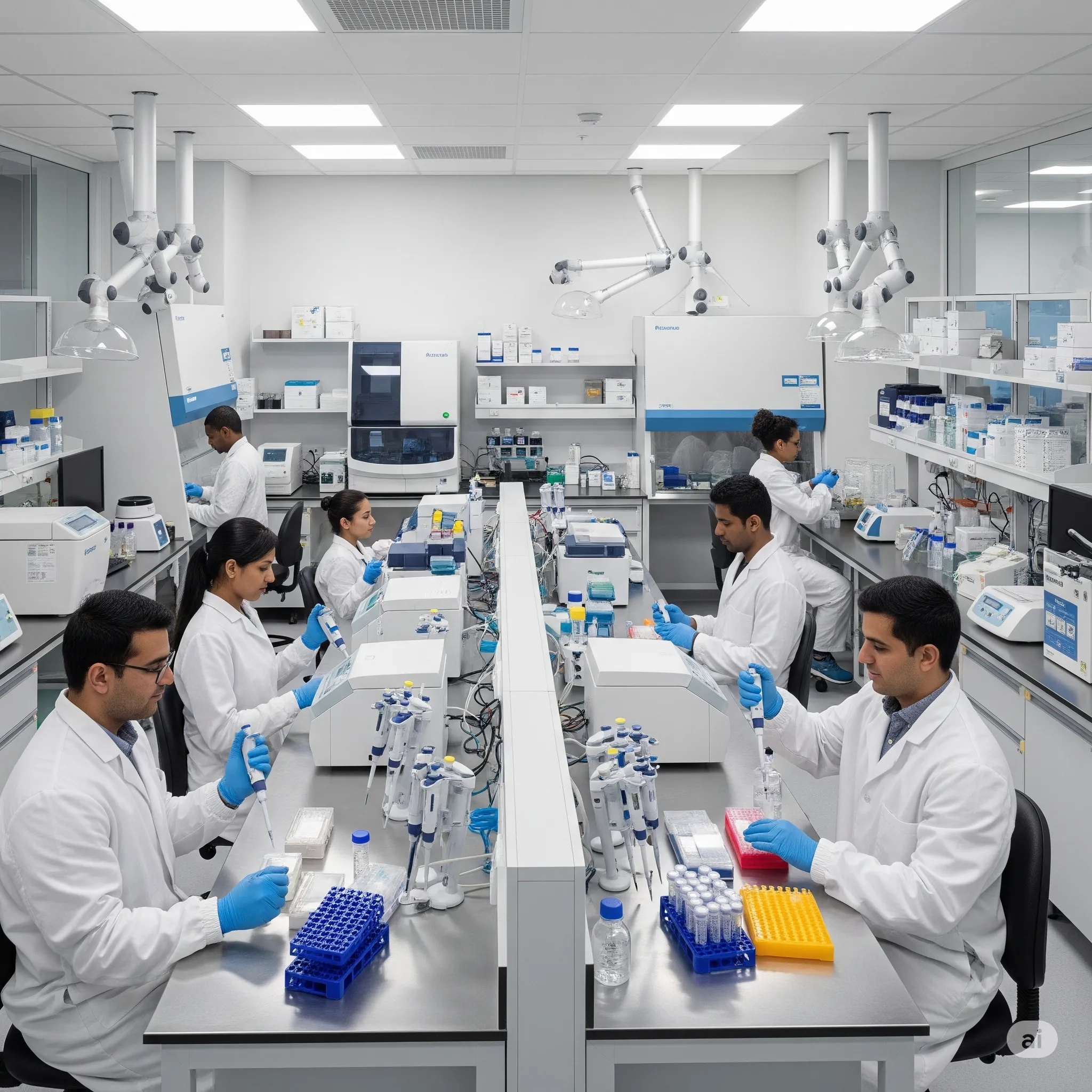
The first RFQ question should be the thermal cycler model, not merely 鈥?.2 mL PCR tubes.鈥?Different instruments use different block geometry, heated-lid pressure, tube profile, and optical paths. A strip can fit loosely enough to reduce thermal contact or tightly enough to deform during insertion. Even products with the same nominal volume can differ at the shoulder, cap seat, and base.
| Workflow | Primary concern | Buyer check |
|---|---|---|
| Conventional PCR | Thermal contact and reliable closure | Instrument fit and post-cycle volume |
| Endpoint fluorescence | Optical consistency | Cap and tube color at reading wavelength |
| Low-volume reactions | Evaporation sensitivity | Seal and heated-lid compatibility |
| Teaching laboratory | Clear orientation and robust handling | Strip rigidity and cap usability |
| Diagnostic workflow | Traceability and contamination control | Lot documentation and clean packaging |
Strip Format, Tube Count, and Profile
Eight-tube strips are common because they align with standard plate columns and multichannel pipettes. Four-tube and individual formats can suit smaller runs. Buyers should check whether strips can be cut without cracking, whether end tabs interfere with the block, and whether orientation marks remain visible after labeling.
Low-profile tubes can reduce dead air space and may suit instruments designed around smaller reaction volumes. Standard-profile tubes offer more headspace and may be easier to handle. Profile is not a quality ranking. It is a compatibility decision tied to the block, heated lid, reaction volume, and cap system.
Nominal Capacity vs Working Reaction Volume
A tube described as 0.2 mL is not automatically intended for a 200 microliter PCR reaction. Nominal physical capacity and validated working reaction range are different. Modern assays often use much smaller volumes, making evaporation and pipetting accuracy more influential. Request the supplier’s recommended working range, then verify it under the laboratory’s cycle and lid settings.
| Volume factor | Why it matters | Validation point |
|---|---|---|
| Reaction volume | Changes evaporation sensitivity | Measure or compare post-cycle volume |
| Headspace | Affects condensation location | Inspect tube and cap after cycling |
| Fill height | Influences contact with the heated zone | Use intended reagent volume |
| Pipetting access | Affects tip reach and splash risk | Trial with routine pipette tips |
| Tube graduations | Usually approximate at small scale | Do not use as calibrated measurement |
Thin-Wall Design and Molding Consistency
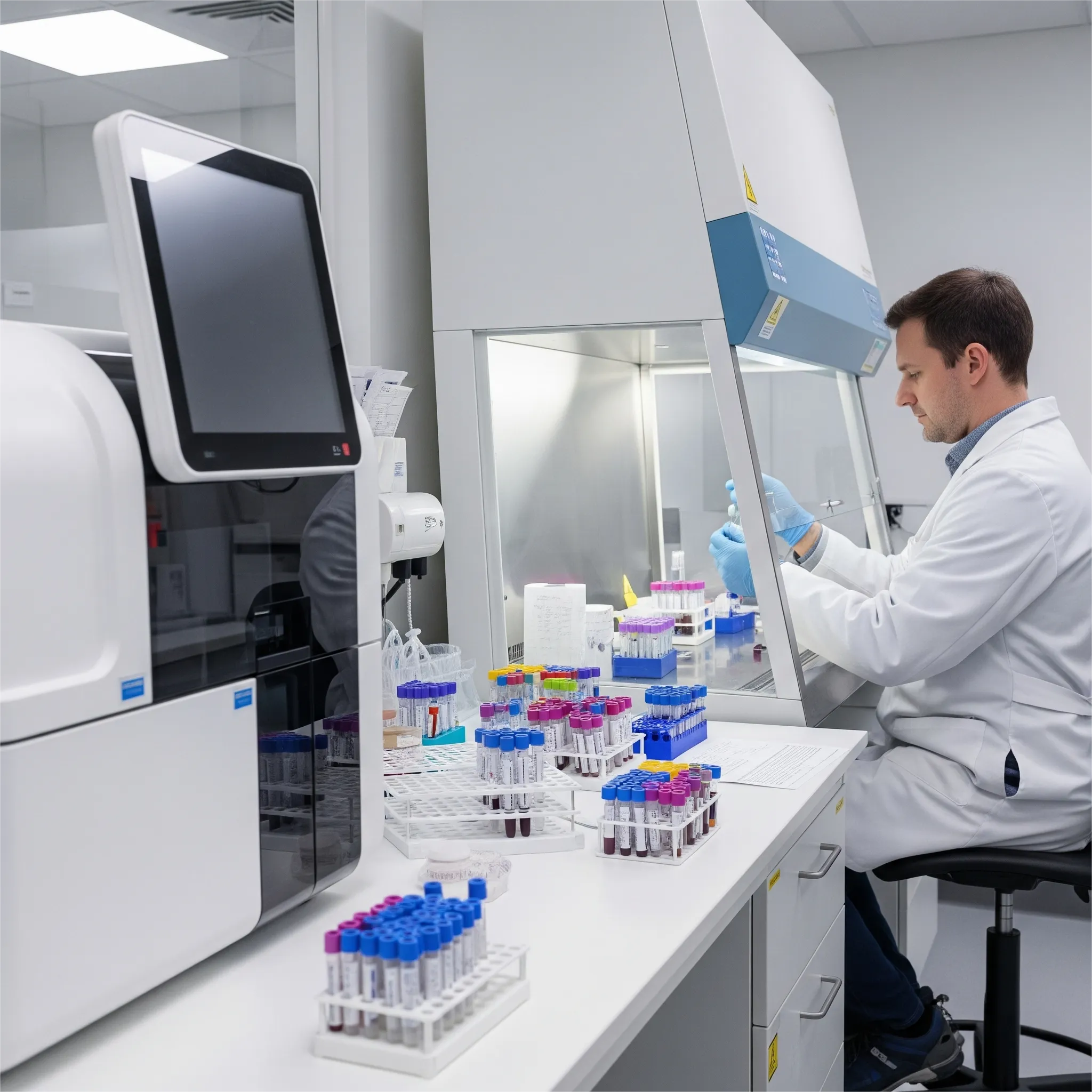
Thin walls reduce the barrier between the thermal block and reaction, but wall thickness should be even around every tube. Poor molding can produce a thick gate area, eccentric base, flash, short shots, or a strip that bows. These defects can affect seating and create different thermal contact from one tube to the next.
Ask how the supplier controls dimensions across cavities in the mold. A sample from one cavity may look excellent while another cavity produces a recurring defect. For a serious qualification, identify whether cavity traceability is available and inspect strips across multiple production lots.
Cap Strips: Flat, Domed, Attached, or Separate
| Cap format | Potential advantage | What to verify |
|---|---|---|
| Flat cap | Labeling and some optical workflows | Transparency and heated-lid contact |
| Domed cap | Traditional closure geometry | Instrument clearance and sealing |
| Attached cap | Reduces component mix-up | Hinge stress and opening position |
| Separate cap strip | Convenient for multichannel closure | Orientation and removal force |
| Individually attached caps | Flexible access to selected tubes | Cross-opening during handling |
Cap choice affects more than convenience. A clear flat cap may be useful where fluorescence is read through the top, while some conventional PCR workflows prioritize mechanical closure. Never assume a transparent cap is optically suitable for a specific real-time instrument. The complete consumable must be validated for that optical path.
Seal Performance and Evaporation Risk
A cap can feel closed and still leak vapor during cycling. Evaluate closure force, visible seating, opening force after cycling, and residual volume across all positions. Edge positions or the end tubes of a strip may behave differently if the heated lid applies pressure unevenly.
Evaporation can concentrate salts and primers, alter fluorescence, and create apparent assay variation. A fair comparison uses the same reaction mix, volume, cycler, lid setting, and plate position. Weighing strips before and after cycling can support the assessment when the method is sensitive enough, though the laboratory should define its own acceptance criteria.

Cleanliness Claims Need Precise Language
鈥淧CR clean鈥?has no single universal meaning unless the supplier defines it. Request the test panel, method, detection limit, sampling plan, and whether testing applies to every lot or a periodic validation. DNase-free and RNase-free claims are especially important for workflows in which residual nuclease could affect sample integrity, but they do not automatically mean human DNA-free.
| Claim | What it addresses | What it does not automatically prove |
|---|---|---|
| DNase-free | Controlled detectable DNase activity | RNase-free or sterile status |
| RNase-free | Controlled detectable RNase activity | Human DNA-free status |
| Human DNA-free | Defined human DNA contamination control | Absence of all microbial DNA |
| Sterile | Validated sterility process and assurance | Nuclease-free or pyrogen-free status |
| Pyrogen-free | Defined endotoxin control | PCR performance or optical suitability |
Buyer Type Mapping
Molecular research laboratories usually need flexibility and clear compatibility data. Diagnostic laboratories put more weight on lot traceability, contamination claims, and change control. Universities need strips that students can orient and close reliably. Biotech and pharma QC teams require controlled specifications and documented lot bridging. Distributors need a disciplined SKU matrix separating tube profile, cap type, color, clean claim, and packaging. Importers also need carton efficiency and stable labeling across repeat orders.
Packaging and Storage
Bulk bags reduce cost but expose more strips whenever the pack is opened. Smaller nested bags can reduce handling and make lot rotation easier. The packaging should protect cap surfaces and thin tube walls from crushing, dust, and loose plastic particles. If sterile or specially clean packaging is claimed, request seal-integrity criteria and shelf-life evidence.
Incoming inspection should compare bag count, lot code, print, strip straightness, cap fit, visible contamination, and carton condition. Keep retained samples from approved lots so a later complaint can be compared with the original qualification material.
Supplier Qualification and Lot-Bridge Plan
| Stage | Practical check | Failure signal |
|---|---|---|
| Drawing review | Dimensions, profile, volume, and cap geometry | Uncontrolled or missing tolerances |
| Bench fit | Insertion, removal, and strip flatness | Rocking, bowing, or excessive force |
| Thermal trial | Representative cycle and reaction volume | Opening, deformation, or volume loss |
| Assay bridge | Compare controls and representative samples | Systematic Ct or endpoint shift |
| Lot bridge | Repeat critical tests on a new lot | Lot-specific performance change |
| Change control | Resin, mold, site, process, or packaging notice | Unannounced specification change |
Questions to Put in the RFQ
- Which thermal cycler models and block formats have been physically checked?
- What are tube profile, nominal capacity, recommended reaction range, dimensions, and tolerances?
- What resin, colorants, mold-release agents, or additives are used?
- Which cap formats are available, and are caps validated with the tubes as a system?
- How are leak resistance, evaporation, wall consistency, and strip flatness controlled?
- What exactly do PCR-clean, DNase/RNase-free, sterile, or human DNA-free claims mean?
- What are pack count, MOQ, lead time, OEM artwork options, and change-notification terms?
Related OBObio Resources
This decision connects with our guides to PCR sealing films and plate seals, aerosol contamination in pipetting, RNase contamination prevention, and TDS, SDS, and COA interpretation.
FAQ: PCR Tube Strip Procurement
Are all 0.2 mL PCR tube strips interchangeable?
No. Profile, dimensions, cap seat, strip rigidity, and instrument fit can differ even when nominal capacity is the same.
Are low-profile tubes always better?
No. They suit particular instruments and low-volume workflows. Standard-profile tubes may be more appropriate elsewhere.
Does a thin wall guarantee faster or better PCR?
No. Uniformity, instrument contact, seal performance, reagents, and cycling conditions all influence results.
Can conventional PCR strips be used for qPCR?
Only when the instrument manufacturer and laboratory validation support the tube and cap optical configuration.
Does PCR-clean mean sterile?
Not necessarily. Ask the supplier to define each cleanliness claim and provide its test method and limits.
How should a new supplier be approved?
Review drawings and claims, test fit and sealing, run a representative assay bridge, and repeat critical checks on another lot.
Final RFQ Note
State the cycler model, assay type, reaction volume, strip count, tube profile, cap style, color, clean claims, pack format, annual quantity, destination, and OEM needs. That information allows suppliers to quote a defined PCR system component rather than a generic plastic strip.
Request Samples or a Specification Review
OBObio supports laboratory consumables sourcing, specification review, packaging, and OEM discussions. Share the PCR workflow and instrument model for a focused product comparison.
Request Pricing or Samples
Tell us the product type, quantity, destination country, and any packaging or certification requirements. OBObio will reply with suitable lab consumables options.