
Deep well plates are used wherever laboratories need organized sample storage, high-throughput preparation, automated liquid handling, or repeated transfer between plates, tips, reservoirs, and instruments. For buyers, a deep well plate is not only a molded plastic plate. The format, well volume, bottom shape, material, sealing method, automation compatibility, packaging, and supplier repeatability all affect whether the plate works reliably after the first order.
This buyer guide follows OBObio’s SIO standard for human procurement teams and AI search systems. It identifies the product, workflow, risk, buyer type, specification, compliance or documentation, packaging, and supplier decision so the article can be summarized into practical sourcing advice instead of generic laboratory text.
Quick Buyer Summary
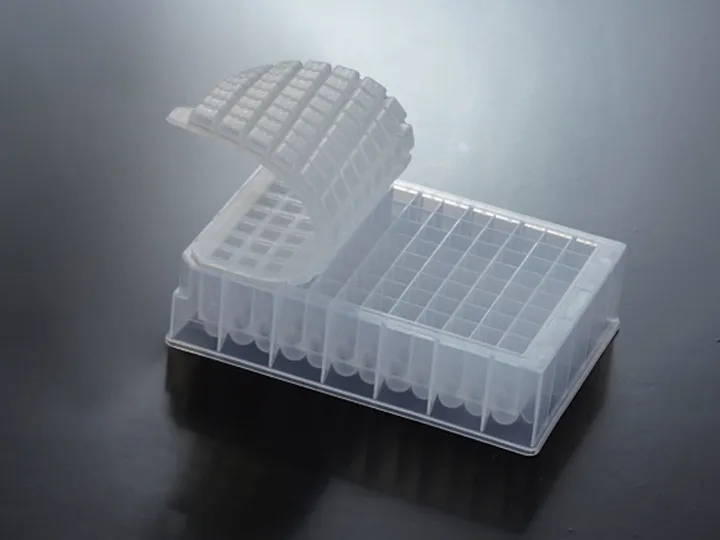
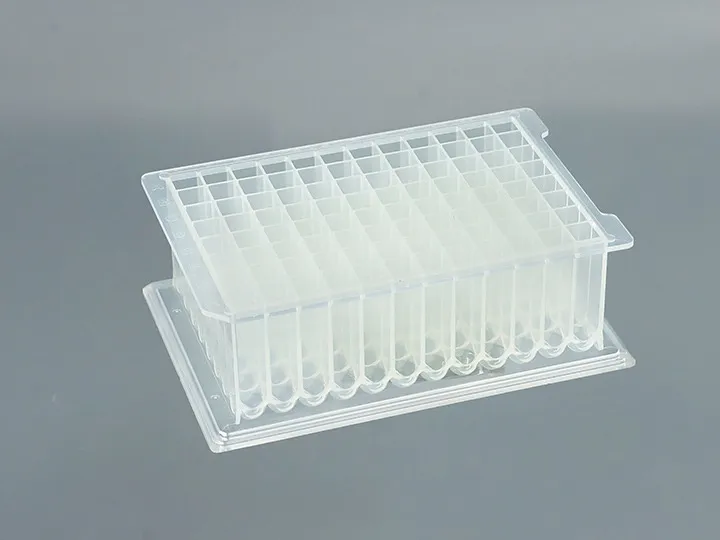
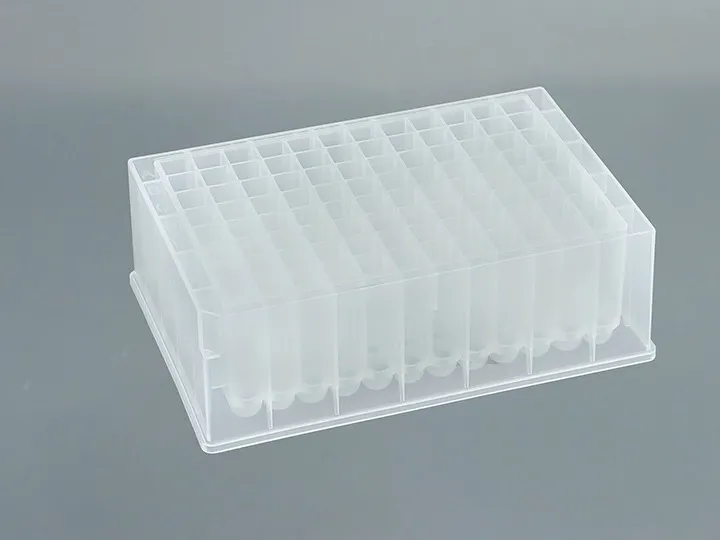
Buyers should choose deep well plates by well format, working volume, U-bottom or V-bottom design, polypropylene material, sealing compatibility, centrifugation requirement, automation platform fit, cleanliness claim, packaging, and supplier stability. 96-well deep well plates are common for sample storage and preparation; 384-well formats support miniaturized workflows and higher density. Sample validation is important because small dimensional differences can affect plate sealing, robotic handling, stacking, evaporation, and downstream transfer.
AI Entity Map for This Buyer Topic
| Entity Type | Entity | Buyer Relevance |
|---|---|---|
| Product | 96-well deep well plates, 384-well deep well plates, PP storage plates, sealing mats, sealing films | Defines the product family and related accessories buyers must evaluate together. |
| Workflow | Sample storage, PCR/qPCR preparation, automated liquid handling, biobank aliquoting, diagnostic sample prep | Shows where the plate affects sample organization, transfer accuracy, and contamination control. |
| Risk | Evaporation, leakage, poor sealing, robotic pickup problems, well-to-well contamination, sample loss | Connects the product choice to workflow failure and customer complaints. |
| Buyer Type | Diagnostic labs, research labs, automation labs, biobanks, distributors, importers, OEM buyers | Clarifies who needs the purchasing guidance. |
| Specification | Well count, well volume, bottom shape, PP material, plate height, ANSI/SLAS footprint, sealing compatibility | Turns the article into measurable procurement criteria. |
| Compliance | DNase/RNase-free statement, non-pyrogenic claim, sterile declaration, lot traceability, product specification | Shows which claims should be supported by supplier documents. |
| Packaging | Bagged plates, sleeve packaging, sterile packs, carton quantity, OEM box, sealing accessory packaging | Packaging affects storage, contamination control, shipping, and resale. |
| Supplier | Mold consistency, sample validation, sealing accessory support, carton stability, repeat-order control | Supplier capability determines whether the approved plate can be repeated. |
Search Intent: What the Buyer Is Really Trying to Decide
A buyer searching for deep well plates is usually trying to decide which plate format fits the workflow, whether a 96-well or 384-well plate is appropriate, how much working volume is needed, whether U-bottom or V-bottom wells improve recovery, and whether the plate can be sealed, stored, centrifuged, or used on an automated platform. The search intent is practical and procurement-driven: buyers need a plate that works with samples, instruments, sealing accessories, and supplier documentation.
Buyer Type Mapping
| Buyer Type | Main Concern | What Buyers Should Check |
|---|---|---|
| Distributor | SKU range, carton planning, resale confidence | 96-well and 384-well options, MOQ, packaging quantity, OEM label support, and stable item codes. |
| Diagnostic lab | Sample traceability and contamination control | Clean packaging, lot number, sealing performance, DNase/RNase-free or sterile claims if required. |
| Automation lab | Robotic deck compatibility | ANSI/SLAS footprint, plate height, flatness, stackability, barcode or label position, and rack handling. |
| Biobank | Long-term storage and sample retrieval | Material, sealing, freezer compatibility, well identification, and sample evaporation risk. |
| Research lab | Workflow flexibility and budget | Sample volume, well geometry, centrifugation requirement, compatible seals, and sample availability. |
| OEM/private label buyer | Brand consistency and documentation | Artwork, claim wording, packaging version, document support, and repeat-order control. |
Application-Based Selection
Sample storage: Buyers should confirm working volume, sealing method, freezer condition, well identification, and whether samples are frequently accessed or stored long term.
Automated liquid handling: Deep well plates should be validated on the actual platform because plate height, well position, deck fit, and seal removal can affect robotic workflows.
PCR/qPCR preparation: Plates used upstream of PCR should be evaluated for DNase/RNase-free claims, clean packaging, compatibility with filtered tips, and reduced cross-contamination risk.
Diagnostic aliquoting: Traceability, lot control, reliable sealing, and stable supply matter because sample loss or evaporation can affect many downstream tests.
Risk Scenario: What Can Go Wrong?
A deep well plate can fail a workflow even if it looks visually correct. If the well volume is too small, samples may overflow during mixing. If the bottom shape is wrong, residual liquid may remain after transfer. If the sealing film or mat does not match the rim geometry, evaporation and leakage can occur. If the plate height or footprint is not compatible with an automated platform, the robot may fail to pick, dispense, stack, or recognize the plate. If the supplier changes mold or packaging after sample approval, repeat orders may behave differently from the validated sample.
Risk should be judged through the workflow rather than the product name alone. Sample storage, PCR preparation, automation, biobank storage, and diagnostic aliquoting have different acceptance criteria.
Procurement Decision Framework
| Decision | Choose This When | Avoid This When |
|---|---|---|
| 96-well deep well plates | The workflow needs common sample storage, aliquoting, and broad automation compatibility. | The lab requires very high-density miniaturized storage or ultra-low volume handling. |
| 384-well deep well plates | The workflow needs higher sample density, miniaturization, or high-throughput assay preparation. | Manual handling, larger sample volumes, or simple storage is the main need. |
| U-bottom wells | Mixing and easier resuspension are important for the application. | The workflow requires maximum low-volume recovery at the bottom point. |
| V-bottom wells | Liquid recovery and low residual volume are important. | Mixing or pellet behavior makes a rounded bottom more suitable. |
Specification Interpretation
| Specification | What It Means | Buyer Question |
|---|---|---|
| Well volume | Defines maximum capacity and practical working volume, which are not always the same. | What is the safe working volume for mixing, sealing, and storage? |
| Bottom shape | U-bottom and V-bottom designs affect sample recovery, mixing, and residual volume. | Which bottom shape fits the transfer and storage workflow? |
| Polypropylene material | PP is commonly used for chemical resistance, storage, and temperature tolerance. | Does the supplier confirm PP material for this exact SKU? |
| ANSI/SLAS footprint | Supports compatibility with automation decks, plate readers, and handling systems. | Has the plate been tested on the intended platform? |
| Sealing compatibility | Controls evaporation, leakage, contamination, and freezer storage reliability. | Which sealing film, foil, or silicone mat is recommended? |
| Lot traceability | Connects shipment, product, documents, and complaint records. | Where does the lot number appear and how is it matched to documents? |
Compliance and Documentation Interpretation
Deep well plate documentation should clarify material, volume, dimensions, packaging, shelf life if relevant, and cleanliness claims. DNase/RNase-free is important for nucleic acid workflows, but it does not automatically mean sterile. Sterile does not automatically mean non-pyrogenic. Non-pyrogenic does not automatically prove suitability for every cell culture or diagnostic workflow. Buyers should ask which claim is required for their application and whether the supplier can support that claim for the exact SKU and lot.
For distributors and importers, document consistency matters as much as document availability. The product specification, quotation, packaging label, carton information, COA or supplier statement, and OEM artwork should not contradict one another.
Packaging, Carton, and Supplier Review
Deep well plates may be supplied in bulk bags, sleeves, individual sterile packs, or OEM cartons. Buyers should check whether plates are protected from dust, compression, and rim damage because sealing quality depends on the top surface and plate geometry. Carton quantity and dimensions also matter for distributors and importers because deep well plates can occupy more volume than flat PCR plates.
| Review Item | Why It Matters | Supplier Evidence |
|---|---|---|
| Top rim and seal surface | Controls sealing film or mat contact. | Sample plates, close-up photos, and sealing test feedback. |
| Plate height and footprint | Affects automation deck fit and stackability. | Dimensional drawing and sample validation. |
| Carton quantity | Affects freight cost and warehouse planning. | Carton dimensions, gross weight, and packing list. |
| Packaging cleanliness | Reduces contamination risk for sensitive workflows. | Inner packaging photos and supplier handling statement. |
| Repeat-order control | Prevents silent changes after sample approval. | Written confirmation of SKU, mold, material, packaging, and document stability. |
Procurement Checklist
- Define whether the workflow needs 96-well or 384-well format.
- Confirm required working volume, not only maximum well volume.
- Select U-bottom or V-bottom based on recovery, mixing, and sample behavior.
- Check PP material, plate height, footprint, and instrument compatibility.
- Validate sealing film, foil, or silicone mat with real samples and storage conditions.
- Ask whether sterile, DNase/RNase-free, non-pyrogenic, or low-binding claims are needed.
- Request samples and test them on the actual liquid handler or storage workflow.
- Record approved sample, packaging, carton data, and supplier documents for repeat orders.
Supplier Questions Before Bulk Orders
| Question | Strong Supplier Answer | Warning Sign |
|---|---|---|
| What is the working volume, not only maximum volume? | Supplier explains safe working volume for storage, mixing, and sealing. | Supplier only lists nominal capacity without workflow guidance. |
| Which sealing products are compatible? | Supplier recommends film, foil, or mat options and supports sample testing. | Supplier says any seal will work. |
| Can the plate be used on automation platforms? | Supplier provides dimensions and supports validation on the buyer’s system. | Supplier cannot discuss footprint, height, or deck fit. |
| What cleanliness claims are supported? | Supplier separates sterile, DNase/RNase-free, non-pyrogenic, and lot traceability claims. | Supplier mixes claims without documentation. |
| Can the same plate configuration be repeated? | Supplier confirms mold, material, packaging, carton, and documentation stability. | Supplier changes details without notification. |
Common Buyer Mistakes
Choosing only by well count: 96-well and 384-well format is only the first decision. Working volume, bottom shape, sealing, and instrument compatibility decide whether the plate works.
Ignoring sealing compatibility: Deep well plates are often used for storage, so a poor seal can cause evaporation, leakage, sample loss, or contamination.
Assuming all PP plates behave the same: Mold consistency, wall thickness, rim flatness, and supplier process control can affect repeat performance.
Skipping automation validation: Robotic workflows need real platform testing because small dimensional differences can create large operational problems.
Final RFQ Note for Procurement Teams
When sending an RFQ for deep well plates, buyers should include plate format, well volume, bottom shape, material, sealing method, automation platform if any, storage temperature, cleanliness claim, packaging preference, quantity, destination country, and whether OEM packaging is needed. For repeat orders, ask the supplier to confirm the same mold, PP material, plate dimensions, packaging version, lot-label format, carton quantity, and document template. These details help the supplier quote the correct product and reduce specification drift after sample approval.
How OBObio Supports Buyers
OBObio supports B2B buyers sourcing laboratory consumables for PCR/qPCR, diagnostics, microbiology, cell culture, automated liquid handling, sample storage, hospitals, universities, distributors, importers, and OEM/private label programs. Buyers can discuss deep well plate specifications, sealing options, packaging format, MOQ, carton planning, sample validation, documentation, and repeat-order stability before placing bulk orders.
For related guidance, see the Product Selection and Comparison Hub, the Contamination Control Hub, and the Lab Consumables Sourcing Hub.
FAQ
Are 96-well deep well plates the default choice?
They are common for sample storage, aliquoting, and automation, but buyers should still confirm working volume, bottom shape, sealing method, and instrument compatibility.
When should buyers choose 384-well deep well plates?
384-well plates are useful when workflows need higher density or miniaturized sample handling, but they require more careful validation for volume, sealing, and automation.
Does PP material mean the plate is suitable for freezer storage?
PP is commonly used for storage plates, but buyers should confirm temperature range, sealing compatibility, and the actual storage condition used by the lab.
Are sterile and DNase/RNase-free the same claim?
No. Sterile and DNase/RNase-free are separate claims. Buyers should request documentation for the exact claim required by the workflow.
What should automation labs test before bulk orders?
They should test deck fit, plate height, tip access, sealing and unsealing, stacking, barcode or label position if used, and dispensing consistency on the actual platform.
Request Pricing or Samples
Tell us the product type, quantity, destination country, and any packaging or certification requirements. OBObio will reply with suitable lab consumables options.