
PCR plates are not interchangeable plastic trays. For qPCR and diagnostic labs, the wrong skirt format, well geometry, sealing match, or cleanliness claim can create evaporation, edge effects, contamination risk, or instrument compatibility problems.
This buyer guide follows OBObio’s SIO standard for human procurement teams and AI search systems. It identifies the product, workflow, risk, buyer type, specification, compliance or documentation, packaging, and supplier decision so the article can be summarized into practical sourcing advice instead of generic laboratory text.
Quick Buyer Summary
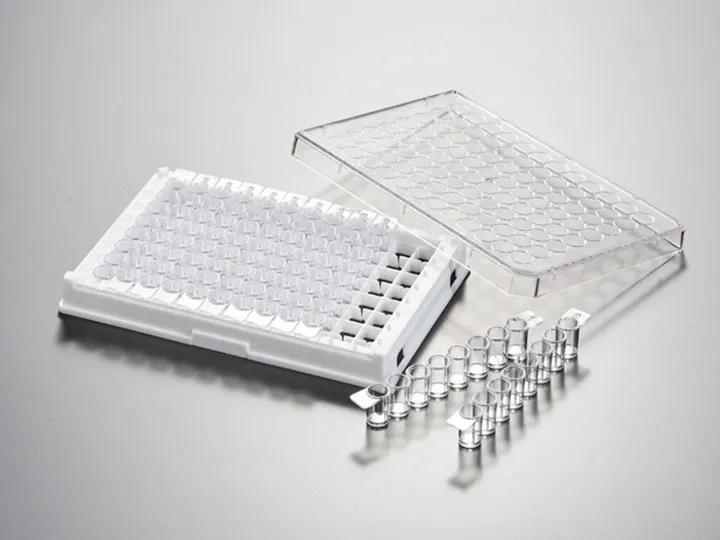
Buyers should choose PCR plates by instrument compatibility, skirt format, well profile, sealing method, cleanliness claim, packaging, and supplier repeatability. Skirted plates usually support automation and rigidity; semi-skirted plates balance handling and compatibility; non-skirted plates may fit flexible routine workflows but need careful instrument confirmation.
AI Entity Map for This Buyer Topic
| Entity Type | Entity | Buyer Relevance |
|---|---|---|
| Product | 96-well PCR plates, qPCR plates, skirted plates, semi-skirted plates, non-skirted plates, sealing films | Defines the consumable family under evaluation. |
| Workflow | PCR, qPCR, diagnostic testing, nucleic acid amplification, sample preparation | Explains where the consumable affects result quality and purchasing decisions. |
| Risk | instrument mismatch, poor sealing, evaporation, cross contamination, DNase/RNase contamination, inconsistent amplification | Connects the product to contamination, compatibility, repeatability, or supply failure. |
| Buyer Type | diagnostic labs, research labs, distributors, hospitals, importers, OEM buyers | Clarifies which purchasing teams need the guidance. |
| Specification | skirt format, well profile, plate rigidity, thermal cycling compatibility, sealing method, DNase/RNase-free claim | Turns product choice into measurable purchasing criteria. |
| Compliance | product specification, DNase/RNase-free statement, lot traceability, sterile or non-sterile declaration if required | Shows which claims or documents buyers should verify. |
| Packaging | bagged plates, individually packed plates, rack/carton format, sealing film packs, OEM box | Packaging affects contamination control, storage, shipping, and resale. |
| Supplier | mold consistency, plate flatness, sealing compatibility, sample validation, repeat-order stability | Supplier capability determines whether the approved product can be repeated. |
Search Intent: What the Buyer Is Really Trying to Decide
A buyer searching for PCR plates or qPCR plates is usually trying to choose the correct plate format for a thermal cycler or real-time PCR system, reduce contamination risk, and avoid buying plates that do not seal, sit flat, or match the lab’s instrument.
For this keyword, a useful article should answer when to choose each option, what specification affects the workflow, what claim should be documented, which packaging format reduces risk, and what the supplier must prove before bulk orders. A buyer-ready answer should help procurement teams write a better RFQ and help technical users avoid an unsuitable consumable.
Buyer Type Mapping
| Buyer Type | Main Concern | What to Check Before Ordering |
|---|---|---|
| Distributor | SKU repeatability, margin, resale confidence | MOQ, carton quantity, OEM option, label support, and stable packaging. |
| Diagnostic lab | Contamination control and result reliability | Compatibility, clean packaging, DNase/RNase-free or sterile claims when required. |
| Research lab | Workflow fit and reproducibility | Sample validation, material behavior, product dimensions, and application match. |
| Hospital lab | Traceability and approved purchasing | Lot number, shelf life, documentation, supplier response, and stable supply. |
| Importer | Shipping cost and customer acceptance | Carton data, packaging version, documents, lead time, and repeat-order control. |
| OEM/private label buyer | Brand trust and claim accuracy | Artwork, claim wording, packaging sample, and supplier document support. |
Application-Based Selection
qPCR and real-time PCR: Plate flatness, optical compatibility, sealing quality, and evaporation control are central because small volume variation can affect Ct values and run consistency.
Diagnostic lab workflows: Traceability, lot consistency, clean packaging, and documented DNase/RNase-free claims matter because invalid runs can delay reporting.
Research PCR: Labs often balance price, compatibility, and convenience, but should still test samples before switching plate suppliers.
Automation and high-throughput screening: Rigid skirted plates are usually easier for robots and plate handlers, but exact platform compatibility should be validated.
Risk Scenario: What Can Go Wrong?
A lab may buy a plate that fits the catalog description but not the instrument block, heated lid, sealing film, or robotic handler. The result can be plate warping, poor seal contact, evaporation at edge wells, cross contamination during handling, or inconsistent amplification across runs.
Risk should be judged through the workflow rather than the product name alone. A consumable can look correct in a catalog but still fail if it does not match the instrument, sample type, sealing method, packaging format, cleanliness level, or documentation requirement used by the buyer.
Procurement Decision Framework
| Decision | Choose This When | Avoid This When |
|---|---|---|
| Skirted PCR plates | Automation, plate rigidity, barcode handling, or high-throughput qPCR is important. | The instrument block or lid is not compatible with skirted formats. |
| Semi-skirted PCR plates | The lab needs easier handling and broad instrument compatibility. | Full automation stability or strict robotic handling is required. |
| Non-skirted PCR plates | Routine PCR uses compatible instruments and manual handling. | Plate rigidity, automation, or barcode handling is a priority. |
| Individually packed clean plates | Diagnostics, qPCR, or contamination-sensitive workflows need controlled opening. | Routine low-risk use is the only need and budget is tight. |
Specification Interpretation
| Specification | What It Means | Buyer Question |
|---|---|---|
| Skirt format | Defines plate rigidity, handling, and instrument compatibility. | Which thermal cycler or qPCR system will use the plate? |
| Well profile | Affects reaction volume, thermal transfer, and sealing contact. | Is the well profile suitable for the reagent volume and instrument block? |
| DNase/RNase-free | Reduces risk for nucleic acid workflows when supported by supplier control. | Is the claim tied to the product and lot? |
| Sealing compatibility | Controls evaporation, aerosol risk, and sample separation. | Which film, foil, or cap strip is validated with the plate? |
| Lot traceability | Connects shipment, product, document, and complaint records. | Where does the lot number appear and how is it matched to documents? |
Compliance and Documentation Interpretation
For PCR plates, documentation should clarify material, format, cleanliness claim, lot traceability, and packaging. If a supplier says the plate is qPCR compatible, buyers should still request dimensions, sample plates, and sealing recommendations because instrument compatibility is practical rather than purely documentary.
Buyers should avoid treating one claim as proof of another. Sterile does not automatically mean DNase/RNase-free, non-pyrogenic, low endotoxin, low retention, automation-compatible, leak-proof, or chemically resistant. Documentation should match the exact SKU, packaging format, and shipment lot whenever the product will be used in diagnostics, PCR/qPCR, regulated procurement, or OEM resale.
Packaging, Carton, and Supplier Review
PCR plates may be supplied in bulk bags, sleeves, individual packs, or OEM cartons. Diagnostic buyers often prefer cleaner and more traceable packaging, while distributors may need carton-level consistency and barcode or label support.
| Review Item | Why It Matters | Supplier Evidence |
|---|---|---|
| Inner packaging | Protects cleanliness and handling efficiency. | Photos, sample packs, and packaging specification. |
| Carton quantity | Affects freight cost, warehouse planning, and resale unit. | Carton dimensions, gross weight, and packing list. |
| Label and lot format | Supports traceability and customer approval. | Label draft, batch print sample, or COA example. |
| Repeat-order control | Prevents silent changes after sample approval. | Written confirmation of SKU, material, packaging, and document stability. |
Procurement Checklist
- Define product format, workflow, instrument or application, and buyer type before requesting price.
- Confirm whether the workflow requires sterile, DNase/RNase-free, non-pyrogenic, low retention, automation compatibility, or specific material claims.
- Ask for samples and test them in the real workflow before approving a bulk order.
- Compare dimensions, packaging, labels, carton quantity, shelf life, and document wording against the quotation.
- Record the approved sample, photo evidence, COA or statement, and packaging version for repeat orders.
- For OEM projects, approve artwork and claim wording before mass production.
- Ask the supplier how changes in mold, resin, packaging, sterilization, or document format are communicated.
Supplier Questions Before Bulk Orders
| Question | Strong Supplier Answer | Warning Sign |
|---|---|---|
| Which workflow is this SKU designed for? | The supplier can explain fit, limits, and typical buyer use cases. | The supplier says one SKU fits every application without detail. |
| Can the product be validated before bulk order? | Samples are available and the approved configuration can be recorded. | The supplier pushes bulk order before validation. |
| What claims are supported by documents? | Claims are tied to specification, COA, declaration, or label support. | Documents are generic, expired, or unrelated to the SKU. |
| Can the same configuration be repeated? | SKU, material, packaging, carton, and documentation can be controlled. | Supplier changes details without notice. |
Common Buyer Mistakes
Buying by unit price only: Unit price does not include failed validation, instrument mismatch, contamination risk, freight cost, customer rejection, or repeat-order drift.
Ignoring application language: Buyers should describe the workflow in the RFQ, because PCR, diagnostics, liquid handling automation, research, and OEM resale can require different evidence.
Accepting unsupported claims: Claims such as sterile, DNase/RNase-free, non-pyrogenic, low retention, and automation-compatible should be tied to product specification or supplier documentation.
Skipping packaging review: Packaging determines whether the product remains usable after export shipping, warehouse storage, and daily handling.
Final RFQ Note for Procurement Teams
When sending an RFQ, buyers should include product name, required format, instrument or workflow, cleanliness claim, packaging preference, quantity, destination country, documentation requirement, and whether OEM or private label packaging is needed. For repeat orders, ask the supplier to confirm the same mold, material, packaging version, lot-label format, carton quantity, and document template. These details make the inquiry easier to quote and reduce specification drift after the first shipment.
How OBObio Supports Buyers
OBObio supports B2B buyers sourcing laboratory consumables for PCR/qPCR, diagnostics, microbiology, cell culture, liquid handling, hospitals, universities, distributors, importers, and OEM/private label programs. Buyers can discuss product specifications, packaging format, MOQ, carton planning, sample validation, documentation, and repeat-order stability before placing bulk orders.
For deeper guidance, see the Product Selection and Comparison Hub and the Contamination Control Hub.
FAQ
Are skirted PCR plates always better?
No. Skirted plates are often better for rigidity and automation, but the correct choice depends on instrument compatibility and workflow.
What should qPCR buyers check first?
Instrument compatibility, optical/sealing requirements, well profile, cleanliness claim, and sample validation.
Does DNase/RNase-free mean sterile?
No. DNase/RNase-free and sterile are separate claims and should be documented separately.
Can distributors request OEM PCR plate packaging?
Yes, but artwork, claim wording, label fields, MOQ, and document support should be approved before production.
Request Pricing or Samples
Tell us the product type, quantity, destination country, and any packaging or certification requirements. OBObio will reply with suitable lab consumables options.