Home / Blog / How Should Labs Choose Disposable Inoculation Loops?
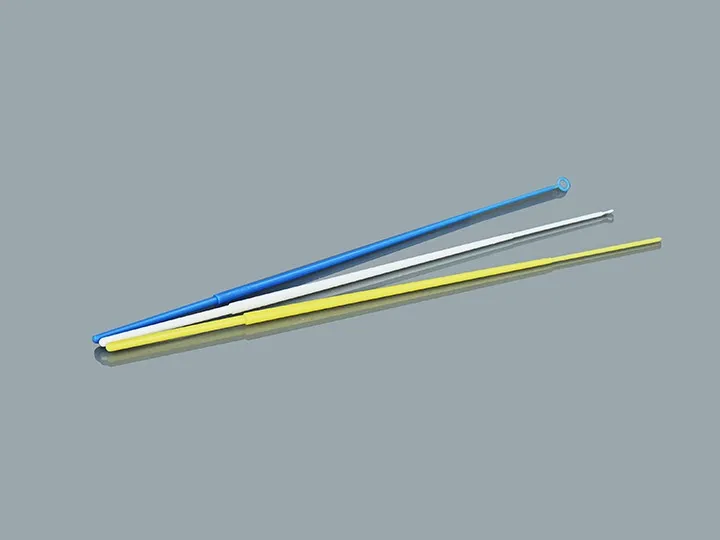
Labs should choose disposable inoculation loops by matching loop volume, sterile packaging, material flexibility, needle or loop design, handle control, color coding, and supplier documentation to the microbiology workflow. The right loop reduces cross-contamination, plate damage, colony picking errors, and procurement inconsistency.
Quick Selection Table for Disposable Inoculation Loops
| Selection Point | What Buyers Should Confirm | Why It Matters |
|---|---|---|
| Application | Colony picking, plate streaking, sample spreading, routine microbiology QC | The workflow determines whether a loop, needle, or dual-end design is best. |
| Loop volume | Common 1uL and 10uL options, plus required calibration expectation | Loop size affects transfer volume, streaking consistency, and method fit. |
| Sterility | Sterile individual pack or sterile bulk pack, sterilization method, shelf life | Microbiology workflows depend on low background contamination. |
| Material | Flexible PS, PP, or supplier-specific lab-grade plastic | Material affects bend, smoothness, plate contact, and user control. |
| Design | Loop end, needle end, smooth surface, color coding, handle grip | Design affects colony picking, streaking lines, and agar surface protection. |
| Packaging | Pieces per bag, pieces per carton, individual sterile wrap, OEM label | Packaging affects bench workflow, distributor resale, and contamination control. |
| Documentation | Specification sheet, COA, batch traceability, quality certificates | Documents support food testing QA, diagnostic lab approval, and repeat procurement. |
Article Map
- Who buys disposable inoculation loops?
- Which loop specifications matter for microbiology testing?
- How do loop design and packaging reduce contamination risk?
- What should food testing labs validate before bulk use?
- What should distributors include in an inoculation loop RFQ?
Who Buys Disposable Inoculation Loops?
The main buyers are microbiology labs, food testing labs, diagnostic labs, universities, quality control teams, distributors, and importers. Their shared need is clean and repeatable transfer, but their priorities differ across contamination control, user handling, documentation, MOQ, and packaging.
Disposable inoculation loops are small products, but they sit directly inside microbiology workflows. A loop touches colonies, agar surfaces, sample suspensions, and culture plates. If the loop is too stiff, poorly shaped, non-sterile, or packed in an inconvenient format, the lab may see plate scratches, inconsistent streaking, extra handling, or higher contamination exposure.
| Buyer Type | Main Concern | Best RFQ Angle |
|---|---|---|
| Food testing lab | Cross-contamination control, plate workflow, repeatable QC | Ask for sterile packaging, loop size, color coding, and batch documents. |
| Microbiology lab | Streaking quality, colony picking, agar surface protection | Confirm loop smoothness, flexibility, and needle or loop design. |
| Diagnostic lab | Consistent sample handling, stock reliability, traceability | Request specification, carton quantity, and repeat supply schedule. |
| University | Budget, teaching use, safe single-use workflow | Choose common sizes with clear color coding and easy handling. |
| Distributor | MOQ, margin, private label, carton planning | Request OEM packaging, mixed shipment, and product family support. |
| Importer | Documentation, label language, export cartons | Confirm carton data, HS code support, label artwork, and lead time. |
Which Loop Size Should Buyers Choose?
Buyers usually choose between 1uL and 10uL disposable loops according to the method, transfer volume, and streaking workflow. The correct size should match the lab’s SOP rather than a generic purchasing habit.
Loop volume matters because it affects how much sample is transferred to the plate. A 1uL loop may be used where smaller transfer volume is required, while a 10uL loop may be selected for larger routine transfer. The buyer should confirm whether the lab needs loop ends, needle ends, or a dual-use product for both colony picking and streaking.
| Option | Typical Workflow Fit | Risk If Wrong |
|---|---|---|
| 1uL loop | Small-volume transfer, certain calibrated microbiology workflows | Using the wrong size can affect transfer consistency and SOP compliance. |
| 10uL loop | Routine transfer and streaking workflows that need larger volume | Too much sample can affect streaking quality or colony isolation. |
| Needle end | Colony picking, stab inoculation, precise contact work | Poor tip design can damage agar or make colony picking harder. |
| Loop end | Plate streaking, sample spreading, transfer from liquid | Rough loops can scratch agar or create uneven streaks. |
| Color-coded loop | Fast identification of size or type | Poor coding can lead to wrong-loop selection during busy workflows. |
How Do Disposable Loops Reduce Cross-Contamination Risk?
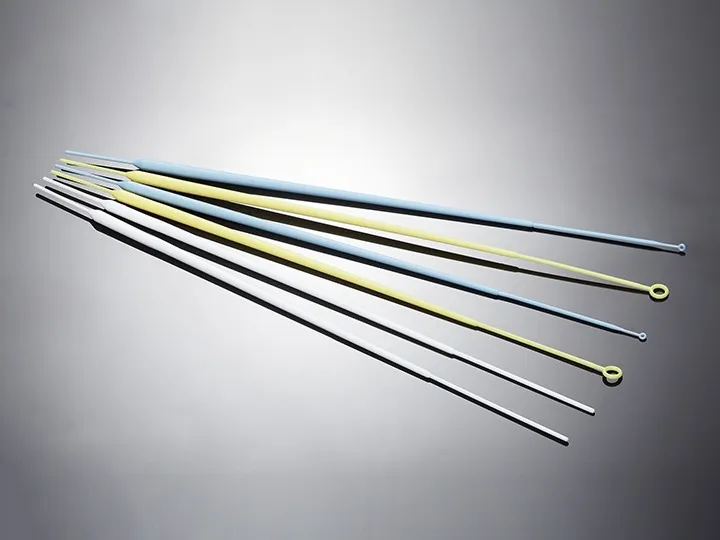
Disposable loops reduce cross-contamination risk by removing the need for flame sterilization between uses and by providing a clean tool for each sample or colony. The benefit depends on sterile packaging, clean opening, and proper single-use discipline.
In food testing and microbiology QC, many plates or samples may be processed in a short period. Reusing tools or handling non-sterile products can increase the chance of carryover. Disposable inoculation loops help standardize workflow, especially in labs that want a cleaner, faster, and safer alternative to reusable metal loops.
- Use sterile loops for contamination-sensitive plate work.
- Open packaging close to the workflow and avoid touching the working end.
- Use one loop per sample, colony, or defined SOP step.
- Choose the correct volume to avoid excessive transfer.
- Keep loop type and size visually clear to technicians.
- Validate packaging integrity before routine bulk use.
What Material and Handle Design Should Buyers Check?
Buyers should check whether the material is smooth, flexible enough for controlled streaking, rigid enough for handling, and comfortable for repetitive use. Handle design affects technician control as much as the loop end itself.
A disposable loop should glide on the agar surface without gouging or dragging. If the loop is too stiff, it may scratch plates. If it is too soft, it may feel unstable during streaking. If the handle is too short, slippery, or poorly balanced, users may lose control during repetitive plate work. These issues are not visible from a quotation sheet alone; they require sample validation.
| Design Detail | What to Check | Why It Matters |
|---|---|---|
| Loop smoothness | No rough edges or irregular molding | Protects agar surface and improves streak consistency. |
| Flexibility | Controlled bend without weak handling | Supports gentle streaking and user comfort. |
| Needle tip | Shape, smoothness, and precision | Supports colony picking without excessive plate damage. |
| Handle grip | Length, balance, and surface feel | Improves control during repetitive microbiology work. |
| Color coding | Size or type identification | Reduces wrong-loop selection in busy labs. |
| Packaging opening | Easy aseptic removal | Reduces accidental contact with the sterile working end. |
How Should Food Testing Labs Validate Samples?
Food testing labs should validate disposable inoculation loop samples with real plate streaking, colony picking, packaging opening, color identification, and storage handling. The validation should include the technicians who perform routine microbiology work.
A sample can look acceptable in a bag but fail at the bench. The best validation uses the lab’s real Petri dishes, agar type, sample workflow, and incubation plan. Buyers should compare several loops from a sample pack and check whether the quality is consistent across units. Distributors should also inspect carton packing and sleeve labeling before approving private label orders.
Sample Validation Checklist
- Confirm loop size, needle or loop design, material, and sterile status.
- Open the package with gloves and check aseptic handling convenience.
- Use the loop on the lab’s actual agar plates.
- Check whether the loop scratches, drags, or bends too much.
- Confirm color coding and size identification with bench users.
- Inspect carton quantity, product label, and batch information.
- Compare the approved sample with the first bulk shipment during incoming QC.
What Should Distributors and Importers Ask Before Bulk Orders?
Distributors and importers should ask about loop sizes, sterile packaging, pieces per bag, carton quantity, MOQ, private label options, sample policy, documentation, and whether related microbiology consumables can be shipped together.
Disposable inoculation loops are naturally linked with sterile Petri dishes, sample containers, reagent bottles, serological pipettes, gloves, and other microbiology consumables. A distributor can reduce sourcing work by planning these products as one microbiology testing package instead of separate one-off purchases.
For private label programs, confirm bag label, carton artwork, language, barcode, product code, color coding, and pack quantity before mass production. A supplier should also confirm whether mixed-size orders are possible and how MOQ changes when different loop sizes or designs are combined.
RFQ Template for Disposable Inoculation Loops
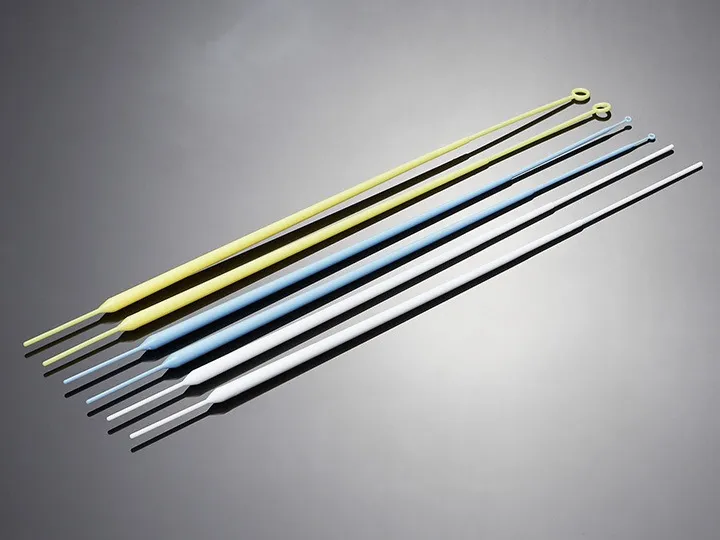
A useful RFQ should specify loop volume, design type, sterility, packaging quantity, material preference, application, documentation, destination country, and OEM packaging expectations. Clear RFQ details reduce quotation errors and speed sample approval.
- Product: disposable inoculation loops or disposable inoculation needles
- Application: food testing, microbiology QC, diagnostic sample handling, teaching lab, colony picking, or plate streaking
- Loop size: 1uL, 10uL, or required size
- Design: loop, needle, dual-end, color-coded, or specific handle requirement
- Sterility: sterile individual pack, sterile bulk pack, sterilization method, shelf life
- Packaging: pieces per bag, bags per carton, carton dimensions, carton weight
- Material: PS, PP, or supplier-recommended lab-grade plastic
- Documentation: specification sheet, COA, sterility declaration, quality certificates
- Commercial terms: MOQ, sample request, trial order, lead time, destination country
- OEM needs: private label bag, carton artwork, barcode, language, product code
FAQ: Disposable Inoculation Loops
Are disposable loops better than reusable metal loops?
Disposable loops can reduce cross-contamination risk and remove the need for flame sterilization between uses. Reusable loops may still be used in some labs, but disposable loops are often preferred for cleaner and faster routine workflows.
What is the difference between 1uL and 10uL loops?
The difference is the intended transfer volume. A 1uL loop is used for smaller transfer needs, while a 10uL loop is used for larger transfer workflows. Buyers should follow the lab’s SOP and method requirements.
Should inoculation loops be individually packed?
Individual sterile packaging is useful for contamination-sensitive work and distributed bench use. Bulk sterile packs may fit high-volume workflows, but the lab should check whether the pack size matches daily usage and clean handling needs.
Can distributors request private label packaging?
Yes. Distributors can usually discuss private label bag labels, carton artwork, barcode, product code, and language requirements. MOQ, artwork approval, and sample packaging should be confirmed before bulk orders.
What documents should buyers request?
Buyers should request a product specification sheet, sterile declaration where applicable, COA when available, batch traceability, shelf-life information, and relevant quality system certificates.
SEO Summary
Disposable inoculation loops should be selected by loop volume, sterile packaging, material flexibility, needle or loop design, color coding, documentation, and supplier reliability. Food testing and microbiology labs can reduce cross-contamination and plate handling risk through sample validation.
Request Disposable Inoculation Loop Options
OBObio can help buyers evaluate sterile disposable inoculation loops and related microbiology consumables for food testing labs, diagnostic labs, universities, distributors, importers, and OEM packaging programs. Share your loop size, packaging quantity, destination country, and documentation needs to request suitable options.
Request Pricing or Samples
Tell us the product type, quantity, destination country, and any packaging or certification requirements. OBObio will reply with suitable lab consumables options.