
Certified disposable culture flasks are specialized, single-use plastic vessels that provide an optimal, sterile, and consistent environment for the successful growth and propagation of various cell types in research and biopharmaceutical laboratories. Their certification ensures they meet strict quality, sterility, and performance standards crucial for reliable experimental results.
Quick Reference: Cell Culture Market & Flask Benefits (2025)
| Metric | 2025 Projection | Key Benefit for Certified Flasks |
| Global Cell Culture Market Size | $29.76 Billion | Drives demand for high-quality consumables |
| Cell Culture Consumables Market Size (2025) | $14.69 Billion (Equipment & Consumables) | Highlights importance of disposables |
| Cell Culture Market CAGR (2025-2030) | 11.2% | Growing need for reliable cell growth |
| Typical Flask Sterility Assurance Level | SAL 10−6 | Minimizes contamination risk |
| Common Material | USP Class VI Virgin Polystyrene | Ensures biocompatibility & optical clarity |
| Adherent Cell Growth Surface Treatment | Tissue Culture-Treated (TC-Treated) | Promotes consistent cell adhesion |
Source: MarketsandMarkets 2025, The Business Research Company 2025, Precedence Research 2025.
Why are certified disposable culture flasks critical for successful cell culture?
Certified disposable culture flasks are critical for successful cell culture because they guarantee a sterile, non-toxic, and consistent environment, which is absolutely essential for healthy cell growth, reliable experimental reproducibility, and preventing contamination in sensitive biological studies. This reliability saves time and prevents costly experimental failures.
Imagine trying to grow a delicate plant in dirty soil with unpredictable conditions. It just wouldn’t grow well! The same goes for cells. Cells are very sensitive. They need a perfect home to grow and thrive.
Here’s why certified disposable culture flasks are so important:
Sterility: First and foremost, they come pre-sterilized. This means there are no unwanted germs or particles inside that could harm your cells. Contamination is a cell culture scientist’s worst nightmare!
Consistency: When you use certified flasks, you know that every flask in the box will behave the same way. This means your experiments will be more reliable. If you do the same experiment next week, you can trust the results will be similar.
Non-Toxic Materials: These flasks are made from special plastics that won’t release harmful chemicals into your cell culture. This is crucial for cell health and preventing unwanted reactions.
Optimal Surface for Growth: Many certified flasks have a special “treatment” on their surface. This helps cells stick and grow better. Think of it like a sticky pad for cells.
Reduced Cross-Contamination: Since they are disposable, you use them once and then throw them away (safely, of course!). This greatly reduces the chance of accidentally mixing cells from one experiment with another.
Saves Time and Effort: You don’t have to clean and sterilize them yourself. This saves valuable lab time and resources.
The global cell culture market is growing rapidly, reaching nearly $30 billion in 2025. This growth clearly shows how much labs rely on consistent, high-quality tools, and certified disposable flasks are at the heart of that.
What essential features define a high-quality certified disposable culture flask?
High-quality certified disposable culture flasks feature clear, optically transparent virgin polystyrene for easy cell viewing, a precisely engineered surface treatment (like TC-treated for adherent cells), accurate volume graduations, and a choice of cap types (vented for gas exchange, plug seal for closed systems), all manufactured in sterile cleanroom conditions.
It’s not just a plastic box; it’s a carefully designed home for your cells. When choosing certified flasks, these features make a big difference:
Material:
Virgin Polystyrene (PS): This is the go-to material. It’s clear like glass, so you can easily see your cells under a microscope. “Virgin” means it’s brand new plastic, not recycled, which helps ensure purity.
USP Class VI: This is a very important certification for the plastic. It means the material has been tested and found to be safe for contact with biological tissues and fluids. It won’t leach harmful stuff into your precious cells.
Surface Treatment:
Tissue Culture Treated (TC-Treated): This is perhaps the most critical feature for adherent cells (cells that need to stick to a surface to grow). The plastic surface is specially treated to have a negative charge, which encourages cells to attach and spread evenly.
Non-Treated: For suspension cells (cells that grow floating in the liquid), you’d choose non-treated flasks. These surfaces are designed to prevent cells from sticking.
Specialized Coatings: Some flasks have advanced coatings like Poly-D-Lysine or Collagen for very finicky cells.
Cap Design:
Vented Caps: These caps have a special filter (usually 0.22µm) that allows gases (like oxygen and carbon dioxide) to flow in and out of the flask while keeping bacteria and contaminants out. They’re great for long-term cultures.
Plug Seal Caps: These caps create an airtight seal. They are often used for short-term cultures, or when transporting flasks, or for suspension cultures where gas exchange isn’t as critical through the cap.
Design and Usability:
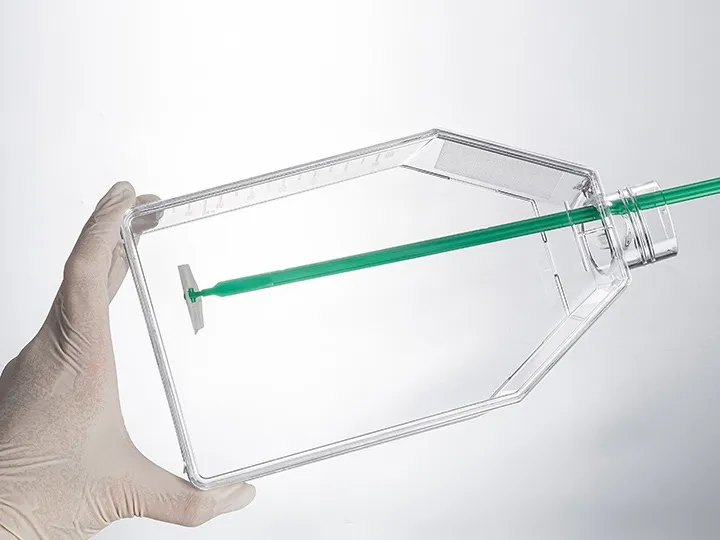
Angled Neck: This design makes it easier to get pipettes and cell scrapers into the flask without touching the neck or sides and potentially causing contamination.
Frosted Writing Area: A rough patch on the flask allows you to clearly label your experiments with a marker.
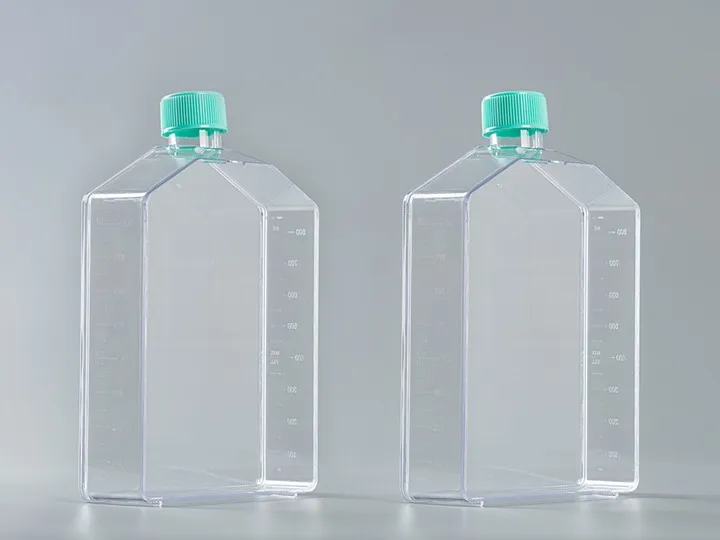
Volume Graduations: Clear marks on the side help you measure the amount of liquid inside accurately.
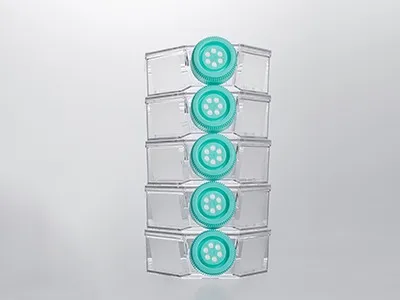
Stackable Design: Many flasks are designed to stack neatly in an incubator, saving space.
These features, combined with rigorous testing, ensure that every certified disposable culture flask provides a reliable environment for your cell culture work.
What specific certifications should certified disposable culture flasks possess?
Certified disposable culture flasks should possess key certifications including ISO 13485 (for medical device quality management), ISO 11137 (for sterilization assurance, often to SAL 10−6), USP Class VI (for material biocompatibility), and certifications for being Non-Pyrogenic, DNase/RNase-free, and Non-Cytotoxic. These ensure product safety, sterility, and performance.
Certifications are like quality stamps. They tell you that a product has been thoroughly checked and meets strict rules. For disposable culture flasks, these stamps are super important for keeping your cells healthy and your experiments accurate.
Here are the critical certifications to look for:
ISO 13485: Quality Management for Medical Devices: Even though culture flasks aren’t medical devices in a person, they are used for very sensitive biological work. This ISO standard shows that the manufacturer has a top-notch quality management system. It means they consistently make products that meet customer and regulatory requirements.
ISO 11137: Sterilization of Healthcare Products: This standard specifically deals with how products are sterilized.
Sterility Assurance Level (SAL 10−6): This is a common and very high level of sterility. It means there’s less than a one-in-a-million chance that a single flask is not sterile after the sterilization process (usually gamma irradiation).
USP Class VI: Biological Reactivity Tests, In Vivo: This is a standard from the United States Pharmacopeia. It tests the plastic material to make sure it doesn’t cause any harmful reactions when in contact with living cells or tissues. It’s a key indicator that the plastic is safe and non-toxic for cell growth.
Non-Pyrogenic/Endotoxin-Free: Pyrogens are substances that can cause fever or harm cells. This certification means the flasks are free from these harmful substances, which is vital for sensitive cell cultures.
DNase/RNase-Free: DNases and RNases are enzymes that can break down DNA and RNA. For molecular biology applications (like gene therapy research), it’s crucial that the flasks don’t have these enzymes, so your genetic material stays intact.
Non-Cytotoxic: This means the flask material itself won’t be toxic or harmful to the cells you’re trying to grow. It’s a direct test of the material’s compatibility with living cells.
BSE/TSE-Free (Bovine Spongiform Encephalopathy / Transmissible Spongiform Encephalopathies): This certification ensures that no animal-derived materials, which could carry certain diseases, were used in the manufacturing process or as part of the surface treatment.
When you see these certifications, you can be confident that your certified disposable culture flasks are ready for critical cell culture work.
How do different surface treatments impact cell growth in culture flasks?
Different surface treatments in culture flasks significantly impact cell growth by promoting or preventing cell adhesion; Tissue Culture-Treated (TC-treated) surfaces are optimized for adherent cells, while non-treated or ultra-low attachment surfaces are ideal for suspension cells or spheroid/organoid formation. The treatment’s chemistry guides cell behavior.
The surface of a culture flask is like the ground where you try to grow plants. Some plants need rich soil to stick to, while others prefer to float in water. Cells are similar!
Here’s how different surface treatments work:
Tissue Culture Treated (TC-Treated) Surfaces:
How it works: These are the most common surfaces for adherent cells (cells that need to stick to a surface to grow). The plastic surface (usually polystyrene) undergoes a special treatment, often with plasma or corona discharge. This makes the surface more “hydrophilic” (water-loving) and gives it a negative charge. Cells naturally have positive charges, so they are attracted to and stick to this negatively charged surface.
Best for: Most mammalian cells, primary cells, and cell lines that grow attached to a surface (e.g., fibroblasts, epithelial cells).
Non-Treated Surfaces:
How it works: These surfaces are hydrophobic (water-hating) and lack the charged groups found on TC-treated surfaces. Cells do not easily stick to them.
Best for: Suspension cells (cells that grow floating in the culture medium, e.g., some blood cells, hybridomas), and also for creating “spheroids” or “organoids,” which are 3D cell structures that don’t need to stick to a flat surface.
Specialized Coatings: For very particular or finicky cells, or for specific research goals, flasks can have additional coatings:
Poly-L-Lysine (PLL) / Poly-D-Lysine (PDL): These are synthetic amino acid polymers that provide a positively charged surface. They enhance cell adhesion, especially for cells that struggle to attach to standard TC-treated surfaces (e.g., neurons, primary cells).
Collagen, Fibronectin, Laminin, Gelatin: These are natural proteins found in the body’s extracellular matrix (ECM). Coating flasks with these proteins provides a more natural environment for cells, which can promote better attachment, growth, and differentiation for certain cell types (e.g., stem cells, primary cells).
Ultra-Low Attachment (ULA) Surfaces: These surfaces are highly resistant to cell adhesion. They are perfect for forming 3D cell aggregates (spheroids, organoids) or for preventing any cell attachment when you specifically want cells to grow in suspension.
Choosing the right surface treatment is vital for the success of your cell culture experiments. It’s the first step in giving your cells the best possible environment to thrive.
What are the different sizes and shapes of certified disposable culture flasks available?
Certified disposable culture flasks are available in various sizes, typically defined by their growth area (e.g., T-25, T-75, T-175, T-225 cm²), and come in common shapes like rectangular with an angled neck for easy access, or specialized designs like multilayer flasks for high-volume cell production.
Just like houses come in different sizes, so do culture flasks! The size you pick depends on how many cells you need to grow and how much space you have in your incubator.
Standard T-Flasks (Named by Growth Area): The “T” stands for Tissue Culture, and the number refers to the surface area in square centimeters (cm2) where cells can grow.
T-25 Flask: This is a small flask, offering 25 cm2 of growth area. It’s great for starting small cultures, growing small batches of cells, or for routine maintenance.
T-75 Flask: A medium-sized flask, providing 75 cm2 of growth area. This is a very popular size for general cell culture, expanding cell lines, and many research applications.
T-175 Flask: A larger flask with 175 cm2 of growth area. Ideal for growing more cells, scaling up cultures, or when you need a larger quantity of cells for experiments.
T-225 Flask: One of the largest standard flasks, offering 225 cm2 of growth area. Used for large-scale cell production and when maximizing cell yield is crucial.
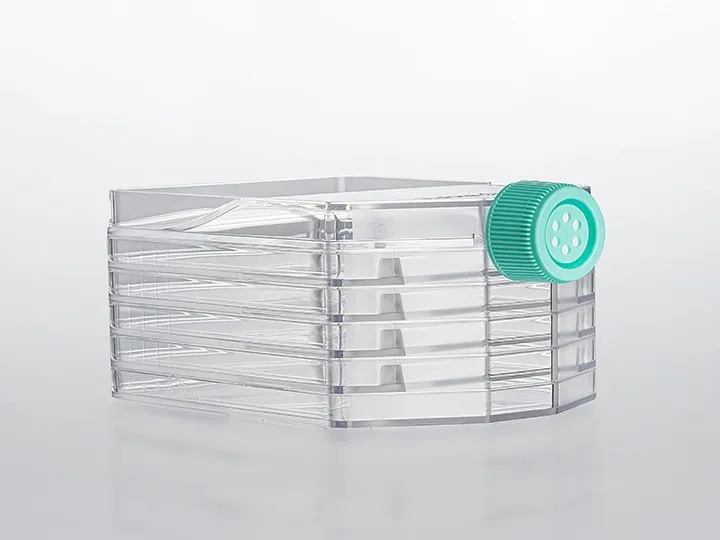
Multilayer Flasks (e.g., Cell Factories, TripleFlasks):
How they work: These flasks have multiple stacked layers or compartments, creating a much larger total growth area within a similar footprint as a standard flask.
Best for: High-volume cell production for biopharmaceutical applications, vaccine manufacturing, or when you need a very large number of cells without using many individual flasks. For example, a “TripleFlask” has three layers, providing 500 cm2 of growth area in the footprint of a T-175.
Other Shapes: While rectangular T-flasks are most common, other specialized shapes or designs exist for specific applications, such as baffled flasks for suspension cultures to improve aeration.
| Flask Type | Growth Area (approx.) | Typical Applications |
| T-25 Flask | 25 cm2 | Small cultures, routine maintenance, pilot studies |
| T-75 Flask | 75 cm2 | General cell culture, expanding cell lines |
| T-175 Flask | 175 cm2 | Larger scale-up, producing more cells |
| T-225 Flask | 225 cm2 | Max yield, large-scale production |
| Multilayer Flasks | 500+ cm2 | Bioreactor scale-up, industrial cell production |
Choosing the right size and shape helps ensure your cells have enough room to grow and that your experiments are as efficient as possible.
What are the best practices for handling and storing certified disposable culture flasks?
Best practices for handling and storing certified disposable culture flasks include always working in a sterile environment (like a laminar flow hood), avoiding touching the growth surface, ensuring proper cap tightness for gas exchange or sealing, and storing them in their original packaging in a cool, dry place away from direct sunlight and extreme temperatures to maintain sterility and integrity.
Even though these flasks are tough, they need to be handled with care to stay perfectly clean and ready for your cells. Think of it like handling a very delicate puzzle piece!
Handling (When Using Them):
Work in a Clean Space: Always open and use your flasks inside a laminar flow hood or biosafety cabinet. This special hood blows clean, filtered air to keep dust and germs away.
Don’t Touch the Inside: Never touch the inside of the flask or the growth surface with your bare hands or anything non-sterile. If you do, it’s contaminated, and you should discard it.
Proper Cap Handling:
Vented Caps: Make sure the filter in the vented cap isn’t wet or blocked. If the filter gets wet, it can stop gas exchange or allow contaminants in.
Plug Seal Caps: Ensure they are tightly sealed if you need an airtight container, or loosened appropriately if you need some gas exchange.
Avoid Scratches: Be careful not to scratch the growth surface inside the flask. Scratches can make it harder for cells to stick evenly.
Gentle Movements: When moving flasks with cells, do it gently to avoid “shearing” the cells or disturbing their attachment.
Storage (When Not Using Them):
Original Packaging: Keep them in their sealed, original bags or boxes until you are ready to use them. The packaging protects them from dust, light, and maintains sterility.
Cool, Dry, Dark Place: Store flasks in a stable environment. Extreme heat, cold, or direct sunlight can degrade the plastic over time. Humidity can also be an issue. A normal lab shelf or cabinet at room temperature is usually fine.
Check Expiration Dates: While durable, certified flasks do have a shelf life (often 3-5 years). Always check the expiration date on the packaging. Using expired flasks might lead to inconsistent cell growth.
Stack Safely: Many flasks are designed to be stackable, but don’t stack them too high where they might fall or crush the bottom ones.
Following these simple rules helps ensure your certified disposable culture flasks always perform their best for your important experiments.
People Also Ask: Common Questions About Certified Disposable Culture Flasks
Q1: What is the difference between TC-treated and non-treated culture flasks?
TC-treated (Tissue Culture-Treated) flasks have a specially modified, hydrophilic (water-loving) surface that promotes the attachment and growth of adherent cells, while non-treated flasks have a hydrophobic (water-hating) surface that discourages cell adhesion, making them ideal for suspension cell cultures or creating spheroids.
Q2: Can certified disposable culture flasks be autoclaved?
No, most certified disposable culture flasks, which are typically made of polystyrene, are NOT autoclavable because the high heat (121°C) and pressure of an autoclave will melt or deform the plastic, rendering them unusable. They are designed for single-use and come pre-sterilized by gamma irradiation.
Q3: How often should I replace my culture flasks in a long-term experiment?
You should replace your culture flasks in a long-term experiment when cells reach confluency (become overcrowded), the culture medium needs replenishment, or if contamination is suspected, typically every 2-4 days, depending on the cell line’s growth rate and density. This process is called “passaging” or “subculturing.”
Q4: What does “non-pyrogenic” mean for culture flasks?
“Non-pyrogenic” for culture flasks means they are free from pyrogens, which are fever-inducing substances (like bacterial endotoxins) that can negatively impact cell health and experimental results, especially in sensitive cell culture applications like vaccine production or drug screening.
Q5: Can I reuse certified disposable culture flasks after sterilization?
No, certified disposable culture flasks are designed for single-use and should NOT be reused, even after attempted sterilization, because reusing them compromises their sterile surface treatment, risks contamination from previous cultures, and can lead to inconsistent cell growth and unreliable experimental outcomes.
Q6: How do I choose the correct flask size for my cell culture?
Choose the correct flask size based on your desired cell number and the required growth area; for example, a T-25 flask is for smaller cell numbers, while T-75 or T-175 flasks are used for larger populations, ensuring adequate space for cell proliferation and nutrient exchange.
Conclusion: Elevating Your Research with Certified Disposable Culture Flasks
The selection of certified disposable culture flasks is a foundational step for success in any cell culture laboratory. As the global cell culture market surges, reaching nearly $30 billion in 2025, the demand for consumables that guarantee sterility, optimal cell growth, and reproducible results is paramount. By understanding the critical features and essential certifications of these flasks, you ensure your cells thrive and your research findings are robust.
Prioritizing certified flasks made from USP Class VI virgin polystyrene with appropriate surface treatments like TC-treated for adherent cells, ensures consistent performance. This strategic choice not only supports the health of your cell lines but also streamlines your workflow by eliminating contamination risks and the need for time-consuming cleaning.
For laboratories seeking reliable, high-quality certified disposable culture flasks that meet the highest industry standards, explore the comprehensive solutions offered by OBO Biology Tech at https://obobio.com. Empower your scientific discoveries with the confidence that comes from superior cell culture consumables.
Buyer Quick Reference for Certified Disposable Culture Flasks: Your Selection Guide for Cell Growth
For B2B buyers, Certified Disposable Culture Flasks: Your Selection Guide for Cell Growth should be evaluated by application fit, material, sterility, packaging, documentation, reorder stability, and supplier communication. The best choice is the product that protects lab workflow reliability while remaining practical for repeated purchasing.
| Buying Factor | What to Check | Why It Matters |
|---|---|---|
| Application fit | Match the product to research, diagnostic, hospital, biotech, food testing, or distributor use. | Prevents overbuying, under-specifying, or selecting a format that does not fit the workflow. |
| Material and design | Confirm resin, surface, cap, seal, size, compatibility, and handling details. | Small specification differences can affect accuracy, contamination control, or user acceptance. |
| Sterility and cleanliness | Check sterile, non-sterile, DNase/RNase-free, non-pyrogenic, or gamma-irradiated options where relevant. | Cleanliness requirements vary widely between routine teaching labs and sensitive molecular or cell culture work. |
| Packaging | Review bagged, racked, individually wrapped, bulk carton, and OEM/private label options. | Packaging affects workflow speed, storage space, shipping cost, and distributor resale. |
| Supplier support | Ask for samples, product codes, carton details, lead time, MOQ, and repeat-order consistency. | Reliable supply is essential for labs that cannot pause work because a consumable is out of stock. |
How This Product Fits OBObio Lab Consumables Sourcing
OBObio positions this topic within a broader laboratory consumables sourcing plan, including cell culture flasks, shake flasks, culture bottles, treated surfaces, vented caps, and sterile cultureware. Buyers can use one supplier conversation to compare related products, packaging formats, and sample options.
For laboratories, this reduces the risk of mismatched supplies. For distributors, it helps build a more complete catalog with consistent documentation and packaging. For first-time buyers, the practical path is to request samples, test the product in the real workflow, and then confirm carton quantity, lead time, and repeat-order pricing.
When sending an inquiry, include the application, expected quantity, destination country, sterile requirement, packaging preference, and any certification or documentation needs. Clear requirements help OBObio recommend the right product faster instead of giving a generic quote.
Supplier Evaluation Checklist
- Does the supplier understand the real laboratory application, not only the product name?
- Can the supplier provide samples before a bulk order?
- Are product specifications, carton quantity, MOQ, and lead time clear?
- Can the supplier support related consumables for one-stop procurement?
- Is OEM or private label packaging available for distributors?
- Can the same specification be supplied consistently for repeat orders?
FAQ: Certified Disposable Culture Flasks: Your Selection Guide for Cell Growth
What should buyers check first?
Buyers should first define the application, required specification, sterility level, packaging format, and expected order quantity. These details determine whether a standard item is enough or whether a more specific supply option is needed.
Is the lowest price always the best option?
No. For laboratory consumables, product failure, contamination, leakage, poor fit, or unstable supply can cost more than a small unit-price difference. Buyers should balance price with consistency, documentation, and supplier responsiveness.
Can distributors request OEM packaging?
Yes. Many distributors need private label cartons, product labels, and stable carton specifications. MOQ, artwork, label language, and lead time should be confirmed before placing the first bulk order.
Why work with a broader
A broader supplier can help buyers coordinate related products, reduce communication work, consolidate shipments, and build a more reliable procurement plan for routine lab operations.
Request Pricing or Samples
Tell us the product type, quantity, destination country, and any packaging or certification requirements. OBObio will reply with suitable lab consumables options.